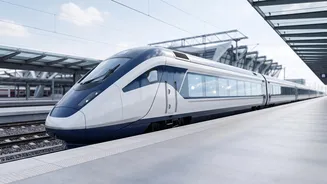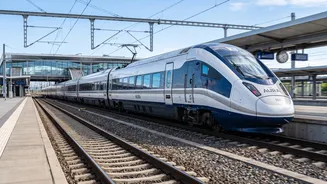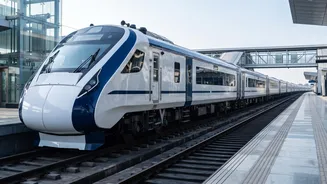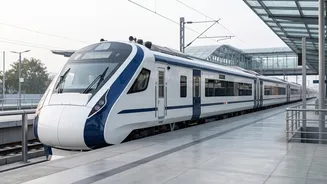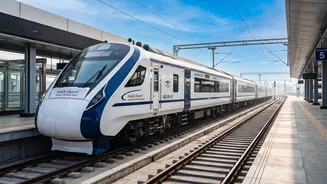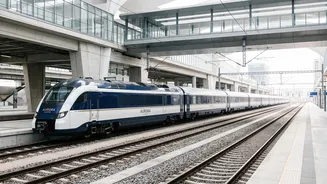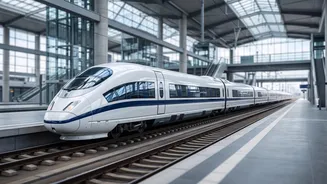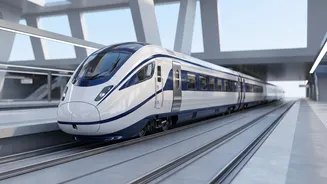




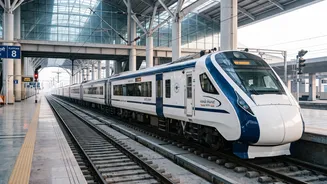
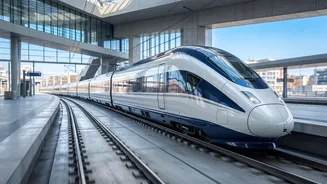
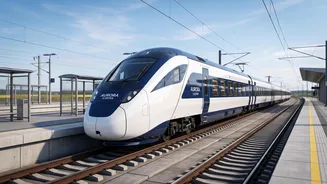
The Vande Bharat revolution is set to transform overnight travel in India, but the initial 16-coach sleeper design is just the beginning. Indian Railways is now thinking bigger, with plans for expanded trainsets to meet diverse passenger demands.
A Bigger Blueprint for Overnight Travel
While
the first Vande Bharat sleeper trains hitting the tracks feature a standard 16-coach configuration, Indian Railways is already working on a significant upgrade. The Integral Coach Factory (ICF) in Chennai has been tasked with manufacturing 50 new Vande Bharat sleeper trainsets with a 24-coach formation. This longer design is a strategic move to increase passenger capacity on high-demand, long-distance routes. The existing 16-coach trains can accommodate around 823 passengers, but the 24-coach version will be able to carry significantly more, with one proposed layout having 1,224 berths. This expansion signals a shift from a one-size-fits-all approach to a more flexible and demand-driven strategy for modernizing India's sleeper fleet.
Why More Coaches Matter
The decision to introduce longer trainsets is rooted in practical needs. A 24-coach train is better suited for trunk routes with heavy passenger traffic, such as those connecting major metropolitan hubs. This increased capacity helps accommodate more travelers and can improve the financial viability of the service. Furthermore, the larger design allows for better amenities. A key feature planned for the 24-coach version is a dedicated pantry car, which is absent in the 16-coach model. This will enable better on-board catering services, with facilities to heat and serve fresh food during long, overnight journeys. The design also calls for more toilets to cater to the larger number of passengers, enhancing overall comfort and convenience.
The Vande Bharat Sleeper Experience
Regardless of the length, the Vande Bharat sleeper trains promise a substantial upgrade over conventional long distance trains. The coaches are designed for a maximum speed of 160 kmph, though actual speeds depend on track capabilities. Inside, passengers can expect ergonomically designed, cushioned berths, improved lighting, and better access to upper berths. The trains will feature modern amenities like automatic doors, sealed gangways for reduced noise and stable temperature, bio vacuum toilets, and CCTV cameras. For added safety, they are equipped with the Kavach anti collision system. The 16 coach trains, which are already entering service, have a three class configuration: AC First Class, AC 2 Tier, and AC 3 Tier, offering a premium travel experience across different budget points.
Timeline and Manufacturing Push
The rollout of these new age sleepers is a massive undertaking involving multiple entities. The first few 16 coach trainsets have already been manufactured by a partnership between BEML and ICF. One service was launched in January 2026, with others, like the Delhi Varanasi and Mumbai Bengaluru routes, expected to be inaugurated around late October and early November 2026. Looking ahead, the design for the 24 coach variant is expected to be finalized by November 2026, with a prototype targeted for rollout by June 2027. This is part of a broader plan to introduce over 200 Vande Bharat sleeper trains. To achieve this, contracts have been awarded to several manufacturing consortia, including an Indo Russian joint venture (Kinet Railway Solutions) and a partnership between BHEL and Titagarh Wagons, which will produce 120 and 80 rakes, respectively.