







A Legacy Carved in Teak and Marble
The story of Chettinad is the story of the Nattukottai Chettiars, a prosperous community of merchants and bankers who, from the 19th to the early 20th century, amassed immense fortunes through trade across Southeast Asia. This wealth was poured back into
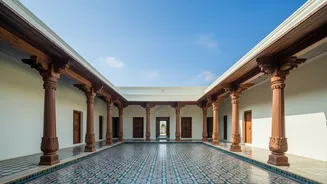
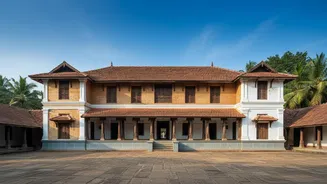
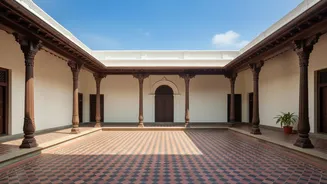
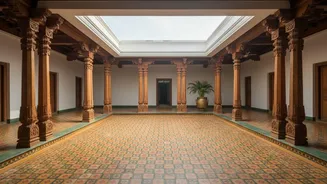
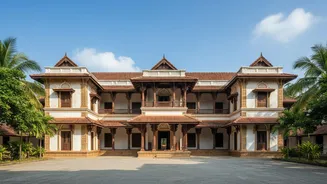
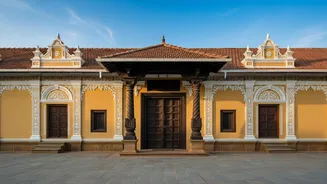
their homeland, resulting in the construction of over 10,000 colossal mansions across a cluster of 70-odd villages. These were not mere houses; they were sprawling palaces designed to house large joint families, with some featuring over 50 rooms, grand courtyards, and halls. The architecture was a stunning fusion of global taste and local tradition, with Burmese teak pillars, Italian marble floors, Belgian glass, and English steel blending seamlessly with traditional Tamil design. However, with the decline of overseas trade after World War II, families migrated, and these architectural marvels slowly fell into disrepair, their grandeur fading under layers of dust and neglect.
Sustainability Through Adaptive Reuse
Today, a new chapter is being written for these homes. A growing movement, led by conservationists, architects, and descendants of the Chettiar families, is focused on restoring these mansions and converting them into heritage homestays and boutique hotels. This process is sustainability in action. Rather than demolishing and building anew, adaptive reuse preserves the soul of the structure while giving it a new purpose. The sustainability element is multi-layered. Environmentally, it honours the original eco-friendly designs, which featured central courtyards for natural ventilation and light, thick walls for cooling, and ingenious rainwater harvesting systems. Socially and economically, the restoration process champions local artisans, reviving traditional skills like the hand-making of vibrant Athangudi tiles and the unique Chettinad plastering techniques. This provides local employment and ensures that the economic benefits of tourism are rooted within the community.
An Immersive Cultural Experience
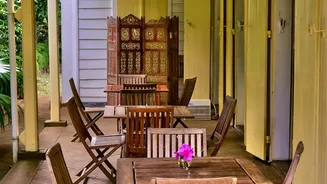
For travellers, staying in a restored Chettinad mansion is far more than just booking a room; it is an immersion into a unique cultural landscape. Guests don’t just admire the architecture—they live within it. They walk through halls supported by giant teak pillars, sleep in rooms adorned with antique furniture, and dine in courtyards that once hosted elaborate family ceremonies. This experience is deeply connected to the region's famed culinary heritage. Chettinad cuisine, known for its complex, aromatic spices, is a highlight of any visit, with many homestays offering cooking classes and authentic meals served on traditional banana leaves. The stay becomes a gateway to exploring the surrounding villages, from visiting artisan workshops making tiles and weaving sarees to discovering local temples and bustling markets.
The Rise of the Conscious Traveller
This unique blend of heritage, authenticity, and sustainability is proving to be a powerful draw for a specific type of tourist: the conscious traveller. These are individuals who seek more than a generic holiday. They are looking for meaningful connections, authentic experiences, and the assurance that their travel choices have a positive impact. They are drawn to the idea of supporting the preservation of a priceless architectural legacy and contributing to a local economy. For them, the choice of a Chettinad homestay over a conventional hotel is a deliberate one, reflecting a desire for slower, more thoughtful travel. It’s a vote for preserving cultural identity over commercial uniformity, and for experiences that are enriching for both the visitor and the host community.