



Satara: Maharashtra's Plateau of Wonders
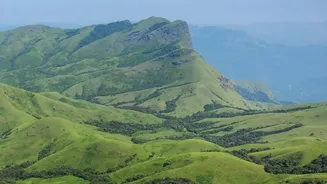
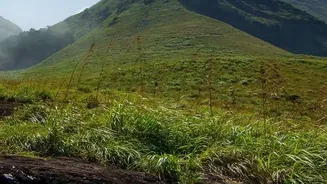
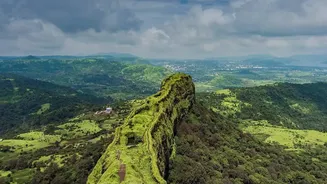
Nestled in the Sahyadri range of Maharashtra, the region around Satara becomes a painter's canvas after the rains. The dusty plains give way to vibrant green grasslands, waterfalls thunder down cliffs, and the air is crisp and clean. This is a land of raw,
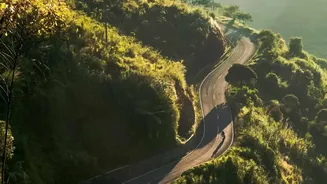
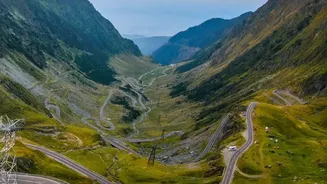
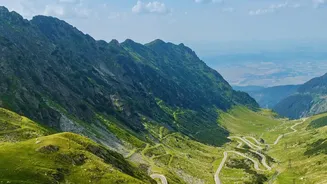
rugged beauty, offering drives that are as thrilling as they are scenic. The roads, often winding through hills and valleys, are in good condition, making it an accessible escape for a weekend drive. The post-monsoon period, from September to November, is arguably the best time to witness this transformation.
Drive 1: The Wildflower Route to Kaas Plateau
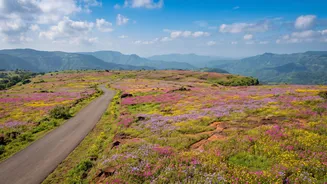
The drive to Kaas Plateau, a UNESCO World Heritage Site, is Satara's main post-monsoon attraction. Starting from Satara city, the road ascends into the hills, offering spectacular views. In September and early October, the plateau itself becomes a carpet of over 850 species of wildflowers, a phenomenon that has earned it the name 'Maharashtra's Valley of Flowers'. The drive continues past the picturesque Kaas Lake and can be extended to the serene Bamnoli village on the edge of the Shivsagar Lake backwaters, where boating is available. Plan this drive for a weekday to avoid the crowds that flock here during the blooming season.
Drive 2: Waterfalls and Windmills Circuit
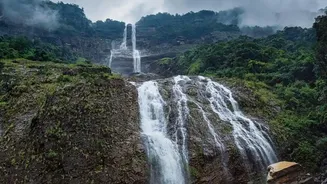
For a journey that combines natural force with human ingenuity, take the route towards Thoseghar. Around 20 km from Satara, the Thoseghar Waterfalls are a series of cascades that are at their most powerful during and immediately after the monsoon. A well-maintained viewing platform allows for safe and breathtaking views of the falls, one of which plunges from a height of nearly 200 meters. From Thoseghar, a short drive takes you to the Chalkewadi Windmill Farm, one of Asia's largest. Driving through this plateau, with giant windmills turning silently amidst the clouds and mist, is a surreal and unforgettable experience.
Coorg: Karnataka's Emerald Kingdom
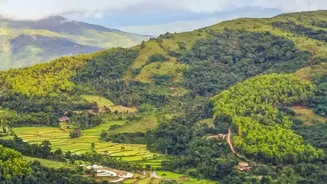
Far south in Karnataka, the district of Kodagu, popularly known as Coorg, offers a different kind of post-monsoon magic. Often called the 'Scotland of India,' Coorg's beauty lies in its rolling hills draped with coffee and spice plantations. After the rains, the landscape is a thousand shades of green, the air is thick with the aroma of wet earth and coffee blossoms, and a gentle mist hangs over the valleys. The drives here are less about wide-open plateaus and more about winding roads that snake through dense, fragrant estates.
Drive 3: The Madikeri and Abbey Falls Loop
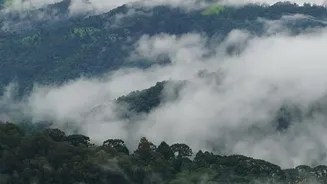
A classic Coorg drive begins in the main town of Madikeri. A short, scenic trip of about 8 km through coffee estates leads you to Abbey Falls. Post-monsoon, this 70-foot waterfall is a roaring spectacle, best viewed from the hanging bridge opposite it. After soaking in the views, drive back towards Madikeri to visit Raja's Seat, a garden that was once the favourite viewpoint of Kodava kings. It offers panoramic vistas of the mist-filled valleys below, especially enchanting in the soft light of the late afternoon.
Drive 4: The Spiritual Ascent to Talacauvery
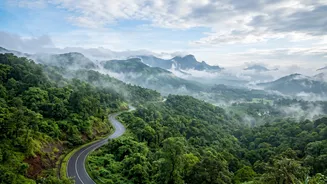
For a drive that combines stunning scenery with spiritual significance, head towards Talacauvery, the source of the sacred river Kaveri. Located about 48 km from Madikeri, the route itself is a journey through the heart of Coorg's lush landscape. The drive passes through the temple town of Bhagamandala before ascending the Brahmagiri Hills. At the top, besides the temple, you are rewarded with breathtaking panoramic views of the Western Ghats. The post-monsoon clarity in the air often allows you to see for miles, making the winding drive up the hill completely worthwhile.