


Saturn Shines its Brightest
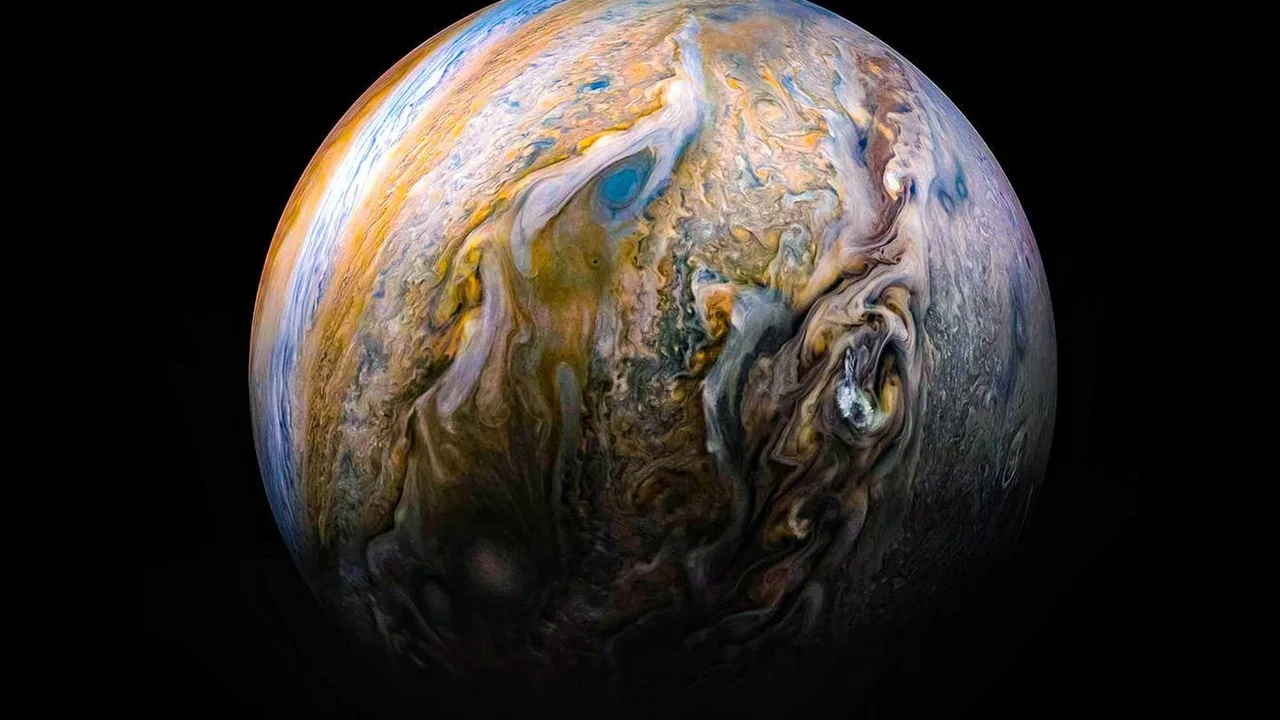
October kicks off with a major treat for planet-watchers. On October 4, Saturn will be at opposition, meaning Earth is passing directly between the sun and the ringed planet. This positioning makes Saturn appear at its biggest and brightest for the entire
year, rising around sunset and remaining visible all night long. While you can spot it with your naked eye as a steady, yellowish point of light, even a basic pair of binoculars might reveal its distinctive, non-circular shape. A small telescope will provide a spectacular view of its famous rings. The best time to look is around midnight when the planet is highest in the sky.
An Evening Meteor Shower: The Draconids
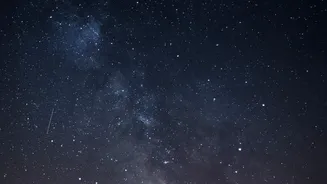
Mark your calendars for the evening of October 8-9 for the peak of the Draconid meteor shower. Unlike most meteor showers that are best seen after midnight, the Draconids are an evening affair, with the best viewing right after full darkness sets in. This shower is typically a quiet one, producing about 5 to 10 slow-moving meteors per hour. But it’s known for occasional outbursts of hundreds of meteors, so it’s always worth a look. The good news for 2026 is that the peak happens close to the new moon, meaning the sky will be nice and dark, making it easier to spot the fainter shooting stars. Find a spot away from city lights, look north toward the constellation Draco, and be patient.
A Dazzling Display from Halley's Comet: The Orionids
The month’s main meteor event is the Orionid shower, which peaks on the night of October 21 and into the early morning of October 22. These meteors are actually tiny dust particles left behind by the famous Halley's Comet. Under perfect conditions, you can expect to see up to 20 fast, bright meteors per hour. This year, a bright waxing gibbous Moon will be in the sky during the evening, which will wash out some of the fainter meteors. Your best bet is to set an alarm for the hours just before dawn, after the Moon has set. No special equipment is needed; just find a dark spot, lie back, let your eyes adjust for about 30 minutes, and look up.
The Full Hunter's Moon
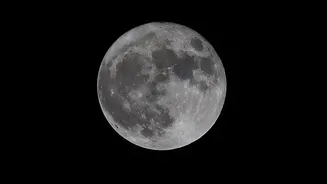
October’s full moon, known as the Hunter’s Moon, reaches its peak illumination just after midnight on the morning of Monday, October 26. However, the best time to enjoy it is on the evening of Sunday, October 25, when it will rise in the east around sunset. As it climbs above the horizon, the Moon often appears enormous and takes on a beautiful golden-orange hue. This name comes from tradition, as the bright moonlight of autumn once helped hunters spot game in the recently harvested fields to prepare for winter. This is a simple and rewarding sight that requires nothing more than a clear view of the eastern horizon.
The Moon Visits a Star Cluster
For a final celestial treat, look for the Moon passing close to the Pleiades star cluster on the nights of October 27 and 28. The Pleiades, also known as the Seven Sisters, is one of the most famous and easily recognizable star clusters in the sky. To the naked eye, it looks like a tiny, fuzzy dipper-shaped group of six or seven stars. The pairing with the bright Moon will make for a lovely sight in the eastern evening sky. While you can see the cluster without any aid, looking through binoculars will reveal dozens more stars, transforming the fuzzy patch into a spectacular spray of diamonds on black velvet.