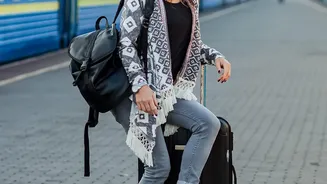







Rethink Your Wardrobe Entirely
During the monsoon, fabric choice is paramount. Heavy materials like denim and thick cotton become waterlogged and can take days to dry in the humid air. Instead, your suitcase should be filled with lightweight, quick-drying clothes. Synthetic blends,
rayon, and light cottons are your best friends. These materials are breathable, which is crucial in high humidity, and will dry much faster if you get caught in a downpour. Opt for darker colours, which are more forgiving of the inevitable mud splashes. When it comes to length, shorter is often better; knee-length kurtis, capris, and dresses are less likely to drag through puddles. And don't forget to layer. A light, waterproof jacket or poncho is essential, as temperatures can drop after a rain shower.
The Right Footwear Is Non-Negotiable
Your choice of shoes can make or break a monsoon trip. Leather and suede are out, as water will ruin them. Your everyday sneakers might also become heavy and uncomfortable when wet. The best options are waterproof and offer a good grip, as paths can become extremely slippery. Rubber sandals, waterproof floaters, or quick-dry sneakers with anti-skid soles are excellent choices for navigating wet streets. For more adventurous treks, proper anti-skid trekking shoes are a must. It is always a wise idea to carry an extra pair of shoes so you have a dry set to change into. Waterproof socks can also add an extra layer of comfort and protection on long walking days.
Protect Your Gadgets and Documents
Moisture is the enemy of electronics. A few simple precautions can save your phone, camera, and other gadgets from ruin. The easiest and most affordable solution is to use waterproof ziplock bags to shield your devices from rain. For more robust protection, consider investing in a dry bag, especially if you plan on being near water. A waterproof backpack or a reliable rain cover for your existing bag is also a must-have. Power cuts can be more frequent during the monsoon, so a fully charged power bank is an essential item. It's also a good practice to keep digital copies of your important documents like your passport, visa, and tickets saved on your phone or in secure cloud storage in case the physical copies get damp.
Prioritise Your Health and Safety
The rainy season can bring an increased risk of certain health issues. Mosquitoes are more common, so a good insect repellent is vital to protect against diseases like dengue and malaria. It's also prudent to carry a basic first-aid kit. This should include essentials like bandages, antiseptic cream, medication for common ailments like fever or stomach upset, and oral rehydration salts (ORS). Be cautious about food and water. To avoid waterborne diseases, stick to bottled or purified water and prioritise freshly cooked, hot meals from clean establishments. Avoid street food that may have been exposed to the elements.
Plan Your Itinerary Wisely
While many parts of India are stunning during the monsoon, some areas are prone to flooding and landslides. Before you book, do some research on your chosen destination. Check weather forecasts and local advisories. Be aware that heavy rains can lead to travel delays, so build extra time into your schedule, especially for connecting flights or trains. When driving, be extra cautious on slippery roads and never attempt to cross a flooded area, as it's difficult to gauge water depth. Choosing accommodation in a safe, accessible location that isn't in a high-risk zone is also crucial for a worry-free trip. A flexible mindset will allow you to adapt your plans if the weather disrupts your original itinerary.