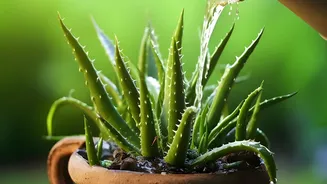

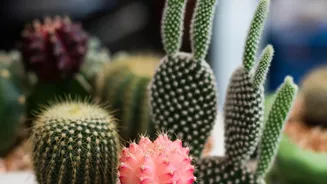
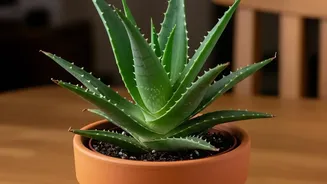
Many plant lovers show affection by showering their leafy friends from above. But for desert plants with a classic rosette shape, this common practice could be doing more harm than good. A simple shift in technique can be a plant-saver.
The Problem with Top-Watering
When you pour water
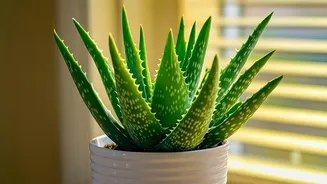
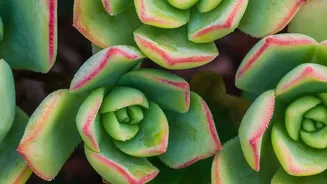
directly into the centre of a succulent or other desert plant, you're inviting trouble. These plants have a dense, tightly packed structure at their base known as the crown. Letting water pool in this central cup can lead to a condition called crown rot. This occurs when moisture sits for too long against the stem and the base of the leaves, creating a perfect breeding ground for fungal and bacterial pathogens. An overwatered or rotting crown will become soft, mushy, and discoloured, and the leaves may start to fall off with the slightest touch. Once crown rot sets in, it can be very difficult to reverse and often proves fatal to the plant.
Nature's Funnel Is Not a Bowl
The beautiful, flower-like rosette shape is a masterful evolutionary adaptation. It's not designed to hold water like a bowl, but to channel it. In their arid native habitats, these plants evolved this form to capture scarce rainfall and dew, directing every precious drop down toward the root system at the base of the plant. This ensures the water gets to where it's needed most—the roots, which are responsible for absorption. The rosette itself is built for sun exposure and water collection, not for sitting in a puddle. By watering the soil directly, you are simply mimicking the way these plants receive water in the wild, working with their natural design instead of against it.
The Hidden Dangers of Wet Leaves
Beyond crown rot, there are other risks associated with getting the leaves of desert plants wet. Many succulents, such as Echeverias, are coated in a powdery wax called farina, or epicuticular wax. This coating is a multi-purpose protectant. It acts as a natural sunscreen, reflecting harsh UV rays, and is also hydrophobic, meaning it repels water. Watering over the top can wash away or mar this delicate, protective layer, leaving the leaves vulnerable. Furthermore, water droplets left on the leaves can act like tiny magnifying glasses under bright sun, causing burn spots. Lingering dampness on the foliage can also encourage the growth of powdery mildew and other fungal issues.
The Right Way to Water
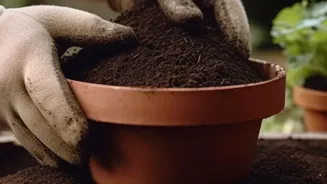
Proper watering is perhaps the most critical factor in succulent care. The best practice is the 'soak and dry' method. Instead of a light sprinkle from above, water the soil at the base of the plant thoroughly and deeply until you see it run out of the drainage holes in the pot. This encourages roots to grow deep and strong. After this deep watering, it is crucial to let the soil dry out completely before watering again. You can check the soil's moisture by sticking a finger or a wooden dowel a couple of inches deep; if it comes out dry, it's time to water. This cycle of deep drenching followed by a dry period prevents the roots from sitting in waterlogged soil, which is the primary cause of root rot.