





Why Your Brakes Don't Work the Same
The single most important change during rain is the dramatic reduction in friction between your tyres and the road. A thin layer of water acts as a lubricant, significantly increasing your braking distance. On a dry road, a car travelling at 60 km/h might
stop in about 20 metres. On a wet road, that distance can easily double to 40 metres or more. This is because the tyre tread has to work much harder to push the water away and make contact with the asphalt. Heavy, sudden braking on a wet surface is a primary cause of skidding, as the wheels can lock up while the car continues to slide forward on the water film. The key is to anticipate stops much earlier and apply gentle, steady pressure on the brake pedal.
The Invisible Danger of Hydroplaning
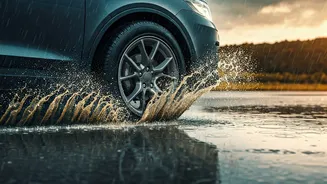
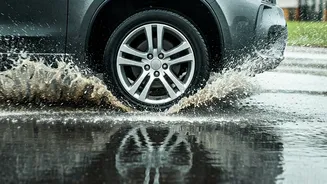
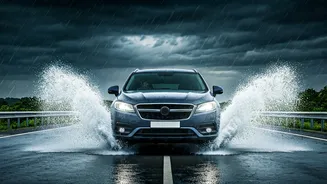
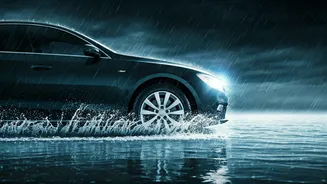
Hydroplaning is one of the most frightening experiences a driver can have. It occurs when a layer of water builds up between the tyres and the road surface, leading to a complete loss of traction. Your steering and brakes become useless, and the car effectively surfs on the water. It can happen at speeds as low as 50-60 km/h, especially if your tyres are worn. The deeper the water and the faster you're going, the higher the risk. If you feel the steering suddenly go light and the car start to drift, do not slam the brakes or jerk the steering wheel. Instead, ease your foot off the accelerator and keep the steering wheel straight. As the car slows, the tyres should regain contact with the road, and you will feel control return.
See and, Crucially, Be Seen
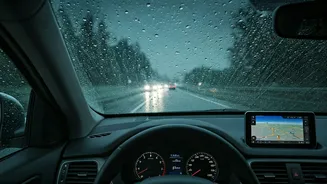
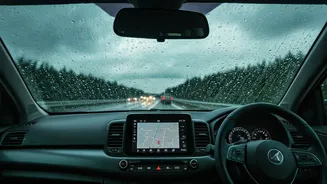
Heavy rain severely compromises visibility for everyone. It’s not just about what you can see, but how visible you are to others. Always turn on your headlights (on low beam) during rain, even in broad daylight. This makes your car far more visible to oncoming traffic and pedestrians. Ensure your wiper blades are in good condition; old, cracked wipers will only smear water across the windscreen, making things worse. Use your car’s defogger to keep the interior of your windows clear from condensation. Avoid using high beams in heavy rain or fog, as the light reflects off the water droplets, creating a wall of glare that further reduces your own visibility.
Navigating Waterlogging and Potholes
Indian roads are notorious for waterlogging and hidden potholes during the monsoon. Driving through a large puddle is a gamble. You cannot be sure of its depth or what lies beneath the surface—it could be a deep pothole or an open manhole. If possible, watch other vehicles go through first to gauge the depth. If you must proceed, do so slowly and in a low gear, keeping the engine revs high to prevent water from entering the exhaust pipe. Splashing through at high speed can also flood your engine's air intake, causing catastrophic damage. If a patch of water looks too deep or you are unsure, the safest decision is always to stop and find an alternative route.
Simple Pre-Monsoon Vehicle Checks
A few simple checks can make a world of difference. First, inspect your tyres. The tread depth is crucial for channelling water away. A tyre with less than 2-3 mm of tread is a serious hydroplaning risk. Check your tyre pressure, as under-inflated tyres can also increase this risk. Second, test your brakes. If they feel spongy or weak, get them checked by a mechanic immediately. Water can affect brake performance, and you need them at their best. Finally, as mentioned, replace worn-out wiper blades. It’s a small, inexpensive fix that is critical for maintaining clear vision.