






A New Era of Weather Forecasting
In the past, weather forecasts were often broad, covering entire states and offering little specific guidance for travellers. The India Meteorological Department (IMD) has revolutionized this with its district-level and even hyper-local warnings. Instead
of a single forecast for a large region, you can now get specific, impact-based alerts for each district you plan to drive through. This granular data, available on platforms like the 'Mausam' app and the IMD website, shifts travel planning from guesswork to a data-driven strategy. It's no longer just about knowing if it will rain, but understanding what the weather will actually do—cause traffic disruptions, flooding, or landslides—and where.
Decoding the IMD's Colour Codes
The key to using these new warnings is understanding the IMD's four-colour alert system, which communicates the severity of expected weather. Green (No Warning): All is well. Conditions are clear and safe for travel. Yellow (Be Aware): This is a heads-up. Moderate rainfall is expected, which could cause minor travel delays or waterlogging on low-lying roads. It’s a sign to be watchful. Orange (Be Prepared): This is a serious alert for heavy to very heavy rainfall. Expect potential disruptions to transport, including road and rail traffic, and possible power cuts. An orange alert for a district on your route means you should seriously consider delaying or rerouting that leg of your journey. Red (Take Action): This is the highest level of warning, indicating extremely heavy rainfall that poses a significant risk to life and property. All non-essential travel in or through a red-alert zone should be avoided.
Your Pre-Journey Vehicle Checklist
A well-prepared vehicle is your first line of defence against monsoon hazards. Before you even think about the route, conduct a thorough check of your car. Tyres are the most critical component for wet roads; ensure they have adequate tread depth (ideally above 3mm) to prevent hydroplaning or skidding. Check that your windshield wipers are in good condition and can clear water without leaving streaks. Test all your lights—headlights, taillights, brake lights, and indicators—as heavy rain drastically reduces visibility. Finally, ensure your brakes are responsive and your battery is in good health. A pre-monsoon service is always a wise investment before a long road trip.
Integrating Alerts Into Your Route Plan
With vehicle checks done, it’s time to plan your route using IMD's tools. Start monitoring the 5-day district-wise forecast on the Mausam website a week before your trip. Break your journey into segments—for example, plains, ghats, and coastal legs—and check the forecast for each district you'll pass through. The day before you leave, check the 3-hourly 'Nowcast' predictions for a more precise picture. If a district on your route has an orange alert, have a backup plan. This could mean leaving earlier to cross the area before the rain intensifies, or booking a refundable hotel to wait out the storm. A red alert for any part of your route is a clear signal to not travel through that area until the alert is downgraded.
On-the-Road Monsoon Driving Safety
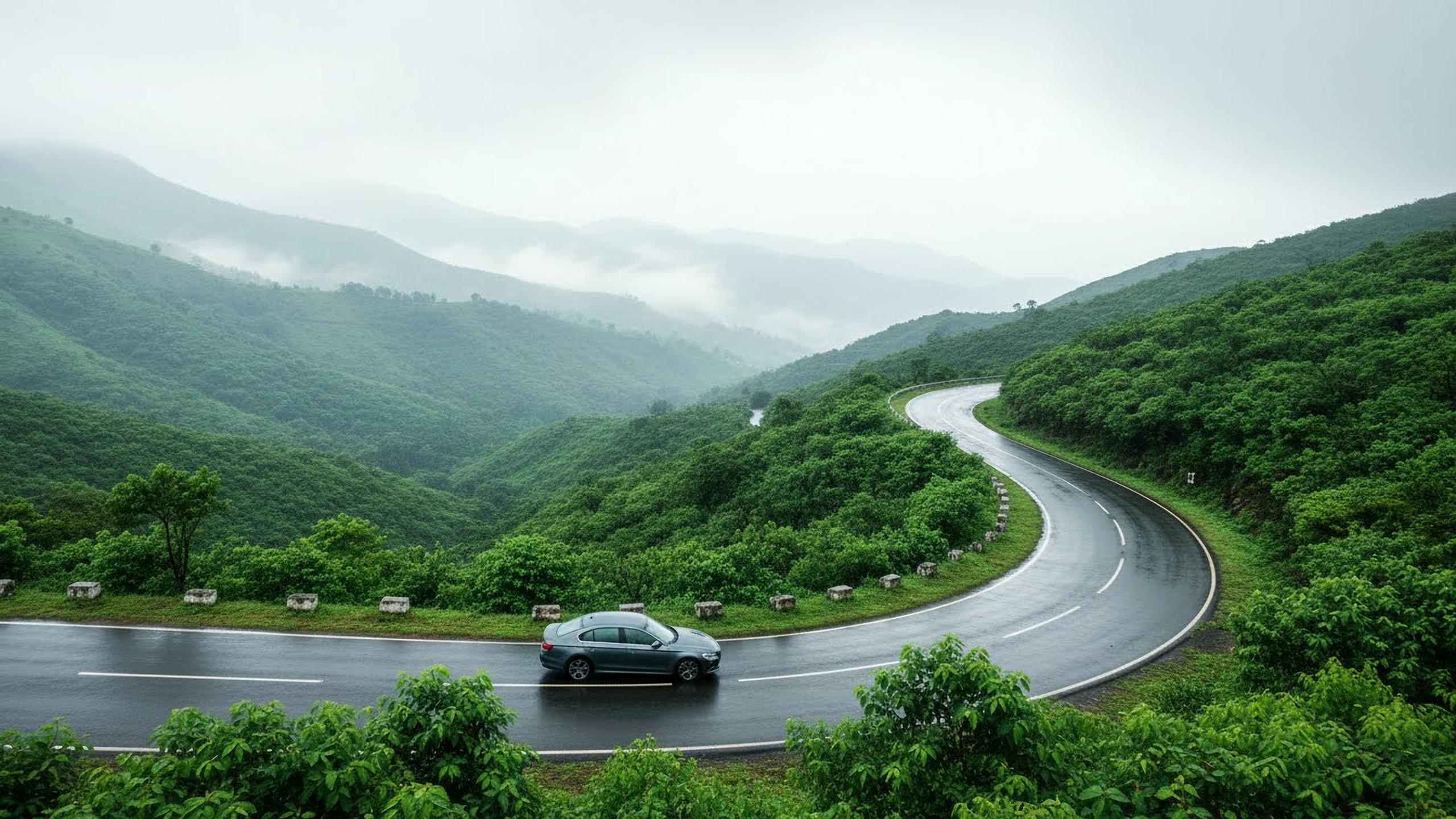
Even with a green alert, monsoon driving demands caution. Reduce your speed and increase the distance between your car and the vehicle in front of you to allow for longer braking distances on wet roads. Use low-beam headlights to improve visibility for yourself and other drivers. Never use cruise control on wet surfaces. One of the biggest dangers is waterlogged roads. If you can't gauge the depth of the water, don't risk driving through it. It’s always better to find an alternative route or wait for the water to recede. When driving in hilly areas, be extra vigilant for signs of landslides, like falling rocks or muddy water flowing across the road. Always have an emergency kit with a first-aid box, flashlight, and jumper cables in your car.