


The Green Banana: A Gut-Friendly Choice
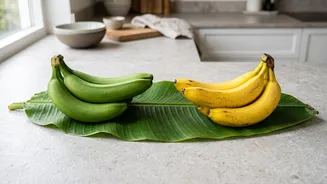
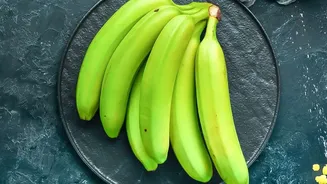
A green, unripe banana is firm, waxy, and less sweet, with a taste some find slightly bitter. Its primary claim to fame is its high concentration of resistant starch. Unlike other carbohydrates, resistant starch functions much like dietary fibre, passing
through the small intestine without being digested. Instead, it travels to the large intestine, where it becomes food for your friendly gut bacteria. This prebiotic effect helps foster a healthy gut microbiome, which is linked to better digestion, improved insulin sensitivity, and even a stronger immune system. Because the starch is 'resistant' to digestion, it doesn't cause a rapid spike in blood sugar, giving green bananas a low glycemic index (GI) of around 30 to 42. This makes them an excellent option for individuals managing blood sugar levels. The only downside is that for some, the high starch content can cause gas or bloating as their gut adapts.
The Yellow Banana: Quick Energy and Peak Flavour
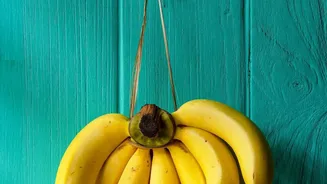
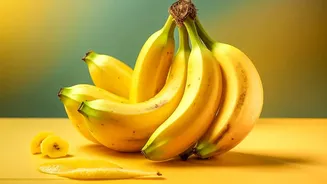
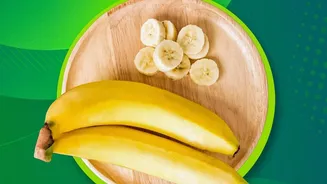
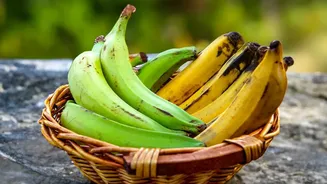
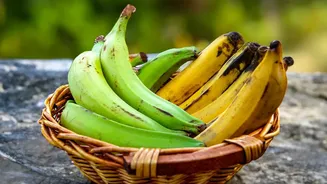
The perfectly yellow banana is the version most of us know and love. At this stage, the ripening process has converted much of the resistant starch into simple sugars like sucrose, fructose, and glucose. This makes the banana softer, sweeter, and easier to peel and digest. With a higher sugar content, a ripe yellow banana provides a quick source of easily accessible energy, making it an ideal pre-workout snack or a way to refuel after exercise. The glycemic index is higher than a green banana's, typically falling in the moderate range of around 51. While the fibre content from resistant starch is lower, the banana remains a great source of key nutrients like potassium, vitamin B6, and vitamin C. This stage represents a balance between the starchy benefits of a green banana and the sweetness of an overripe one.
The Spotted Banana: Maximum Sweetness and Antioxidants
As a banana continues to ripen and develop brown spots, nearly all its starch has converted into sugar, making it intensely sweet. A fully ripe, spotted banana can have a sugar content of over 16% of its fresh weight and a glycemic index that can climb above 60. While this means it will raise blood sugar more quickly, this stage has its own unique benefits. The browning spots are an indicator that the banana's antioxidant levels have increased. These antioxidants help protect the body from cellular damage caused by free radicals. Some research even points to the dark spots creating a substance called Tumor Necrosis Factor (TNF), which may help combat abnormal cells. Thanks to their soft, mushy texture and concentrated sweetness, spotted bananas are perfect for baking things like banana bread, blending into smoothies, or creating one-ingredient 'nice cream'.
From Complex Starch to Simple Sugar
The magical transformation a banana undergoes is all thanks to enzymes. As the fruit ripens, enzymes like amylase get to work, breaking down long, complex chains of resistant starch into simpler sugars. An unripe banana can be composed of 70-80% starch, but by the time it's fully ripe, that number can drop to less than 1%. This enzymatic process is what changes the banana's texture from firm to soft and its taste from starchy to sweet. The type of sugar also shifts. In the middle stages of ripening, sucrose is prominent, but in very ripe, spotted bananas, an enzyme called invertase cleaves the sucrose into fructose and glucose, which contributes to the intensely sweet flavour. This fundamental change in carbohydrate structure is why bananas at different stages have such different effects on digestion and blood sugar.
So, Which Banana Is Best for You?
Ultimately, the 'best' banana depends entirely on your personal health goals and taste preferences. There’s no right or wrong answer, just a different tool for a different job. If you are focused on managing blood sugar levels, improving gut health, or want to feel full for longer, a green or slightly underripe banana is your ideal choice. If you need a quick burst of energy before hitting the gym or a conveniently sweet and digestible snack, a classic yellow banana is perfect. And if you’re looking for maximum sweetness for baking, a boost in antioxidants, or something that’s extra gentle on your digestive system, don't shy away from a well-spotted, overripe banana. By understanding these nutritional differences, you can use the entire lifecycle of a banana to your advantage.