


1. Gaganyaan’s First Uncrewed Flight
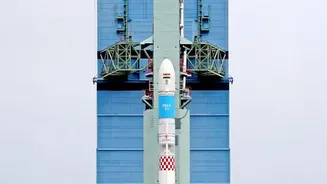
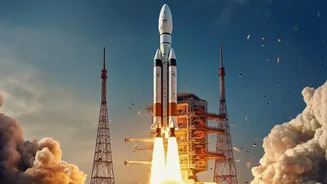
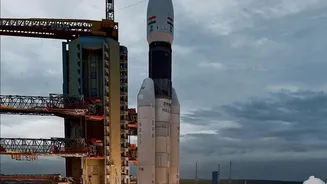
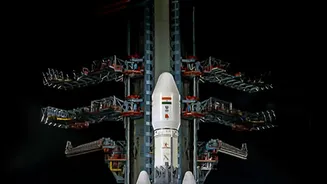
The Gaganyaan programme, India's prestigious human spaceflight mission, is the top priority. Before astronauts make the journey, a series of validation flights are crucial. The first uncrewed orbital test flight, known as G1, is a major highlight of the upcoming
launch manifest. This mission will use the human-rated LVM3 rocket to launch an uncrewed crew module into orbit and test every phase of the flight, from ascent to re-entry and recovery, ensuring all systems are space-ready. This is a critical step towards India becoming the fourth nation to send its own astronauts into space.
2. The Second Uncrewed Gaganyaan Test
Following the first test, ISRO plans a second uncrewed Gaganyaan mission (G2) in late 2026. This flight will further validate the reliability of the launch vehicle and the orbital module. A third flight (G3) will follow, carrying the humanoid robot 'Vyommitra' to monitor life support systems and cabin conditions before the first crewed flight, H1, which is targeted for 2027. These successive tests demonstrate ISRO's methodical and safety-first approach to human spaceflight.
3. NISAR: An Eye on Planet Earth
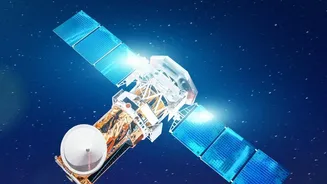
One of the most significant upcoming missions is the NASA-ISRO Synthetic Aperture Radar (NISAR) satellite. This advanced Earth observation satellite is a landmark collaboration between the two space agencies. Launched in July 2025, NISAR entered its science operations phase in early 2026. Using dual-frequency radar, it will map the entire globe every 12 days, providing unprecedented data on climate change, deforestation, melting glaciers, and natural hazards like earthquakes and volcanoes. It is considered one of the most expensive Earth-imaging satellites ever built.
4. Chandrayaan-4: Bringing Back a Piece of the Moon
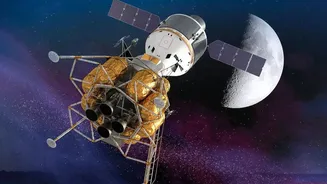
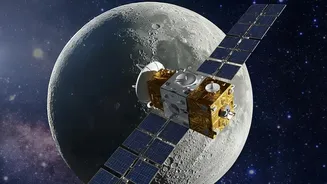
Building on the resounding success of Chandrayaan-3, ISRO is planning the highly ambitious Chandrayaan-4 mission. Aiming for a 2027-2028 timeframe, this mission's goal is to land on the Moon, collect surface samples of soil and rock, and return them to Earth. This complex sample-return mission will be a major technological leap, requiring multiple launches and intricate manoeuvres. It is a foundational step for future crewed lunar landings and in-situ resource utilisation.
5. Shukrayaan-1: A Journey to Venus
ISRO is also setting its sights on Earth's other neighbour, Venus. The Shukrayaan-1 orbiter mission has received government approval for a launch in 2028. This will be India’s first mission to Venus and only its second interplanetary venture after Mangalyaan. The spacecraft will carry multiple instruments to study the dense, hot, and mysterious atmosphere of Venus, as well as its volcanic surface. This mission will add India to the very exclusive club of nations that have explored the second planet from the Sun.
6. Mangalyaan-2: India’s First Mars Landing
After the historic Mars Orbiter Mission (MOM), ISRO is planning a far more ambitious sequel: Mangalyaan-2. This mission, planned for launch around 2030, will mark India's first attempt to land on the Red Planet. Unlike its predecessor, which was an orbiter, Mangalyaan-2 is expected to include a lander and potentially a rover to conduct on-surface experiments. Successfully landing on Mars is an incredibly difficult feat, and this mission signifies a major escalation of India's deep-space exploration capabilities.
7. A Slate of Satellite Deployments
Beyond these flagship missions, the busy schedule includes several satellite launches for national needs and commercial clients. The ISRO Chairman confirmed that two satellites are already built with several more in the final stages of integration, targeting at least seven launches within the current financial year. These will likely include communication satellites like GSAT-32, Earth observation satellites such as EOS-05, and navigation satellites to bolster India's own GPS-like system, NavIC. This high launch frequency is supported by the commissioning of a second launch complex at Kulasekarapattinam.