







The Problem With ‘Always On’ Spaces
For millions of Indian professionals, the shift to hybrid work wasn't just a change in location, but a fundamental redesign of their homes. Suddenly, bedrooms, living rooms, and even kitchens had to accommodate laptops, monitors, and the endless clutter
of a workday. This blending of personal and professional space has come at a cost. When your dining table is also your desk, it becomes difficult to mentally 'clock out'. The visual cue of a workspace serves as a constant reminder of pending tasks and unopened emails, contributing to burnout and a feeling that one is living at the office, not working from home. This spatial dilemma is particularly acute in urban Indian homes, where square footage is often at a premium. The need for a dedicated, functional workspace that doesn't permanently colonise a living area has become a top priority for the modern professional.
Enter the Modular Workstation
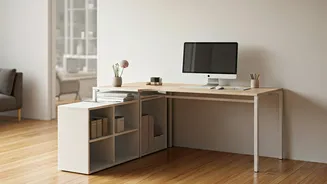
This is where modular workstations come in. Forget the clunky, immovable desks of traditional offices. A modular workstation is a system of adaptable, often reconfigurable, furniture components designed for flexibility. Think of it less as a single piece of furniture and more as a 'work-in-a-box' solution. These setups can range from sleek, wall-mounted desks that fold away to nothing, to multi-part systems with detachable shelves, mobile pedestals, and integrated cable management that can be assembled and disassembled as needed. The 'modular' aspect is key: it allows the user to customise their setup to their specific needs and, crucially, to the specific constraints of their space. It’s a design philosophy that prioritises user control and adaptability over the one-size-fits-all approach of the past. The demand is not just for a desk, but for a system that respects the dual nature of a hybrid home.
Why the Demand Is Surging Now
The surge in demand is a direct response to the permanence of hybrid work. What was once a temporary adjustment is now a long-term reality for many companies and employees. People are investing in upgrading their makeshift setups into something more sustainable and ergonomic. Furniture retailers and manufacturers have reported a significant uptick in sales for products categorised as 'home office' or 'flexible furniture'. The appeal is twofold. First, the obvious physical benefit: reclaiming valuable floor space. A desk that can be folded and tucked away after 6 PM returns a living room to its primary function. Second, there's a powerful psychological benefit. The physical act of packing away your workspace creates a clear boundary between work time and personal time. It’s a ritual that helps the brain transition, reducing stress and improving work-life balance. For employers, encouraging such setups can also be a strategic move, boosting employee well-being and productivity in a remote environment.
Key Features Driving the Trend
When consumers look for modular solutions, they are prioritising a few key features. Verticality is one of the most important; designs that use wall space for storage with shelving and magnetic boards are incredibly popular because they keep the floor footprint minimal. Integrated functionality is another major driver. Workstations with built-in power outlets, USB ports, and clever cable management systems are in high demand as they solve the perennial problem of wire clutter. Finally, aesthetics matter. Consumers want solutions that blend seamlessly with their home decor. They are moving away from corporate-looking grey and black furniture in favour of natural wood finishes, minimalist metal frames, and designs that don’t scream “this is where I answer emails.” The ideal modular workstation is effective when in use and invisible when it’s not.