




First, What Is a Rain Shadow?
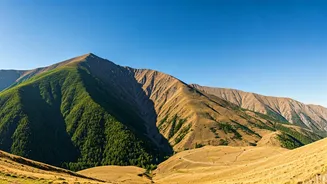
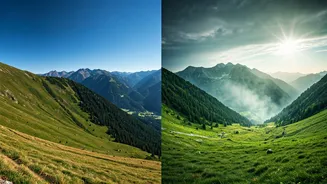
Before we dive into the destinations, let’s quickly understand what a rain-shadow region is. When moisture-laden winds, like the monsoon clouds, encounter a tall mountain range, they are forced to rise. As the air ascends, it cools and releases its moisture as rain on the side
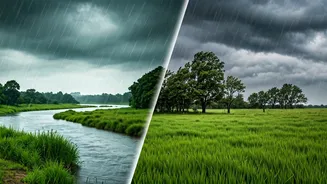
facing the wind (the windward side). By the time the air passes over the mountains to the other side (the leeward side), it has lost most of its moisture. This leeward side becomes a 'rain shadow' zone, an area that receives significantly less rainfall, making it relatively dry even when the surrounding regions are drenched.
Ladakh: The High-Altitude Desert
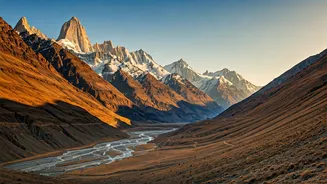
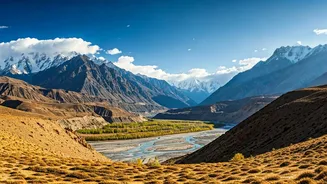
Ladakh is the most famous rain-shadow destination in India. Tucked away behind the mighty Himalayan ranges, it is shielded from the Indian monsoon clouds, resulting in a stark, arid landscape that earns it the nickname 'the cold desert'. While the rest of India experiences heavy rains from June to September, Ladakh enjoys clear blue skies and pleasant sunny days, making it the perfect time for travel. This window is ideal for exploring ancient monasteries perched on dramatic cliffs, driving through breathtaking mountain passes, and witnessing the surreal beauty of high-altitude lakes like Pangong Tso. The annual rainfall here is less than 10 cm, so your travel plans are unlikely to be washed out.
Lahaul and Spiti: Himachal's Hidden Gem
Much like Ladakh, the valleys of Lahaul and Spiti in Himachal Pradesh are located in the trans-Himalayan rain-shadow zone. While the entry routes via Manali or Shimla might experience some monsoon showers and landslides, the valleys themselves remain remarkably dry. This creates a unique travel opportunity to see a landscape of barren mountains, deep gorges, and pristine rivers. The monsoon months are perfect for road trips, trekking, and visiting ancient Buddhist monasteries like Key Monastery. The weather is generally cool and comfortable, providing a welcome escape from the heat and humidity of the plains. Just be sure to plan for potential delays on the approach roads.
The Eastern Deccan Plateau
While the Western Ghats receive some of the heaviest rainfall in the country, the region to their east tells a different story. The interior of the Deccan Plateau, covering parts of Maharashtra, Karnataka, and Telangana, lies in the rain shadow of the Western Ghats. As the southwest monsoon winds dump their rain on the coastal side, the air that crosses over to the plateau is much drier. This results in a semi-arid climate with significantly less rainfall. For travellers, this means you can explore historical sites like Hampi in Karnataka or the forts around Pune and Aurangabad in Maharashtra without the constant interruption of downpours. The weather is often overcast but with less rain, making sightseeing more pleasant.
Coimbatore and Surrounds, Tamil Nadu
Coimbatore, in Tamil Nadu, benefits from a unique geographical position. It lies to the east of the Palghat Gap, a significant break in the Western Ghats. While the southwest monsoon winds bring heavy rain to neighbouring Kerala, they lose much of their intensity after crossing the ghats. This means Coimbatore receives only moderate rainfall during the June-to-September monsoon period, with pleasant, breezy weather. This makes it an excellent base for exploring the region's temples and the nearby hill stations, which are lush and green but not perpetually waterlogged. The main rainy season for Coimbatore is actually the retreating northeast monsoon later in the year.