

The Two-Hour Danger Zone
The most critical concept in food safety is the "temperature danger zone." According to the USDA, this is the range between 40°F (4°C) and 140°F (60°C). In this zone, harmful bacteria like Salmonella and E. coli can double in number in as little as 20
minutes. The goal is to move your leftovers through this zone as quickly as possible. Food should not be left at room temperature for more than two hours. If the ambient temperature is high, like above 90°F (32°C), that window shrinks to just one hour. This is why simply leaving a hot pot on the counter to cool for hours is one of the riskiest things you can do in the kitchen.
Why Large, Deep Pots Are a Problem
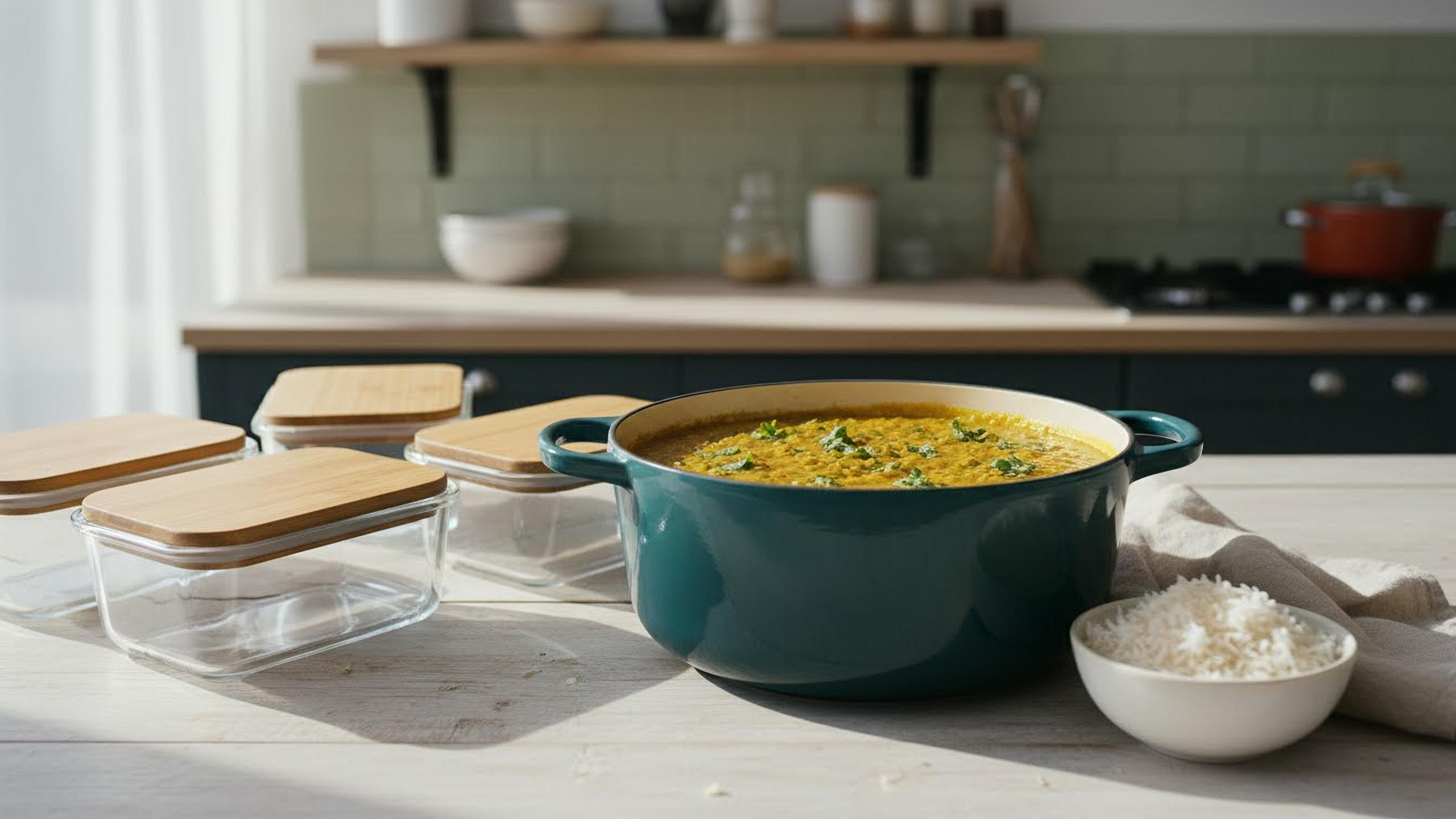
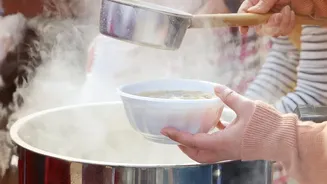
A large, deep stockpot is excellent for cooking, but it's terrible for cooling. The food in the center of the pot is insulated by the surrounding food, holding onto its heat for a dangerously long time. Even if you place the entire hot pot in the refrigerator, it won’t cool down fast enough. The contents can remain in the temperature danger zone for many hours, creating a perfect incubator for bacteria. Furthermore, placing a very hot, large container in the fridge can raise the internal temperature of the appliance, which puts all your other refrigerated foods at risk.
The Shallow Portion Solution
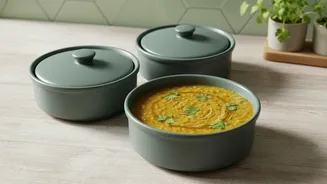
The single most effective way to cool food rapidly is to increase its surface area. Instead of leaving your chili or stew in one giant pot, divide it into several smaller, shallow containers. For liquids like soups, aim for a depth of no more than three inches. For thicker foods like casseroles or mashed potatoes, the depth should be two inches or less. This allows heat to escape much more quickly and evenly. Using metal containers is also a smart move, as they transfer heat away from the food faster than glass or plastic.
Actively Cool Before Refrigerating
While you shouldn't leave food on the counter for hours, you also shouldn't put steaming hot food directly into the fridge without some pre-cooling. An ice bath is a highly effective method. Place your smaller, sealed containers of food into a larger pan or clean sink filled with ice and water. Stirring the food during the ice bath will accelerate the cooling process significantly. Another professional trick is to use an "ice paddle," a reusable plastic tool you fill with water and freeze. You can then stir hot liquids with it to bring the temperature down rapidly. You can even add ice directly into soups or stews as an ingredient to help cool them, provided you accounted for the extra water in your recipe.
The Final Step: Smart Refrigeration
Once your food has cooled considerably—it doesn't have to be completely cold, but it should no longer be steaming—it’s ready for the refrigerator. When you first place the containers inside, you can cover them loosely. This allows any remaining heat and steam to escape instead of being trapped. Once the food is fully chilled to 40°F (4°C), you can seal the containers tightly. It’s also wise to leave some space around the containers in the fridge to allow cold air to circulate freely. Properly cooled leftovers can be safely stored in the refrigerator for three to four days.