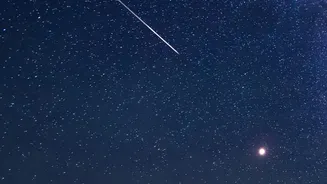






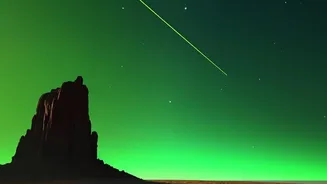
First, What Are the Perseids?
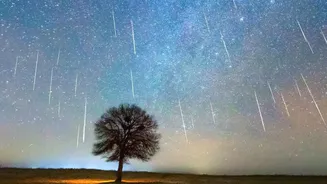
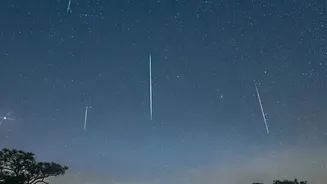
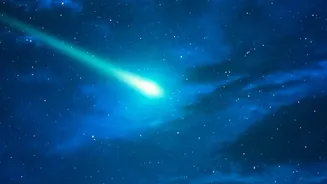
The Perseid meteor shower is one of the most reliable and beloved cosmic events of the year. These 'shooting stars' are not actually stars but tiny bits of space debris—mostly the size of a grain of sand—left behind by the Comet Swift-Tuttle. Every August,
Earth's orbit takes it through this dusty trail. As the particles hit our atmosphere at incredible speeds (around 59 kilometres per second), they burn up, creating the bright streaks of light we see in the sky. At its peak, the shower can produce 50 to 100 meteors per hour under perfect conditions.
The Golden Window for 2026
This year, the celestial timing is nearly perfect. The Perseids are active from mid-July to late August, with the peak set for the night of August 12 and into the pre-dawn hours of August 13. The absolute peak in India is expected around 8:23 PM IST on August 13, but the best viewing window will be in the dark hours after midnight, specifically between 2:00 AM and 4:30 AM on both August 12 and 13. What makes 2026 exceptional is that the peak coincides with a new moon, meaning the sky will be dark and free of moonlight, making it much easier to spot fainter meteors.
Battling the Monsoon Clouds
For most of India, August means heavy cloud cover, which is the single biggest obstacle for watching the Perseids. Major cities like Mumbai, Delhi, and Bengaluru are often entirely clouded over, making a sighting nearly impossible from urban terraces. However, not all is lost. The key is to find a location that is either high-altitude or lies in a rain-shadow region. These areas are less affected by the monsoon and offer a much higher probability of clear skies.
Where to Go for the Best View
To significantly increase your chances, you may need to travel. High-altitude cold deserts like Ladakh and Spiti Valley in Himachal Pradesh are considered the best destinations in India for watching the Perseids. These regions are sparsely populated, have minimal light pollution, and are geographically shielded from the monsoon, offering pristine dark skies. Hanle in Ladakh, home to the Indian Astronomical Observatory and a designated Dark Sky Reserve, is a prime spot. Other viable options include the arid landscapes of western Rajasthan, such as Jaisalmer, and the Rann of Kutch in Gujarat, which also tend to stay dry.
Tips for a Successful Watch
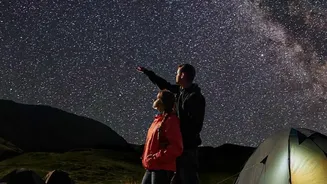
You don’t need any special equipment like telescopes or binoculars to enjoy the show; the naked eye is best as it allows you to see a wider swathe of the sky. The most important thing is to get away from city lights. Find a dark, open area and give your eyes at least 20-30 minutes to fully adjust to the darkness. Dress in warm layers, as even summer nights can get chilly, especially at higher altitudes. Lie on a blanket or reclining chair, look up towards the northeast constellation of Perseus, and be patient. While the meteors radiate from that direction, they can appear anywhere in the sky.
What If It’s Cloudy? Your Plan B
If the weather just won't cooperate, you can still join the global sky-watching party from the comfort of your home. Several organizations, including NASA and Slooh, often host live webcasts of the meteor shower, featuring feeds from telescopes in clear-sky locations around the world. While it might not be the same as seeing it in person, these live streams offer expert commentary and a guaranteed view of the celestial event, ensuring you don't miss out completely.