





Blade Runner 2049 (2017)
A masterclass in mood and atmosphere, Denis Villeneuve’s sequel to the 1982 classic is arguably one of the most beautiful science fiction films ever made. Cinematographer Roger Deakins rightfully won an Oscar for his work, which drenches every frame in evocative,
colour-coded light, from the smoggy, neon-drenched streets of future Los Angeles to the eerie, orange-hued dust of a desolate Las Vegas. But the visuals serve a deeper purpose, enhancing the melancholic journey of Officer K (Ryan Gosling), a replicant blade runner who unearths a secret that shatters his understanding of his own identity. His quest is a poignant exploration of what it means to be human, wrapped in a slow-burn noir mystery that respects its audience's intelligence.
Arrival (2016)
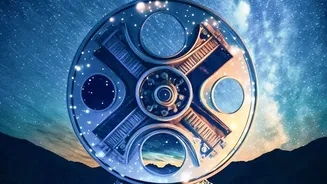
Another gem from Denis Villeneuve, Arrival is the thinking person’s alien invasion movie. The film’s primary visual marvel isn't explosions, but the elegant, ink-blot language of the heptapods. This visual concept is central to the film’s mind-bending mystery. The story is anchored by the deeply emotional performance of Amy Adams as Dr. Louise Banks, a linguist tasked with deciphering the alien language before global panic leads to war. Her intellectual journey is also a profound personal one, as she grapples with memory, grief, and the nonlinear nature of time. The film’s central twist is a stunning revelation that reframes the entire narrative, turning a sci-fi mystery into a powerful meditation on love, loss, and choice.
Interstellar (2014)
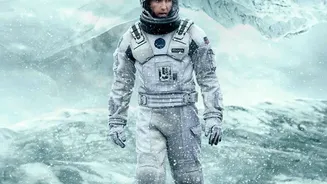
Christopher Nolan’s space epic is a spectacle of the highest order, taking audiences on a visually staggering journey through wormholes, across alien planets, and to the edge of a black hole named Gargantua. The film’s commitment to scientific accuracy, aided by physicist Kip Thorne, resulted in groundbreaking visual effects that still feel breathtakingly real. Yet, the film's core is an intimate story about a father, Cooper (Matthew McConaughey), and his daughter, Murph. His journey into space to save humanity is driven by the promise he made to her. The film's exploration of time dilation, where hours for Cooper mean decades on Earth, creates a powerful and heart-wrenching character arc, making the vastness of space feel deeply personal.
Dune (2021)
Adapting Frank Herbert’s famously dense novel was long considered an impossible task, but Denis Villeneuve succeeded by creating an immersive and awe-inspiring world. The sense of scale is immense, from the gargantuan sandworms churning through the desert sands of Arrakis to the brutalist architecture of its cities. At the center of this epic world-building is the complex journey of Paul Atreides (Timothée Chalamet). He is a young noble burdened by prophetic visions and the immense weight of his family's legacy. Paul's arc is not a simple hero's journey; it is a reluctant and often frightening transformation as he navigates political betrayal, awakens to new powers, and confronts a destiny that may be more of a curse than a blessing.
Annihilation (2018)
Alex Garland’s Annihilation is a visually hypnotic and deeply unsettling journey into the unknown. The film follows a biologist named Lena (Natalie Portman) who joins a mission into 'The Shimmer,' a mysterious and expanding zone where the laws of nature are being rewritten. Inside, the world is both beautiful and terrifying, with DNA refracting and mutating to create impossible flora and fauna, like crystalline trees and a bear that screams with a human voice. The visuals create a dreamlike, nightmarish quality that mirrors Lena’s internal state. Her character arc is a psychological puzzle box; she is a self-destructive and unreliable narrator on a quest for answers, not just about The Shimmer, but about her own marriage and identity. The film’s ambiguous, mind-bending climax is a haunting exploration of creation and destruction.