





What Exactly Is Wood-Fibre Foam?
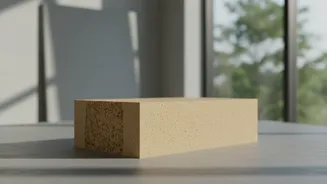
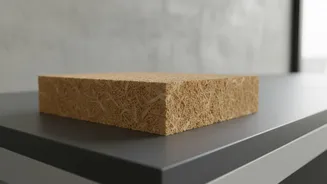
Imagine turning sawdust and wood chips, byproducts of the timber industry, into a high-performance insulating material. That's the essence of wood-fibre foam. Researchers have developed processes to grind down wood waste with water into a suspension,
foam it, and then dry it into lightweight, rigid boards or flexible batts. One of the most appealing aspects is that the wood's own natural binders, like lignin, can often be used to hold the foam together, eliminating the need for synthetic adhesives common in other insulation types. This creates a product made almost entirely from renewable resources. Recent research, including work at the University of Maine and Germany's Fraunhofer Institute, is refining these techniques, aiming to create foams that are not only sustainable but also robust and effective.
The Undeniable Green Credentials
From an environmental standpoint, wood-fibre foam has a compelling story. First, it’s a carbon sink; the wood used has absorbed carbon dioxide throughout its life, and that carbon remains stored within the insulation. This stands in stark contrast to petroleum-based foams like polyurethane or polystyrene, whose production is energy-intensive and releases significant carbon. Second, it's made from a renewable resource, often using wood waste that would otherwise have little economic value. Finally, at the end of a building's life, wood-fibre insulation is biodegradable and can be recycled or repurposed, reducing landfill waste. This positions it as a key player in the circular economy for construction.
How Does It Perform?
Sustainability is great, but insulation has a job to do. On this front, wood-fibre holds its own. Its thermal performance, or R-value, is competitive, though sometimes slightly lower than top-tier PIR foam boards. However, it excels in other crucial areas. Wood fibre has high thermal mass, meaning it's excellent at absorbing and slowly releasing heat. This helps keep homes cooler in the summer, a phenomenon known as 'decrement delay', reducing the need for air conditioning. It also offers superior acoustic insulation, effectively dampening sound. Furthermore, its vapour-permeable structure allows buildings to 'breathe,' helping manage moisture and prevent mould without the need for plastic vapour barriers. While counterintuitive for a wood product, it also performs well in fire resistance tests, often charring on the surface, which slows the spread of flames.
The Cost Conundrum
If wood-fibre insulation is so good, why isn't it everywhere? The primary hurdle is cost. Currently, it is generally more expensive than mainstream options like fibreglass or rock wool. A 2023 study noted the price of wood fibre insulation at around $27–$38 per cubic meter, which can be higher than some conventional alternatives. The manufacturing process, which involves finely grinding fibres, foaming, pressing, and drying, is more complex and energy-intensive than simply spinning glass fibres or expanding plastic beads. While proponents argue that simpler installation and long-term energy savings can offset the initial premium, the upfront ticket price remains a significant barrier for many builders and homeowners.
Research Closing the Gap
This is where the 'research' in the headline becomes critical. Scientists are actively working to make wood-fibre foam more cost-competitive. Innovations are focused on several fronts. One approach is simplifying the manufacturing process, such as using new foaming agents or drying techniques that require less energy. Another area of research involves using different types of wood waste or even incorporating other bio-based materials to lower feedstock costs. Researchers are also enhancing the foam's properties, like its resistance to moisture and mechanical strength, to ensure it meets rigorous building standards without expensive additives. Recent developments, such as a wood-based foam that nearly matches polyurethane's performance, show that these efforts are paying off. The goal is to scale up production and streamline processes until the cost difference becomes negligible.
The Road to the Mainstream
For wood-fibre foam insulation to move from a niche green product to a construction staple, a few things need to happen. Continued research and development are essential to drive down production costs. Equally important is scaling up manufacturing. The recent opening of the first wood-fibre insulation plant in the United States, in Maine, is a major step in this direction, reducing reliance on European imports and improving availability. As production increases and supply chains mature, economies of scale will naturally lower the price. Finally, as builders and architects become more familiar with the material's unique benefits—like superior summer heat protection and moisture management—demand is expected to grow, creating a virtuous cycle of adoption and affordability.