





Who Is Anil Menon?
Anil Menon, a US Space Force colonel and emergency physician with Indian and Ukrainian heritage, is not new to high-stakes environments. He served as a first responder in the Haiti and Nepal earthquakes and was SpaceX's very first flight surgeon. In this
role, he helped launch the first commercial crewed mission to space and developed the medical systems to support astronauts. Selected by NASA in 2021 from over 12,000 applicants, he completed two years of intensive training to become a fully qualified astronaut, ready for a flight assignment.
The Mission: A Milestone in Space
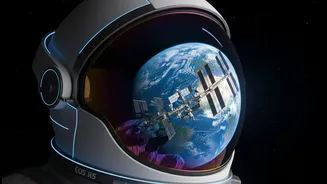
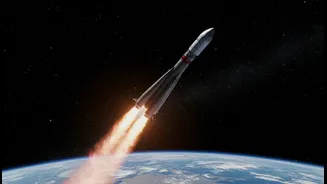
Menon is scheduled to launch to the International Space Station (ISS) on July 14 aboard a Roscosmos Soyuz MS-29 spacecraft from Kazakhstan. He will be accompanied by Russian cosmonauts Pyotr Dubrov and Anna Kikina for an eight-month stay as a flight engineer for Expeditions 74 and 75. This long-duration mission is a significant step, placing him among a distinguished list of astronauts of Indian origin like Rakesh Sharma, Kalpana Chawla, and Sunita Williams who have ventured into space. His journey from a physician in Minneapolis to an astronaut orbiting Earth is a powerful story of multifaceted expertise.
Your Practical Follow-Along Checklist
A mission this complex can feel distant. However, knowing what to look for can transform it into a deeply engaging experience. This checklist helps you track the key moments and understand the broader context of Menon's historic flight.
1. Know the Science
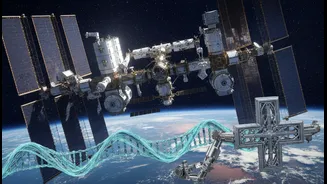
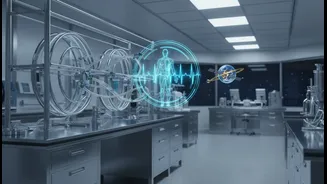
Menon’s work on the ISS is packed with crucial experiments. He will study how microgravity affects the human body, particularly blood flow and composition, to protect future deep-space explorers. He will also test technologies for producing IV fluids from the station’s water and help refine the in-space manufacturing of semiconductor crystals for next-generation computers. Another key experiment involves using augmented reality and AI to perform ultrasounds, a step toward medical autonomy on missions to the Moon and Mars. Understanding these goals provides insight into the tangible benefits of his work.
2. Follow the Key Events
The mission has several key phases. The first is the launch on July 14 from the Baikonur Cosmodrome. NASA provides live coverage of the launch, docking, and hatch opening. Once aboard, his eight-month stay will be filled with scientific work, station maintenance, and potentially spacewalks. Following official NASA channels and news updates will keep you informed of major milestones, including the crew's return to Earth, scheduled for the spring of 2027.
3. Understand the Bigger Picture
Menon's mission is part of a larger story. It underscores the continued importance of international cooperation in space, as an American astronaut launches on a Russian spacecraft. It also highlights the growing role of commercial companies like SpaceX, where Menon previously worked, in the space ecosystem. For India, it is a moment of inspiration, especially as the nation advances its own human spaceflight program, Gaganyaan. Menon's journey reinforces the global nature of scientific exploration and the diverse backgrounds of those who lead it.
4. Connect with the Indian Astronaut Legacy
Anil Menon joins a small, revered group of space explorers with Indian roots. Rakesh Sharma was the first Indian citizen in space in 1984. Kalpana Chawla became the first woman of Indian origin in space but was tragically lost in the 2003 Columbia disaster. Sunita Williams holds records for spacewalks by a woman, and Raja Chari is another active Indian-American NASA astronaut. Placing Menon's flight in this lineage helps appreciate the cumulative journey and the legacy he now helps to build.