



More Than Just Stardust
For decades, astronomers knew space contained simple molecules like water and carbon monoxide. But the idea that larger, more intricate structures could form and survive in the harsh, irradiated vacuum between stars seemed unlikely. Now, that picture
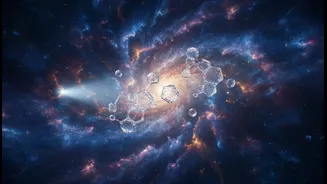
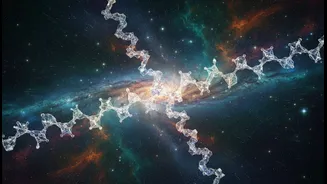
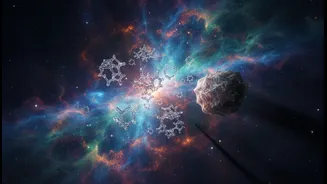
is changing dramatically. Scientists are finding that the cold, dark clouds where stars are born and the swirling disks where planets take shape are littered with complex organic molecules (COMs). These are not just simple compounds; we're talking about substances like alcohols, sugars, and the precursors to amino acids. A recent study even identified erythrulose, a four-carbon sugar found in raspberries, in a giant molecular cloud near the center of our galaxy. This suggests the universe is seeded with the ingredients necessary for life long before planets even form.
New Eyes on the Universe
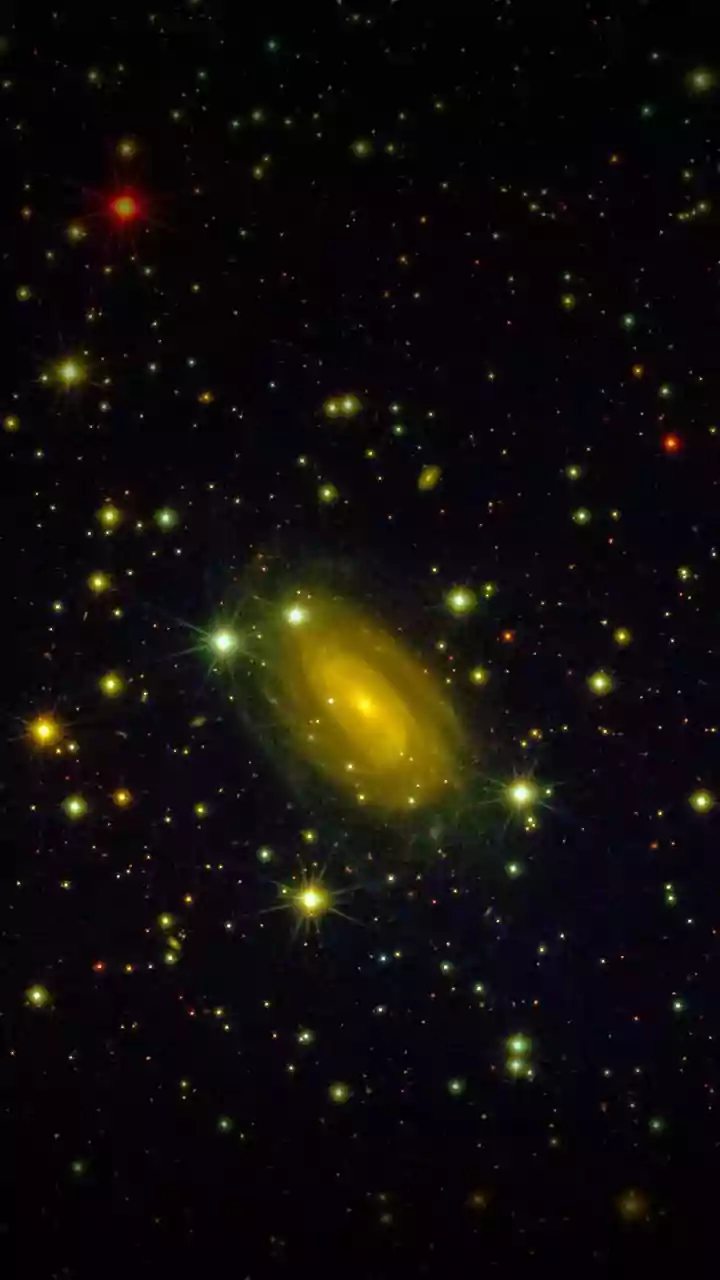
This boom in discovery is largely thanks to new, powerful observatories, chief among them the James Webb Space Telescope (JWST). Its incredible sensitivity to infrared light allows it to peer through thick clouds of cosmic dust that were previously impenetrable. Where older telescopes saw only darkness, JWST sees a rich tapestry of chemical signatures. By analyzing the light that passes through these clouds, astronomers can identify the specific molecules within them, much like a cosmic fingerprint. These capabilities have led to a cascade of findings, from identifying ethanol and acetic acid (the stuff of vinegar) in the ices around infant stars to detecting benzene and other ring-shaped molecules in distant galaxies.
The Cosmic Fingerprints of Life
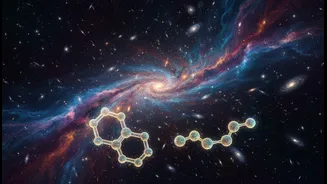
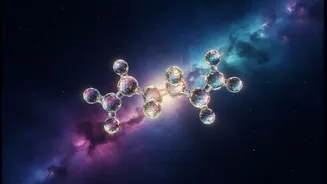
The molecules being found are not life itself, but they are its fundamental building blocks. Many are classified as Polycyclic Aromatic Hydrocarbons (PAHs), complex carbon-based molecules that are considered crucial for the origin of life. Others are even more tantalizing. Dimethyl ether, a precursor to larger organic molecules that can lead to life, has been spotted in the planet-forming disk around a young star. In January 2026, scientists announced the detection of the largest sulfur-bearing molecule ever seen in space, a 13-atom ring structurally similar to compounds found in meteorites. These findings bridge a long-standing gap between the simple chemistry seen in interstellar clouds and the complex inventory of organic material found in asteroids and comets within our own solar system.
A Delivery Service for Life's Ingredients
The prevalence of these molecules in protoplanetary disks—the spinning platters of gas and dust from which planets are born—has profound implications. It suggests that the raw materials for life are not rare, but are instead inherited by newly forming planetary systems. The going theory is that comets and asteroids, which are leftovers from this formation process, act as a cosmic delivery service. Billions of years ago, they may have crashed into a young Earth, depositing these complex organic molecules and the water needed to kick-start the chemical reactions that ultimately led to biology. The discovery of amino acids and even the precursors to DNA in asteroid samples, like those from Bennu, lends strong support to this idea.
What Does It All Mean?
Each new discovery adds a piece to the puzzle of our own origins. The detection of these molecules, from simple sugars to complex PAHs, suggests that the conditions that give rise to biological processes may be widespread throughout the universe. While scientists are careful to distinguish between these prebiotic chemicals and actual evidence of life, the implications are hard to ignore. If the building blocks are everywhere, it dramatically increases the odds that life itself might be common. The search isn't just about finding aliens; it's about understanding the fundamental chemical journey from stardust to living cells. The story of how life began on Earth may have its first chapters written in the cold, dark clouds between the stars.