






The votes are in, and the 2026 US midterm elections have delivered a new balance of power in Washington. Now, attention pivots from the campaign trail to the Capitol, where a divided government is set to clash over high-stakes fiscal policy.
A Decisive Shift in Washington
The Democratic
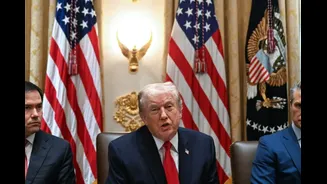
Party achieved a decisive victory in the November 2026 midterm elections, winning control of both the House of Representatives and the Senate. This outcome represents a significant power shift, ending the Republican party's legislative majority and ushering in a period of divided government for the final two years of President Donald Trump's term. The Democratic gains, which exceeded many pre-election predictions, extended even into traditionally Republican states, signaling widespread voter frustration over economic issues and a desire for a check on presidential power.
The Fiscal Flashpoints Ahead
With a Democratic Congress and a Republican in the White House, the stage is set for intense political gridlock. This standoff will be most pronounced during upcoming fiscal negotiations. Key battles are expected over government funding, with a shutdown risk looming as the current funding expires on December 11, and a contentious fight over raising the nation's debt ceiling, which is projected to be reached around mid-2027. While a divided government often limits sweeping policy changes, these must-pass bills create high-stakes deadlines that could lead to significant market volatility and brinkmanship between the two parties. Analysts expect the President to rely more heavily on executive orders to bypass a constrained Congress.
How Global Markets Are Reacting
Global financial markets reacted immediately to the election results with a mix of caution and, in some cases, relief. Initially, US stock futures and Asian equities dipped as the results rolled in. However, US markets rallied on Wednesday, November 4, with the Dow Jones Industrial Average posting its best day since April 2025. This positive reaction is partly because markets often favor gridlock, which reduces the uncertainty of major, unexpected policy shifts that could disrupt business. The US dollar weakened against major currencies, while US Treasury bonds saw increased demand, pushing yields lower as investors anticipated less fiscal stimulus. Oil prices also fell sharply amid speculation that a Democratic-controlled Congress would apply more scrutiny to foreign policy matters.
The Ripple Effect on Key Industries
The new political landscape is expected to have varied effects across different sectors. The technology industry, particularly companies involved in artificial intelligence, saw stock prices fall on fears of increased regulatory scrutiny from Democrats. New Democratic leadership at the state and federal level may impose stricter rules on data center development. Conversely, the prospect of gridlock is often seen as a positive for the broader market, as it creates a more predictable environment. Historically, the 12nd month period following a midterm election has been strong for US equities.
Bracing for an Unpredictable Two Years
While the removal of election uncertainty has provided some initial market clarity, the road ahead is filled with potential conflict. The upcoming 'lamenduck' session of the old Congress must address government funding before the December 11 deadline. After the new Congress is seated in January 2027, all eyes will turn to the debt ceiling. A prolonged fight over raising the borrowing limit could threaten US creditworthiness and trigger significant economic disruption. Investors and businesses globally are now watching to see whether Washington can find a path to compromise or if it is headed for a period of extended fiscal standoffs and heightened political confrontation.