

Seeing the Invisible
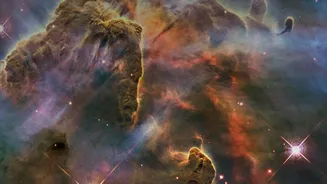
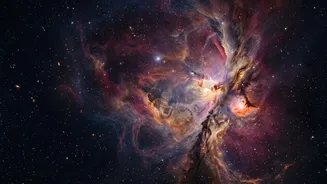
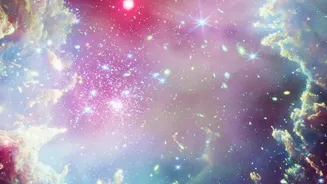
Stellar nurseries are regions where stars are born, but they are notoriously difficult to observe. These areas are shrouded in thick molecular clouds of gas and dust, which act like a dense fog, blocking visible light from passing through. For telescopes
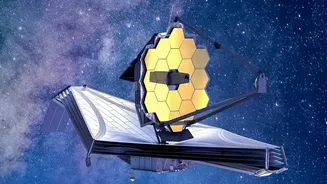
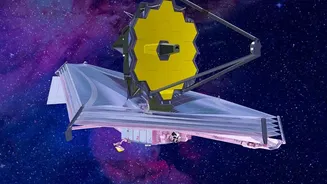
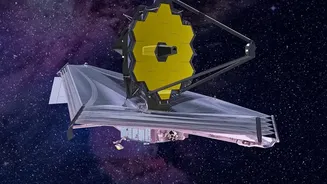
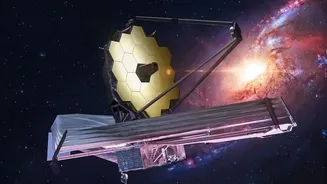
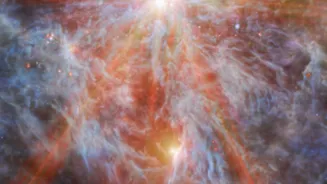
like Hubble, which primarily see in visible and ultraviolet light, these nurseries are largely opaque, hiding the action within. This is where the James Webb Space Telescope (JWST) changes the game. Built to detect infrared light, JWST can pierce through these dusty veils. Infrared radiation has longer wavelengths that aren't easily scattered or absorbed by the dust particles, allowing the telescope to see the previously hidden processes of star formation in spectacular detail.
A New Look at Familiar Places
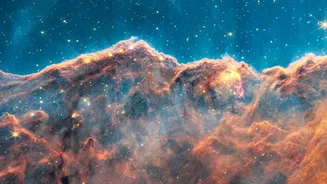
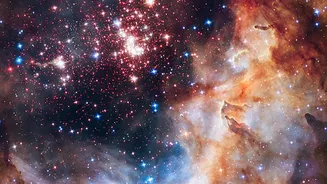
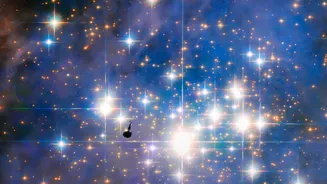
Even well-studied regions of space are being seen in a completely new light. The Carina Nebula, home to the famous 'Cosmic Cliffs', has been a favourite target. Recent JWST images captured in August 2026 showcase a feature dubbed the 'Treasure Chest', a cluster of about 70 young stars that are now estimated to be around 1.3 million years old, significantly older than previous estimates. This highlights how JWST's precision is forcing scientists to rethink their understanding of cosmic timelines. In another star-forming region, W51, astronomers recently used the telescope to uncover young, massive stars that were completely hidden before. These observations revealed giant gas bubbles, dark dust filaments, and shockwaves from protostellar jets, painting a dynamic and chaotic picture of starbirth.
The Mechanics of Starbirth
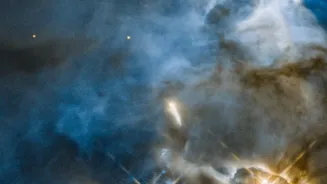
JWST isn't just taking beautiful pictures; it's providing crucial data that helps explain how stars are made. The telescope allows scientists to observe every stage of the process, from the initial collapse of gas and dust clouds to the formation of protostars and the protoplanetary disks that surround them. These disks are where planets eventually form. By studying jets of material ejected by young stars, as seen in Herbig-Haro 46/47, astronomers can learn how a star gathers mass while also clearing out its immediate surroundings. This stellar feedback is a critical part of the formation process, shaping the environment and influencing whether more stars or planets can form nearby.
Finding the Building Blocks of Life
One of the most profound secrets being uncovered in these nurseries is the presence of complex molecules. JWST's instruments can analyze the chemical composition of the dust and gas clouds. In regions like the Chamaeleon I molecular cloud, astronomers have detected various ices, including water ice. They have also found complex organic molecules, which are the fundamental building blocks of life as we know it. The telescope has provided clear evidence of how water transitions from ice to vapour as it gets closer to a young star, creating a rich environment where Earth-like planets could potentially form. This connects the vast, distant process of star formation directly to the question of our own origins.
Rewriting the Cosmic Textbooks
With each new observation, JWST challenges existing models of astrophysics. Discoveries of massive, well-formed galaxies in the early universe have already been puzzling scientists. Similarly, detailed views of nearby stellar nurseries are refining our understanding of how quickly stars form and how they interact with their environment. By comparing JWST's infrared views with data from other telescopes like the Atacama Large Millimeter/submillimeter Array (ALMA), scientists get a more complete picture, though they've also been surprised to find that some objects visible to one are invisible to the other. These findings suggest that star formation is even more complex and varied than previously thought, offering a new window into the processes that have shaped our galaxy and the universe at large.