




What Is the Cold Atom Lab?
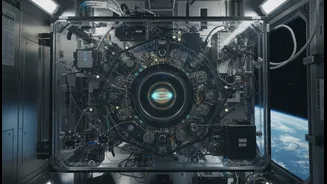
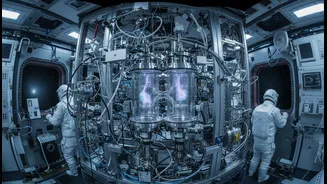
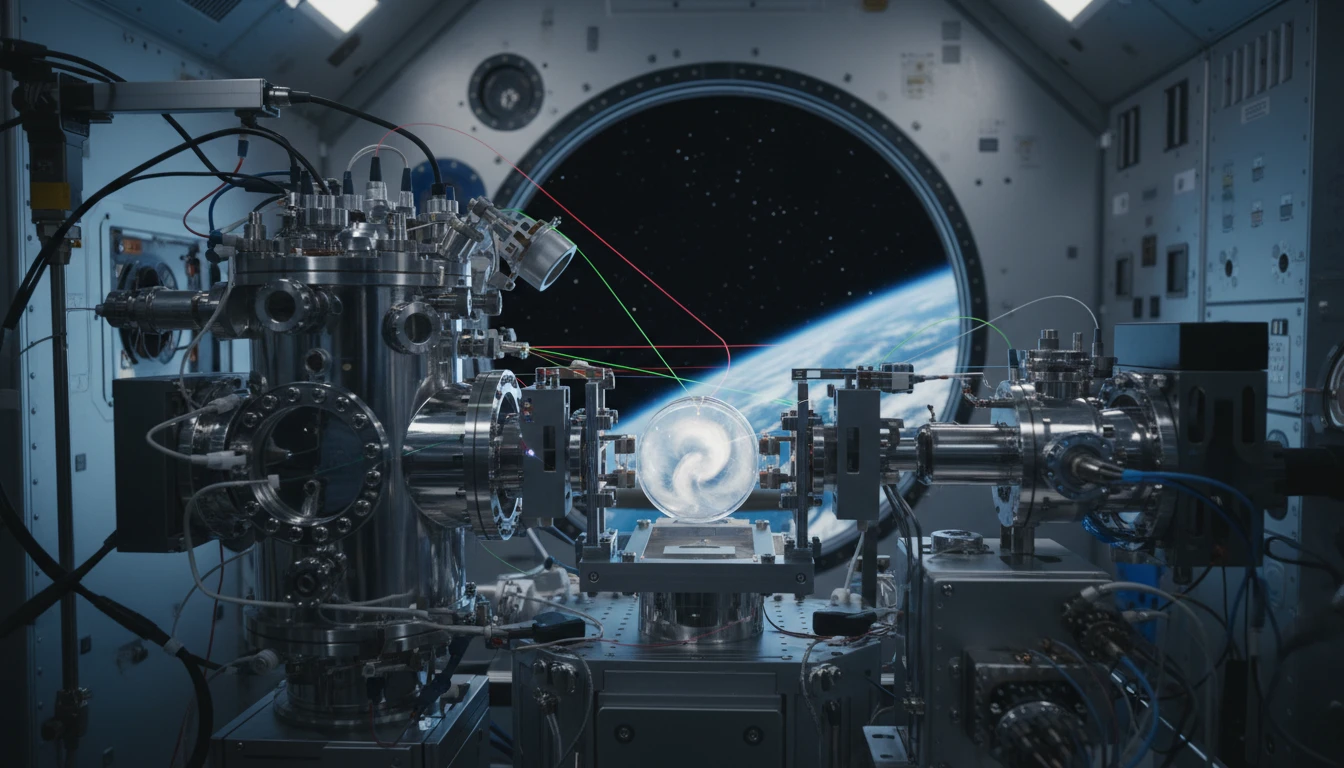
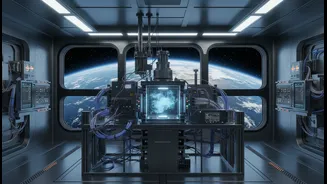
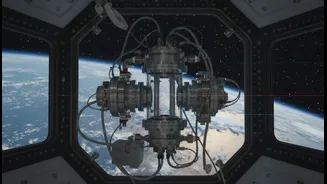
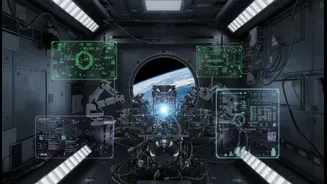
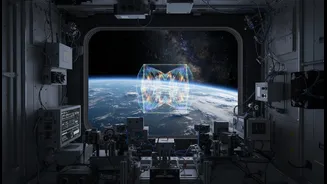
The Cold Atom Laboratory (CAL) is a sophisticated physics research facility on the International Space Station (ISS), remotely operated by scientists at NASA's Jet Propulsion Laboratory. Launched in 2018, its purpose is to study the bizarre and fascinating
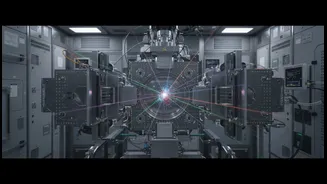
world of quantum mechanics by cooling atoms to temperatures just a fraction of a degree above absolute zero, or -273.15°C. At these extreme temperatures, atoms slow to a crawl, allowing their quantum properties—which are normally hidden—to be observed on a macroscopic scale. The lab essentially shrinks an entire room full of lasers, vacuum chambers, and electronics, typical of a ground-based lab, into a compact box. This allows for unprecedented quantum experiments in an environment impossible to replicate on Earth.
The Zero-Gravity Advantage
So why send a refrigerator-sized freezer to space? The key is microgravity. On Earth, gravity is a constant interference in quantum experiments. When scientists create ultracold atom clouds, gravity pulls them down, and they quickly fall and dissipate. An experiment might only last for milliseconds. In the continuous freefall of orbit, gravity's effects are almost negligible. This allows scientists to observe these fragile quantum states for much longer—sometimes for over a second, compared to fractions of a second on Earth. This extended observation time is crucial for making precise measurements and studying how these quantum systems evolve, opening up new avenues for fundamental physics research.
The 'Major Boost' Explained
In June 2026, astronauts activated the fourth major upgrade to the Cold Atom Lab since its 2018 installation. The new hardware, delivered to the station earlier in the year, represents a significant leap in capability. Among the key enhancements is a redesigned magnetic trap. This gives scientists far greater flexibility to alter the shape of the quantum gas clouds they create, allowing them to probe new properties of the atoms. The upgrade also includes improved atom sources and more powerful electronics. This allows researchers to create larger, denser clouds of ultracold atoms and manipulate them with higher precision, essentially giving them more control over the boundary of the quantum world.
Creating the Fifth State of Matter
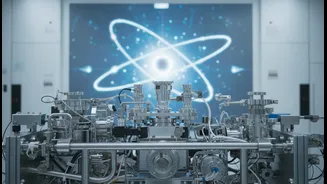
One of the primary goals of the Cold Atom Lab is to create and study Bose-Einstein Condensates (BECs). Often called the 'fifth state of matter' after solids, liquids, gases, and plasmas, a BEC forms when a cloud of atoms is cooled to near absolute zero. At this point, the individual atoms lose their distinct identities and begin to behave as one single, massive quantum wave. The CAL was the first facility to produce BECs in Earth orbit. With the new upgrades, scientists can create BECs using atoms like rubidium and potassium and study their interactions in new ways, pushing the boundaries of what we know about this exotic form of matter.
Why It Matters for Us on Earth
While studying ultracold atoms in space might seem abstract, the implications are profound. This fundamental research is part of what scientists call "Quantum 2.0," the direct manipulation of quantum states to create new technologies. The first quantum revolution gave us lasers, transistors, and MRI machines. This new era could lead to ultra-precise quantum sensors capable of monitoring climate change, detecting gravitational waves, or even searching for dark matter. It could also lead to dramatically improved navigation systems that don't rely on GPS and new ways to test Einstein's fundamental theories about gravity. Each experiment on the CAL is a step towards harnessing the quantum world for technologies of the future.