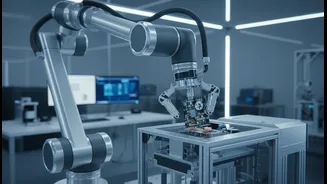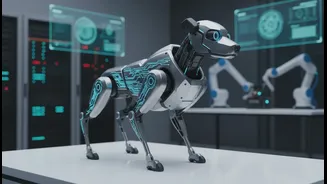







First, What is Physical AI?
Before we dive into verification, let's clarify the term. Unlike generative AI that creates text or images in a digital space (like ChatGPT), physical AI refers to systems that perceive, reason, and act in the real world. Think of autonomous cars, warehouse
robots, or surgical assistants. These machines use sensors like cameras and lidar to gather data, process it with advanced AI models, and then perform physical actions. The goal is to move beyond rigid, pre-programmed automation to create machines that can adapt to complex, dynamic environments.
Is It Truly Autonomous or Remotely Controlled?
One of the most common points of confusion is the difference between autonomy and teleoperation. An autonomous robot makes its own decisions based on its programming and sensor input. A teleoperated robot, on the other hand, is being controlled by a hidden human operator, much like a sophisticated drone or remote-controlled car. Many viral videos show robots performing complex tasks that look autonomous but are actually guided by a person. Supervised autonomy is a middle ground, where a robot operates on its own but is monitored by a human who can intervene. Always ask: Does the creator explicitly state the level of autonomy, or are they letting you assume?
Has the Video Been Edited or Sped Up?
A classic trick in tech demos is creative video editing. Watch for subtle cuts, speed adjustments, or moments where the camera conveniently looks away. A task that seems to be performed in a single, fluid motion might actually be a composite of many different takes. Companies sometimes speed up footage to make a robot's actions seem faster and more decisive than they are in reality. Look for disclosures in the video description or on the company's website. If there are no disclaimers and the action seems too perfect, a healthy dose of skepticism is warranted.
Who is Behind the Claim and What is Their Goal?
Consider the source. Is the video from a university research lab, a startup seeking investment, or a large, established tech company? Each has different motivations. A research lab might be demonstrating a proof of concept that is years away from being a product. A startup might be generating buzz to attract funding, a practice sometimes called 'AI-washing' where capabilities are exaggerated. Established companies may be showcasing a genuine product, but even their demos are carefully curated marketing materials. Always check the credibility of the source before accepting a claim at face value.
What Is the Demo Not Showing?
Impressive demos are designed to highlight success, but they often omit the failures. A robot might successfully pick up an object in the video, but the demo won't show the 99 failed attempts that came before it. Demos are often conducted in highly controlled environments, not the messy, unpredictable real world. Ask yourself what limitations are being hidden. How long does the battery last? (Often just a few hours for advanced humanoids). Can the robot handle different lighting conditions or unexpected obstacles? The most informative demos are often those that transparently discuss failures and limitations.
Has It Been Independently Verified?
A claim made by a company about its own product is one thing; verification by a neutral third party is another. Look for reports from independent journalists, academic researchers, or industry analysts who have tested the technology themselves. Have other credible sources replicated the results or confirmed the performance metrics? Without independent corroboration, you are relying solely on the creator's marketing. This is a core principle of fact-checking: cross-referencing claims against trusted, external sources.