




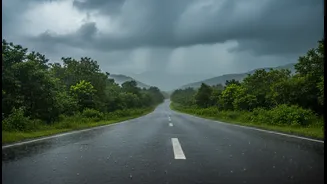


DO: Prepare Your Vehicle Before You Drive
A pre-monsoon check is non-negotiable. Your first line of defence against treacherous, wet roads is a well-maintained vehicle. Ensure your tyres have adequate tread depth—at least 2-3 mm—to grip slippery surfaces and prevent aquaplaning. Worn-out tyres are
a major risk and should be replaced immediately. Similarly, your braking system must be in top condition. Wet brakes can be less effective, so get your brake pads and discs inspected by a professional. Finally, replace old or streaky wiper blades and top up your washer fluid to ensure you have a clear view of the road ahead at all times.
DON'T: Underestimate Waterlogged Roads
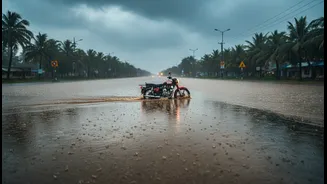
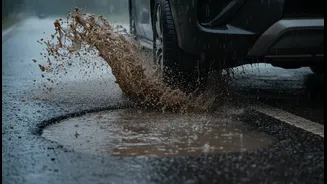
One of the biggest mistakes a commuter can make is attempting to drive through a flooded street. It’s impossible to know the depth of the water or what hazards lie beneath the surface, such as open manholes, deep potholes, or debris. As little as six inches of water can cause a car to stall, while just one foot of flowing water can sweep most vehicles away. If your vehicle does stall in water, do not try to restart the engine. This can cause water to enter the engine, leading to catastrophic and expensive damage known as hydrostatic lock. The safest choice is always to find an alternative route or wait for the water to recede.
DO: Adjust Your Driving Habits
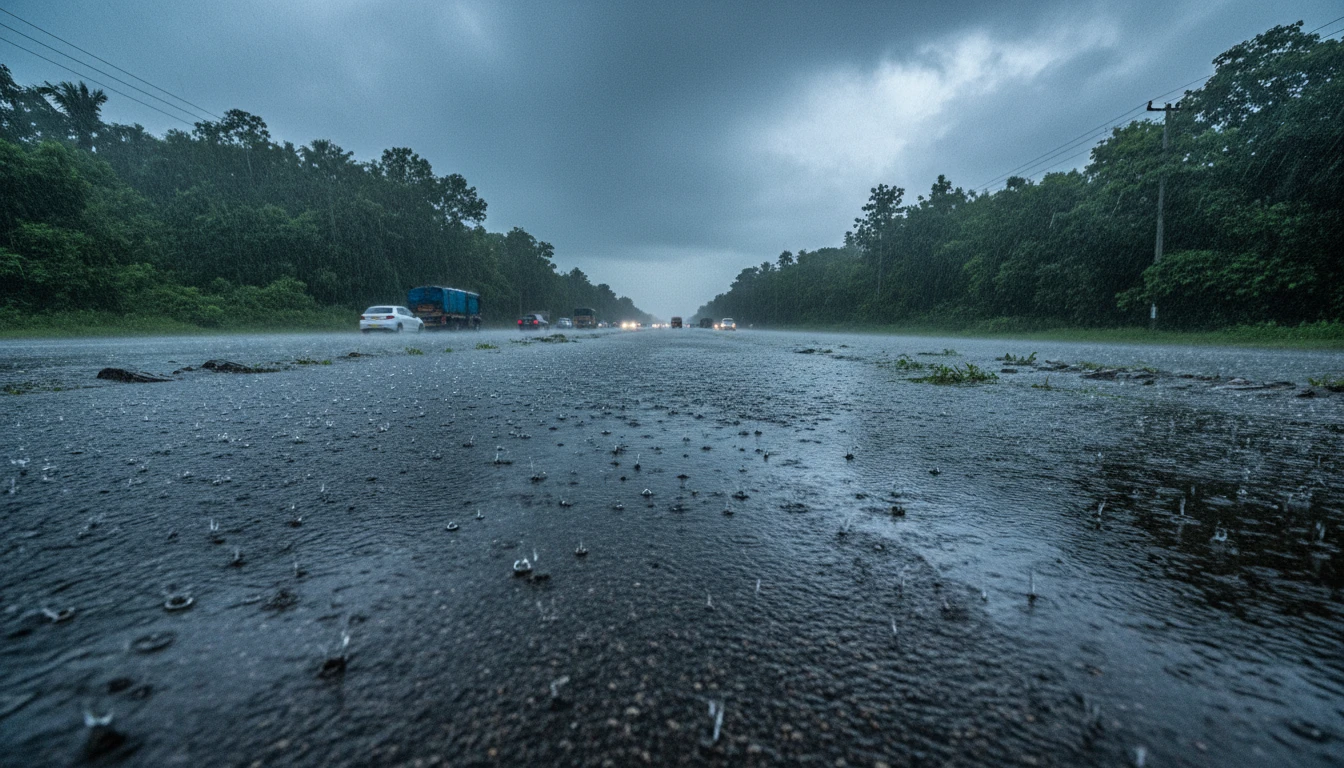
Driving in the rain demands a change in your approach. The most crucial adjustment is to slow down. Wet roads significantly increase your braking distance, and reducing your speed gives you more time to react. Maintain at least double the usual following distance from the vehicle in front of you. During heavy downpours, switch on your low-beam headlights even during the day. This not only helps you see but, more importantly, helps other drivers see you. Avoid using high beams, which can reflect off raindrops and impair the vision of oncoming drivers.
DON'T: Make Sudden Moves
Smooth and steady is the key to maintaining control on wet surfaces. The combination of rain, oil, and road grime creates a slick film that drastically reduces tyre grip. Avoid sudden acceleration, hard braking, and sharp turns, as these actions can easily cause your vehicle to skid. If you need to slow down, brake gently and progressively. For two-wheeler riders, this is especially critical. Smooth inputs and a gentle throttle are essential for staying upright. Hard braking can lock the wheels and lead to a fall.
DO: Be Extra Cautious of Others
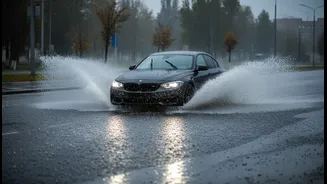
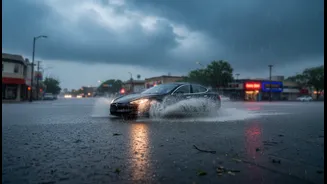
Monsoon conditions are challenging for everyone. Be especially considerate of pedestrians and two-wheeler riders, who are more exposed to the elements and harder to spot in heavy rain. Avoid splashing through puddles at speed, as this can drench pedestrians and bikers. In rainy conditions, large vehicles like trucks and buses have massive blind spots and limited visibility, so be extremely cautious when overtaking them. Honk and flash your lights liberally to make your presence known.
DON'T: Forget Your Emergency Kit
Getting stuck in a monsoon traffic jam or having a breakdown can be a long and frustrating experience. It is always wise to be prepared. Before heading out, ensure your fuel tank is full. Keep an emergency kit in your vehicle that includes a fully charged power bank, a flashlight, a first-aid kit, drinking water, and some snacks. Having an umbrella and a towel is also a good idea. These simple preparations can make a significant difference if you find yourself stranded.