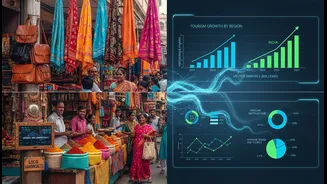








The Big Picture View
The Ministry of Tourism provides a wealth of high-level data through its annual reports and digital dashboards like the National Integrated Database of Hospitality Industry (NIDHI+). These platforms are designed to track key performance indicators for the nation's
tourism sector. They offer reliable, aggregated statistics on international and domestic tourist arrivals, foreign exchange earnings, and the overall economic contribution of tourism. For instance, these portals can tell you how many international tourists arrived in India in a given year and the total number of domestic tourist visits across the country. This macro-level data is indispensable for the central government, allowing policymakers to formulate national strategies, market the 'Incredible India' brand globally, and track progress against ambitious goals.
Why National Numbers Matter
Reliable national statistics are the bedrock of effective governance and large-scale investment. When the government can point to steady growth in arrivals or a significant contribution to GDP, it builds confidence among international stakeholders and potential investors. These figures help justify budget allocations for major infrastructure projects, such as airport expansions or highway development, that support the tourism ecosystem. Furthermore, data on source markets—knowing which countries send the most tourists—allows for targeted marketing campaigns and diplomatic efforts, like expanding the e-Visa facility, to boost numbers further. In essence, the national data portal provides the vital signs for the health of India's tourism industry as a whole.
The Missing Local Story
The portal's strength in national numbers, however, highlights its most significant limitation: a lack of local detail. The data is primarily collected and compiled at the state level from various administrative records. This means while we might know how many tourists visited Rajasthan, the data often doesn't specify whether they flocked to Jaipur's palaces, Jodhpur's forts, or the desert camps of Jaisalmer. Information on visitor flows to specific monuments, the popularity of homestays versus hotels in a particular district, or the economic impact on a small tourist town is often absent. This aggregation, while necessary for a national overview, obscures the diverse and hyper-local realities of tourism on the ground. Experts have noted that this can lead to an incomplete picture, sometimes missing out on categories like same-day visitors or those staying with friends and relatives.
The Impact of the Data Gap
This lack of granular data has tangible consequences. For a small business owner in a lesser-known destination, the national statistics are of little practical use. They cannot use the data to understand their specific market, anticipate demand, or make informed decisions about expansion. Local municipal bodies also struggle, unable to effectively plan for infrastructure needs like waste management or public transport without precise visitor counts and flow patterns. This gap can lead to a cycle where popular destinations become overcrowded due to a lack of data-driven dispersal strategies, while emerging locations fail to receive the attention they need to grow sustainably. It leaves local stakeholders to rely on guesswork rather than evidence.
Bridging the Divide
Addressing this gap is the next frontier for India's tourism strategy. The Ministry of Tourism has acknowledged the need to improve data collection methodologies, even commissioning studies to develop standards for district-level estimates. Integrating technology could be a game-changer. Anonymized data from mobile phones, insights from Online Travel Aggregators (OTAs), and digital feedback platforms could supplement official statistics, painting a much richer, real-time picture of visitor behaviour. Fostering partnerships between national, state, and local bodies is crucial to ensure that data collection becomes a two-way street, where local insights feed into the national picture and national tools empower local action.