





A Welcome Shift in Focus
For decades, airports were designed primarily for efficiency and security, often leaving travelling families to fend for themselves in a stressful environment of long queues, limited seating, and few distractions for restless children. That old reality
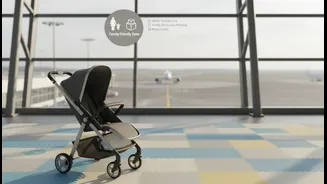
is slowly giving way to a more thoughtful approach. Airports now recognise that the growing family travel market is not just a demographic but a significant revenue driver. Happier families are more likely to spend time and money in retail and food outlets. This economic incentive, combined with a greater emphasis on passenger experience, is fuelling a wave of investment in family-friendly infrastructure.
Indian Hubs Lead the Way
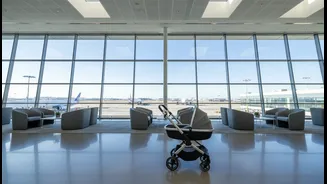
Indian airports are emerging as leaders in this transformation. In a July 2026 ranking of family-friendly airports, both Bengaluru's Kempegowda International Airport (KIA) and Hyderabad's Rajiv Gandhi International Airport featured in the global top five. This recognition was based on factors like play areas, family security lanes, and baby-changing facilities. Hyderabad was noted for its dedicated children's play areas, complimentary strollers, and even therapy dogs to ease anxiety. Bengaluru's airport has also invested in children's play zones and facilities to support passengers travelling with infants and the elderly. Not to be outdone, Delhi's Indira Gandhi International Airport launched its 'Family@DEL' initiative in early 2026. The program, operational across all domestic terminals, offers dedicated entry gates, exclusive check-in counters, and priority security lanes for families, significantly reducing stress and wait times. It even includes 'Family Assistance Buddies' to guide travellers through the process. Mumbai's Chhatrapati Shivaji Maharaj International Airport also provides baby care facilities and children's play areas.
Playgrounds and Quiet Rooms
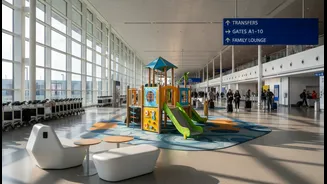
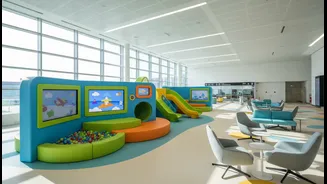
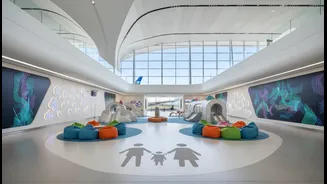
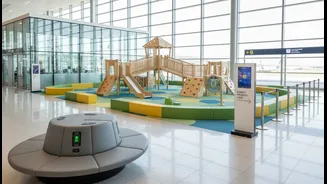
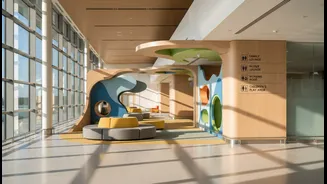
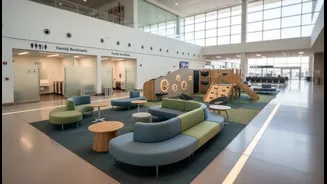
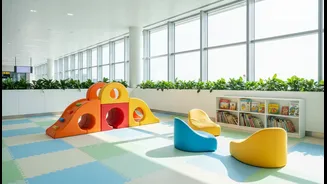
One of the most visible changes is the evolution of the airport play area. Gone are the days of a sad, solitary rocking horse. Modern airports are installing large, interactive play zones designed to let kids burn off energy before a long flight. Pittsburgh International Airport, for example, recently opened a redesigned play area featuring a climbing mound and interactive art, along with an in-space restroom and water station. Beyond just play, there is a growing awareness of the need for quiet spaces. Airports like Newark Liberty and Bengaluru have introduced sensory rooms. These calm environments are designed for neurodivergent children or any child feeling overwhelmed, featuring gentle lighting, comfortable seating, and quiet activities to help them de-stress before a flight.
Streamlining the Stress Points
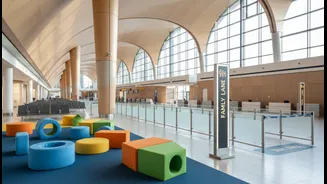
The biggest hassles for families often occur at procedural bottlenecks like security and check-in. The introduction of dedicated family lanes is a game-changer, preventing the frantic juggle of strollers, luggage, and toddlers in a crowded queue. Delhi's Family@DEL program is a prime example of an end-to-end solution, offering families a separate, guided path from the moment they enter the terminal. The basics are also getting better. Airports are finally investing in clean, spacious, and plentiful family restrooms equipped with proper changing tables. Many are also adding dedicated nursing pods or private lactation suites, offering mothers a dignified and comfortable space to feed their infants—a significant improvement over previous options.
A Global Investment
This trend is not isolated. In the United States, the Federal Aviation Administration recently announced an investment of nearly $1 billion in grants to make airports more family-friendly. The funding is earmarked for projects like renovating play areas, adding more mothers' rooms, and creating family-friendly security lanes. This signals a systemic shift, treating family amenities not as an afterthought but as essential infrastructure. In India, a government directive in July 2026 ordered a coordinated upgrade of passenger flow across 62 airports, aiming to create a more seamless journey from check-in to boarding. While not exclusively focused on families, these systemic improvements to reduce queues and improve facilities will have a significant positive impact on anyone travelling with children.