

The Science of a Perfect Bake
Baking is often compared to a chemistry experiment, and for good reason. Every ingredient plays a specific role, and their ratios are critical for success. Take flour, for example. Its proteins form gluten, which creates the structure of cakes and breads.
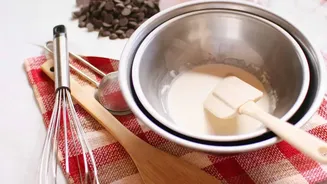
Too much flour, which often happens when you scoop directly from the bag, can make your baked goods dense, dry, and tough. A study showed that scooping flour can result in up to 50% more than what a recipe developer intended, a variation that can ruin a delicate cake. Leavening agents like baking powder and soda are powerful, and even a slight imbalance can mean the difference between a light, airy crumb and a flat, gummy texture. Sugar doesn't just add sweetness; it tenderises, helps with browning, and creates softness. This is why professional bakers almost exclusively measure ingredients by weight—it removes the guesswork and ensures repeatable perfection.
Beyond Baking: Precision in Savoury Cooking
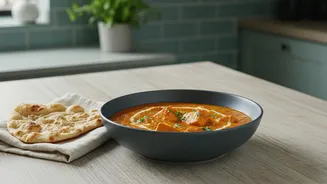
While savoury cooking is certainly more forgiving, applying the same principle of precision can elevate your dishes from good to great. Think of a recipe not as a strict set of rules, but as a formula perfected by its creator. Accurate measurements are the key to replicating that success. This is especially true for foundational ingredients that define a dish's flavour profile. Too much salt can overpower everything, while too little leaves food bland. In Indian cooking, the balance of a spice blend is everything. An imprecise 'pinch' of garam masala might work one day, but using a quarter-teaspoon measure ensures that your chicken curry tastes exactly the way you loved it last time. Consistency is a hallmark of a great cook, and measuring is the most direct path to achieving it. It allows you to reliably recreate your culinary triumphs for family and friends.
The Ultimate Tool: A Kitchen Scale
The single best way to ensure accuracy in the kitchen is by using a digital kitchen scale. It completely eliminates the ambiguity of volume measurements. A cup of flour can weigh anywhere from 120 grams to 170 grams depending on how you pack it, but 120 grams is always 120 grams. Using a scale opens you up to a world of recipes, especially international ones, that provide ingredients by weight. It also makes scaling recipes up or down foolproof and significantly reduces the number of measuring cups and spoons you need to wash. You can simply place your mixing bowl on the scale, press the 'tare' or 'zero' button, and add each ingredient directly into the bowl. For those who prefer to stick with measuring cups, the 'fluff, spoon, and level' method is the next best thing: first, aerate the flour with a spoon, then spoon it into the measuring cup before levelling the top with a straight edge.
Putting It Into Practice
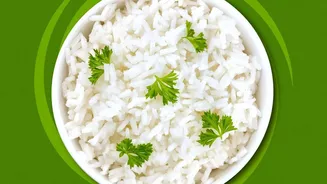
Making the switch to more precise measuring doesn't require a complete overhaul of how you cook. Start small. The next time you make a familiar dish, like a vegetable stir-fry or a pot of rice, try measuring the liquid exactly. See how this affects the final texture. When preparing a curry, use measuring spoons for your key spices like turmeric and chilli powder instead of just spooning them from the jar. You might notice a cleaner, more balanced flavour. For baking, the impact is immediate. If you've ever had cookies that spread too much or a cake that turned out disappointingly dense, improper flour measurement is a likely culprit. Investing in a simple kitchen scale can feel like a revelation, giving you the confidence that your results will match the recipe's promise. It’s not about stifling creativity; it’s about giving you control over the outcome.