




What is the Crew Escape System?
In human spaceflight, there are no second chances. That's why ISRO has engineered the Crew Escape System (CES) as a critical safety feature for the Gaganyaan mission. Think of it as an intelligent, high-powered ejection seat, not for a single pilot, but
for the entire crew capsule. Its sole purpose is to detect a catastrophic failure on the launchpad or during ascent and, within milliseconds, pull the crew module—with the astronauts inside—away from the malfunctioning rocket. This system is designed to out-accelerate the launch vehicle itself, ensuring a safe distance is achieved before a potential explosion. The principle is simple: crew safety is more important than mission success. The CES is the ultimate insurance policy, designed to work perfectly when everything else has gone wrong.
Anatomy of a High-Speed Escape
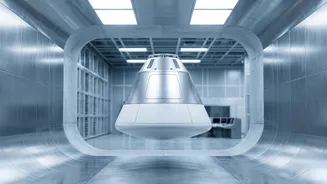
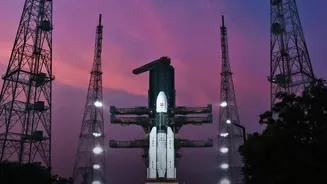
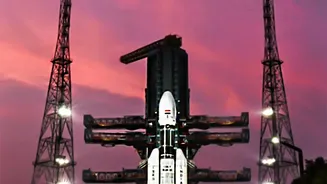
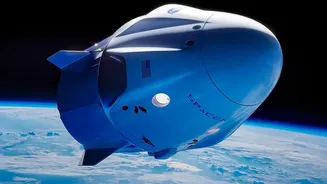
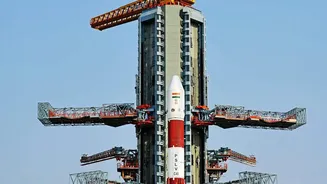
The Gaganyaan CES is a 'puller' or 'tractor' type system, a tower-like structure mounted on the very top of the rocket stack, ahead of the crew module. This design mirrors the proven escape systems used in the Apollo and Soyuz missions. Inside this tower are several powerful, quick-acting solid rocket motors, each with a specific job. High-thrust escape motors provide the immense power needed to yank the capsule clear. Pitch motors help steer the module, directing it on a safe trajectory away from the failing rocket's path. This entire assembly is connected to the launch vehicle's health monitoring system, an electronic nervous system that constantly checks thousands of parameters. If this system detects a critical anomaly—like a loss of thrust or a dangerous deviation from the flight path—it autonomously triggers the abort sequence.
Abort Scenarios: From Pad to Sky
An emergency can happen at any moment, and the CES is designed to handle multiple scenarios. A 'Pad Abort' would occur if a critical failure is detected just before or during ignition while the rocket is still on the launchpad. In this case, the escape motors fire to lift the crew module up and away, moving it to a safe distance for parachute deployment and landing. An in-flight abort is more complex. The most challenging phase of a launch is often 'Max-Q' or maximum dynamic pressure, where the stress on the vehicle is at its highest. The CES must be powerful enough to activate in this phase, pulling the crew module clear of the rocket as it travels at transonic or hypersonic speeds. The system uses different motors, such as the Low Altitude Escape Motor (LAEM) and High Altitude Escape Motor (HEM), to tailor the escape trajectory based on the altitude and speed at which the abort is initiated.
Proving the System: The TV-D1 Mission
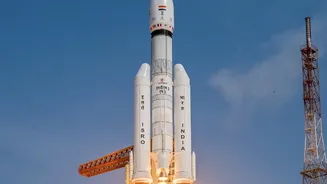
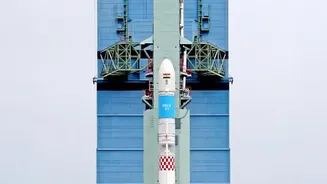
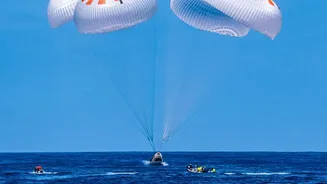
Designing a system on paper is one thing; proving it works under extreme conditions is another. On October 21, 2023, ISRO conducted the Test Vehicle Abort Mission-1 (TV-D1). This crucial test was designed to demonstrate a successful in-flight abort. A special-purpose, single-stage liquid-fueled rocket lifted a full-scale, unpressurised crew module and escape system. At an altitude of about 17 km and a speed of Mach 1.2, the abort was deliberately triggered. The CES fired flawlessly, pulling the crew module away from the test vehicle. The test successfully validated the entire sequence: the powerful separation, the jettisoning of the escape tower, the deployment of drogue and main parachutes to slow the descent, and the final safe splashdown in the Bay of Bengal, where it was recovered by the Indian Navy. The mission was declared a complete success, marking a major milestone in qualifying the Gaganyaan vehicle for human flight.
The Final Steps to Safety
Once the Crew Escape System has done its job of pulling the module clear, the journey back to safety is not over. After the escape motors burn out, the escape tower is jettisoned from the crew module. A complex sequence of parachutes then takes over. First, smaller drogue parachutes deploy to stabilize and begin slowing the capsule from high speed. After these have done their job, the three large main parachutes are released to ensure a gentle splashdown in the ocean at a controlled speed. The capsule is designed to be recovered by the Indian Navy, which will have teams ready in the designated landing zone. Every step of this process, from the violent initial pull to the final, gentle splashdown, is a pre-programmed ballet of engineering designed to bring the crew home safely.