



An Unexpected Diversion
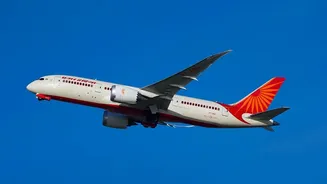
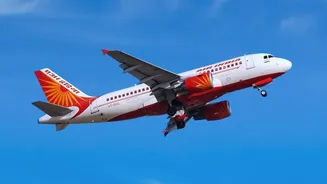
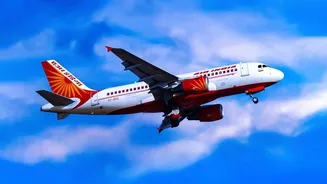
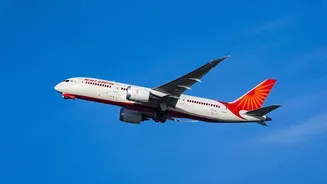
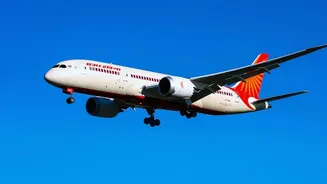
For the 306 passengers and crew aboard Air India flight AI 2030, the journey on Wednesday, October 14, 2026, was expected to be a routine overnight trip from Frankfurt, Germany, to New Delhi. However, as the Boeing 787-9 Dreamliner entered Indian airspace,
a serious security alert prompted air traffic control to take immediate action. Instead of proceeding to its final destination, the aircraft was ordered to divert to Jaipur International Airport as a precautionary measure. The plane landed safely around 9:35 AM local time and was immediately escorted by authorities to an isolation bay, away from the main terminal, setting the stage for a thorough security investigation.
The Meaning of 'Squawk 7500'
The catalyst for the diversion was the transmission of 'Squawk 7500'. In aviation, a squawk is a four-digit transponder code that an aircraft transmits to identify itself to air traffic control. While most codes are for routine identification, a few are reserved for emergencies. Code 7500 is the universal signal for 'unlawful interference', which most commonly means a hijacking. This signal is designed to be a discreet way for pilots to alert authorities without tipping off potential aggressors on board. The moment this code was received from flight AI 2030 while it was in the Mumbai Flight Information Region, a chain of high-level security protocols was automatically initiated.
A Full-Scale Response
The response at Jaipur was swift and comprehensive, reflecting the seriousness of a 7500 alert. Upon landing, the aircraft was surrounded by security personnel, including the Central Industrial Security Force (CISF), local police, and an Anti-Terrorism Squad (ATS). A Bomb Detection and Disposal Squad was also deployed to the scene. All passengers and crew were deplaned under security supervision and moved to a holding area within the terminal. Every person and piece of luggage was subjected to intensive screening while the aircraft itself was meticulously searched. In Delhi, the National Security Guard (NSG) was placed on standby, ready to intervene if required.
A False Alarm
After hours of tension and uncertainty for the passengers, the intense security operation concluded without finding any threat. Initial reports suggest the hijack alert may have been transmitted inadvertently. An airport official stated that early indications pointed towards a possible pilot error, though the pilots reportedly denied activating the signal by mistake when questioned. Regardless of the cause, once security agencies were satisfied that there was no danger, the aircraft was cleared. Following the checks, passengers re-boarded the plane. The flight finally took off from Jaipur at 2:21 PM and landed safely in Delhi later that afternoon, about five hours after the diversion began.
The Aftermath and Aviation Safety
In a statement, Air India confirmed the diversion was due to a 'perceived security concern' and expressed regret for the inconvenience caused to passengers, reiterating that safety remains its highest priority. The Directorate General of Civil Aviation (DGCA) will now investigate the incident to determine exactly how the alert was triggered. The episode serves as a powerful reminder of the robust, 'safety-first' protocols that govern modern aviation. While a false alarm can cause significant disruption, the coordinated and immediate response demonstrates a system designed to assume the worst to ensure the safety of everyone in the skies.