



Cosmic Clouds of Creation
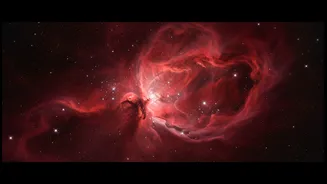
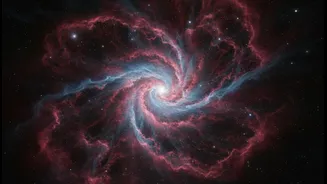
Imagine a cosmic maternity ward, a place where new stars are born. That’s essentially what a stellar nursery is. These are immense clouds of cold gas and dust, primarily hydrogen, floating in the interstellar medium—the space between stars. Sometimes
called molecular clouds, these regions can span several light-years across. They aren't just beautiful; they are the fundamental building blocks of galaxies. Within these vast, turbulent structures, gravity works its slow magic, pulling clumps of material together over millions of years to set the stage for one of nature's most spectacular events: the birth of a star.
A New Eye on the Universe
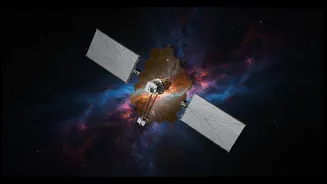
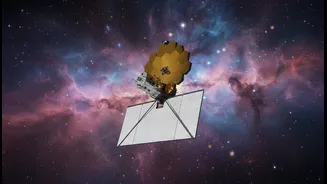
For decades, our view of these stellar nurseries was partially obscured. Just as smoke can hide the details of a fire, the dense dust in these clouds blocked visible light, concealing the action within. But that has changed dramatically with the James Webb Space Telescope (JWST). Launched as a collaboration between NASA, the European Space Agency (ESA), and the Canadian Space Agency (CSA), JWST is an infrared telescope. Its ability to detect infrared light allows it to pierce through the cosmic dust, revealing the intricate processes of star formation that were previously invisible. The result is images of unparalleled depth and detail, transforming our understanding of how stars—and ultimately, planetary systems like our own—come into being.
A Gallery of Celestial Wonders
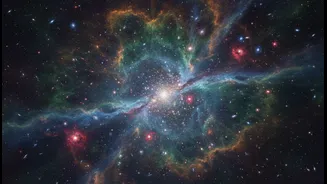
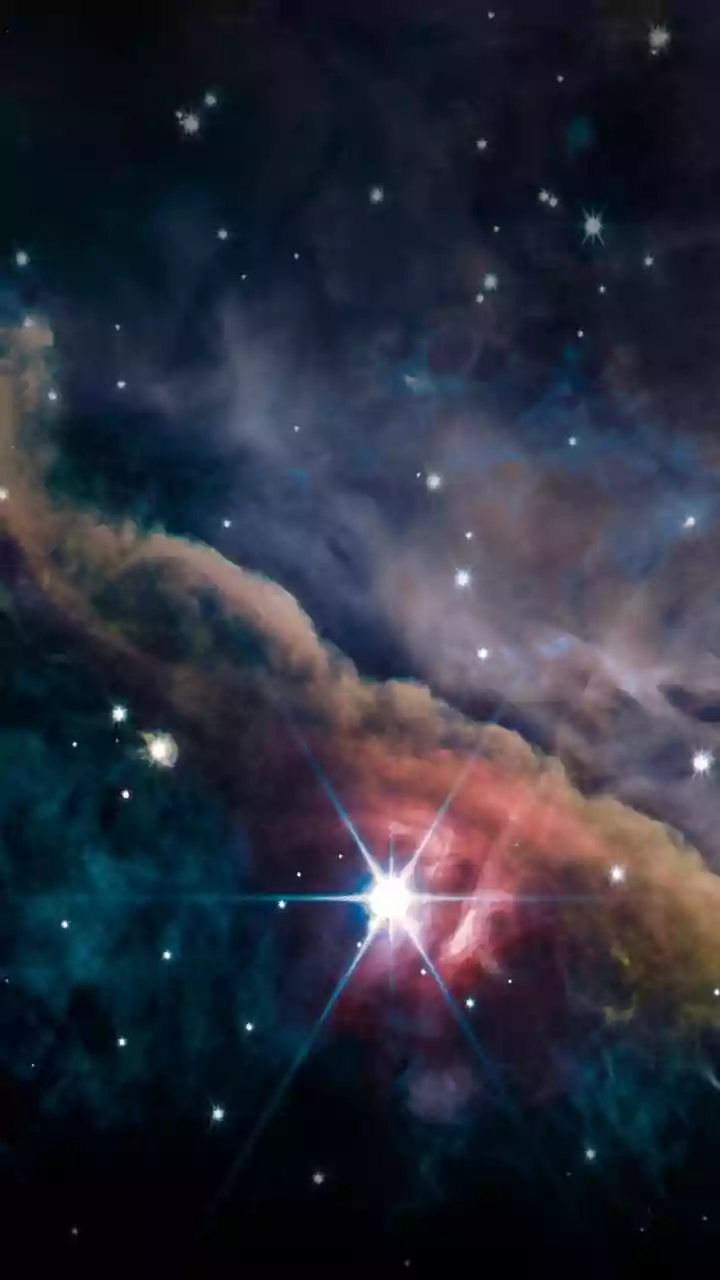
Among the most iconic images from JWST are those of famous stellar nurseries. The “Cosmic Cliffs” in the Carina Nebula, located about 7,600 light-years away, look like a craggy mountain range on a moonlit night. These “cliffs” are the edge of a giant cavity carved out by intense ultraviolet radiation from young, massive stars. Another is the Rho Ophiuchi cloud complex, the closest star-forming region to Earth. Webb's image of this region is a chaotic but beautiful scene, showing jets of material bursting from young stars impacting the surrounding gas. Then there are the famed Pillars of Creation within the Eagle Nebula, first made famous by the Hubble Space Telescope but now seen in extraordinary new detail by Webb. These images reveal hundreds of newly formed stars, bright red orbs that were previously hidden within the dense columns of gas and dust.
The Science Behind the Spectacle
The beauty of these images is matched by the incredible science they represent. Star formation begins when dense cores within a molecular cloud start to collapse under their own gravity. As the material clumps together, it forms a hot, dense core known as a protostar. This early phase is difficult to capture, but Webb’s sensitivity has made it possible. As the protostar continues to gather mass, its core temperature and pressure build until it becomes hot enough to ignite nuclear fusion. At this moment, a true star is born. The energy released pushes away the surrounding gas and dust, and sometimes shoots out supersonic jets that create glowing, wavy patterns within the nebula. The remaining material can go on to form planets, asteroids, and comets.
Why These Images Matter to Us
These snapshots from deep space are more than just pretty pictures. By studying stellar nurseries, astronomers can revamp their models of star formation and better understand the lifecycle of stars. It's a form of cosmic archaeology. These images provide crucial data on the quantities of gas, dust, and the number of newly formed stars in a given region. More profoundly, they tell us about our own origins. Our Sun and solar system were born in a similar stellar nursery about 4.6 billion years ago. By looking at places like the Rho Ophiuchi complex and the Carina Nebula, we are essentially looking at a representation of our own cosmic beginnings, connecting us directly to the grand, ongoing story of the universe's creation.