





A Celebration of Being, Not Buying
Think of a typical Indian mela: vibrant stalls selling everything from handcrafted juttis to sizzling jalebis, ferris wheels spinning against the sky, and designated arenas for folk performances. The experience is largely transactional. You go to see,
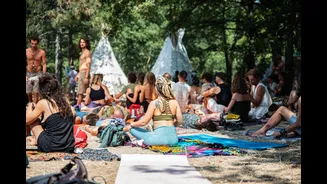
to buy, to eat, to be entertained. The Ambubachi Mela, held at the Kamakhya Temple in Guwahati, operates on a different frequency. While small-scale commerce exists on its periphery, the core of the event is non-transactional. Hundreds of thousands of devotees, sadhus, and tantrics gather to simply be present. Their purpose is to wait, to absorb the spiritual vibrations during the period when the Goddess is believed to be menstruating. The main event is an absence, a quietude, a shared state of being rather than a series of activities to be consumed. This focus on congregation over commerce gives it an authenticity that a purely market-driven fair can never replicate.
Embracing the Unseen over the Spectacle
Most cultural festivals are built around a spectacle. Whether it's the Pushkar Fair's camel races or the Hornbill Festival's choreographed warrior dances, the central attraction is visual and performative. Ambubachi Mela flips this script entirely. Its climax is an event that is unseen and unfelt by any ordinary sense: the annual menstruation of Goddess Kamakhya, whose yoni (vulva) is enshrined in the temple's sanctum sanctorum. In fact, during these three days, the temple’s main doors are closed. There is no idol to worship, no grand procession to watch. The power of the festival lies in this shared belief in a potent, invisible, natural cycle. Devotees gather to honour a metaphysical occurrence, a concept that is far more profound than any physical spectacle. This makes the mela an exercise in pure faith, a stark contrast to fairs that rely on entertaining the eyes.
Raw Spirituality over Curated Performances
While many fairs feature folk artists performing on a stage, the spiritual energy at Ambubachi is raw, uncurated, and sometimes even intimidating. The temple grounds become a temporary home for thousands of ascetics, including reclusive Aghoris and Tantrics from across India and beyond. They are not there to perform for an audience; they are there for their own spiritual pursuits—meditating, performing rituals, and engaging with fellow seekers. For an ordinary visitor, witnessing this is not like watching a scheduled cultural programme. It’s an unfiltered glimpse into the diverse, mystical, and often esoteric world of Indian asceticism. This unpolished reality provides a level of depth and intensity that carefully managed cultural showcases, designed for tourist consumption, simply cannot match. It’s the difference between watching a nature documentary and being in the middle of the jungle.
A Focus on Fertility and Feminine Power
At its heart, Ambubachi Mela is one of the world’s most powerful celebrations of shakti, the divine feminine energy, and specifically, the life-giving power of menstruation. In a society where the topic is often shrouded in taboo and stigma, this mela elevates it to the highest form of divinity. It is a festival of fertility, attracting childless couples, farmers praying for a good harvest, and tantrics seeking to harness this potent creative energy. This thematic core gives the mela a profound socio-spiritual relevance. It isn’t just a generic celebration of ‘culture’; it’s a specific, powerful statement about the sacredness of the female body and its natural cycles. No other large-scale fair in the country tackles such a fundamental and often-avoided aspect of human existence with such reverence, making its purpose uniquely meaningful.
The 'Prasad' is a Potent Symbol
Finally, the culmination of the mela is marked by the distribution of prasad. But this is not the typical ladoo or sweet dish. The key offering is the ‘rakta bastra’—small pieces of red cloth believed to have been moistened by the goddess's menstrual fluid. For devotees, this is not merely a souvenir; it is a powerful symbol of fertility and the Goddess’s blessing, a tangible connection to the divine energy they have been immersed in. This symbolic prasad encapsulates the essence of the mela: it’s abstract, deeply personal, and rooted in a belief system that values natural processes. It’s a far cry from the commercialised souvenirs and generic offerings found at other events. It serves as a reminder that the most valuable takeaways from a spiritual gathering are often symbolic, not material.