

A World Without a Blanket
For decades, the habitable zone was defined as the orbital distance from a star where a planet's surface could support liquid water. Not too hot, not too cold, but just right. However, recent observations are revealing that temperature is only part of
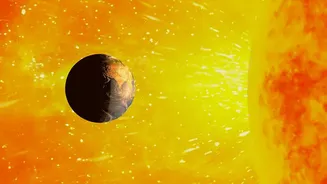
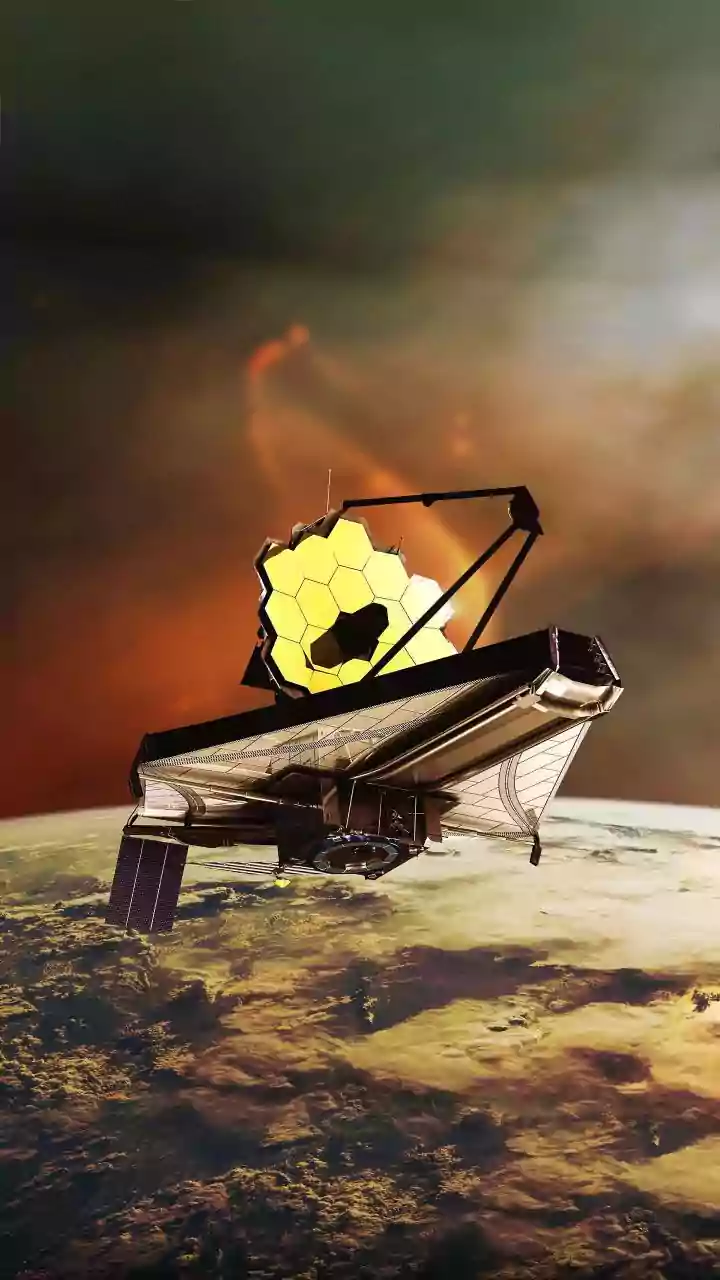
the story. The real key to habitability may be whether a planet can hold onto its atmosphere. JWST has given scientists an unprecedented look at how planets, especially those orbiting close to their stars, can have their atmospheres violently stripped away. Observations of multiple exoplanets, including rocky super-Earths and gas giants, show that intense radiation and stellar winds can act like a cosmic blow-dryer, leaving behind a barren rock. For instance, studies of planets like WASP-107b show its atmosphere bleeding into space, creating a massive tail of escaping gas. While this planet is a gas giant, the principle applies even more critically to smaller, rocky worlds that scientists hope might harbor life.
The Stellar Thief
The primary culprit behind this atmospheric theft is the host star itself. Many exoplanets, particularly those discovered around small, cool red dwarf stars, orbit extremely close to their sun. This proximity bombards them with high levels of X-ray and ultraviolet (UV) radiation, especially when the star is young and active. This intense energy heats the upper layers of a planet's atmosphere, giving gas particles enough velocity to escape the planet's gravitational pull. This process, called atmospheric escape, can be so powerful that it strips a planet of its protective gaseous layer over millions of years. Scientists believe that some worlds we now see as 'super-Earths'—dense, rocky planets larger than our own—might actually be the stripped-down cores of what were once much larger, Neptune-like planets.
Rethinking 'Just Right'
These findings force a major revision of what we consider a potentially habitable planet. The classic Goldilocks Zone is no longer sufficient. Scientists are now proposing a new, more restrictive condition: the 'atmospheric retention distance' (ARD). A planet must not only be at the right temperature for liquid water but also far enough from its star to avoid having its atmosphere blasted into space. This is a huge challenge, because the two zones don't always overlap. For many stars, especially volatile red dwarfs, the region warm enough for liquid water is also deep inside the zone of intense, atmosphere-shredding radiation. Recent JWST observations of planets in the TRAPPIST-1 system, once considered a promising candidate for life, have shown that the inner worlds are likely bare rock with no significant atmosphere, supporting this new understanding.
A Narrower, More Focused Search
While this news might seem discouraging, it ultimately makes the search for life more efficient. By understanding the destructive power of some stars, astronomers can better prioritize which systems to study. The findings suggest that planets orbiting volatile, active stars are less likely to be habitable, even if they are in the traditional Goldilocks Zone. The focus may shift more toward stable, sun-like stars, where the habitable zone is further out and the radiation environment is less harsh. It also highlights the importance of a planet's mass and magnetic field, which can help it hold onto its precious atmosphere against the stellar onslaught. So, while the number of potential targets may have shrunk, the JWST's discoveries are providing a much clearer roadmap for finding a world that is not just in the right place, but has the resilience to actually sustain an environment friendly to life.