


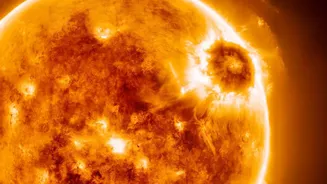
The Threat From 93 Million Miles Away
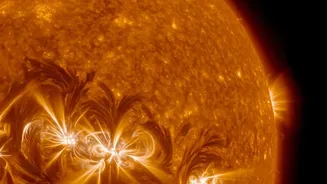
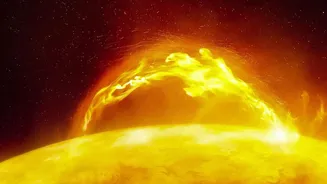
The sun, our life-giving star, has a volatile side. It occasionally unleashes solar flares, which are intense bursts of radiation. More consequential for our grid are Coronal Mass Ejections (CMEs), which are giant clouds of solar plasma and magnetic fields
hurled into space. While a flare's radiation reaches Earth at the speed of light in about eight minutes, a CME is like the cannonball that follows, taking one to three days to arrive. If an Earth-directed CME slams into our planet's magnetosphere, it triggers a geomagnetic storm. This disturbance can create powerful, low-frequency currents in the ground, known as geomagnetically induced currents, or GICs. These are not the type of electricity our grid is built for.
The Problem with the Wrong Current
Our electrical grid is designed to run on alternating current (AC). GICs, however, behave like direct current (DC). When these quasi-DC currents find their way into the grid—using long transmission lines as giant antennas—they flow into high-voltage transformers. This unintended DC current can push the transformers into a state called half-cycle saturation. The result is disastrous: the transformers can rapidly overheat, leading to internal damage, and they begin to draw huge amounts of reactive power, destabilizing the entire grid. This can cause voltage collapses and trigger protective relays to trip, potentially leading to widespread, cascading blackouts.
Our Eyes on the Sun
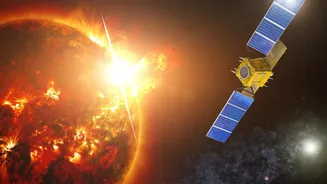
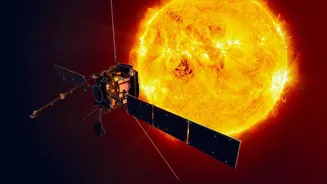
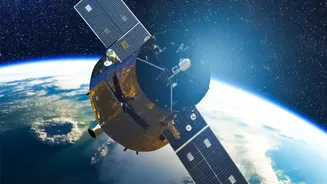
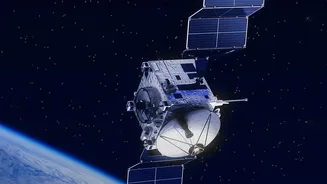
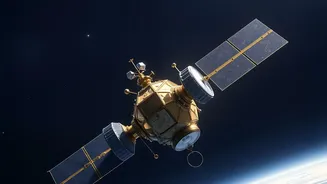
To defend against this threat, we have a network of sentinels in space. Satellites like NOAA's Geostationary Operational Environmental Satellites (GOES) constantly monitor the sun, looking for telltale signs of flares and CMEs. But the most critical information comes from spacecraft positioned at Lagrange Point 1 (L1), a gravitationally stable spot about 1.5 million kilometers upstream from Earth. Satellites like the Deep Space Climate Observatory (DSCOVR) are stationed here. They act as a solar tripwire, directly sampling the solar wind for changes in speed, density, and magnetic field orientation before it reaches our planet, providing a crucial early warning.
From Warning to Action
Once DSCOVR detects a threatening CME, it transmits the data to Earth. This gives agencies like NOAA's Space Weather Prediction Center (SWPC) a vital heads-up—typically between 15 and 60 minutes—before the storm hits our magnetosphere. SWPC analyzes the data and issues watches, warnings, and alerts to power grid operators and other critical industries. These alerts are graded on a scale, similar to hurricane warnings, allowing operators to gauge the severity of the incoming storm. With this notice, grid operators spring into action. They are not simply shutting things down; in fact, the grid cannot just be turned off. Instead, they perform a delicate dance of risk mitigation.
Bracing for Impact
Upon receiving a severe storm warning, grid operators enact a series of carefully planned procedures. They might postpone scheduled maintenance to ensure all available equipment is online. They can reconfigure the grid, sometimes taking vulnerable long-distance transmission lines offline to break the circuit for GICs. Operators also work to increase their reactive power reserves, bringing extra generation capacity online to counteract the voltage instability that transformers will experience. In some cases, they may even perform controlled, localized blackouts to prevent uncontrolled, widespread equipment damage that could take months or years to repair. New hardware, like neutral blocking devices that can physically stop GICs from entering transformers, is also being installed in key locations to harden the grid against these events.