
The Unseen Force in Your Kitchen
Evaporation is one of the most fundamental processes in cooking. At its simplest, it's the process of water turning into steam and leaving the pot. This isn't just a side effect; it's often a key technique. When you let a sauce simmer uncovered, you're
using evaporation to reduce its volume and concentrate its flavours. The same principle is at play when you thicken a stew or create a rich balsamic glaze. However, this process is highly sensitive. Factors like the heat level, the humidity in your kitchen, and, most critically, the shape of your cooking vessel all influence how quickly water escapes, directly impacting the final taste, texture, and quantity of your food.
Why Pan Size Is More Than Just Capacity
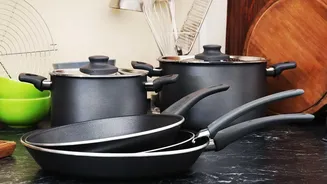
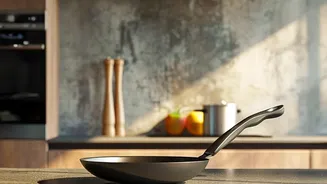
A recipe might call for a "medium saucepan," but what does that really mean? The most important factor isn't just the volume a pan can hold, but its surface area. A wide, shallow pan exposes more of the liquid's surface to the air, which dramatically speeds up evaporation. This is ideal if you want to get a good sear on vegetables or quickly reduce a pan sauce. On the other hand, a narrow, tall pot minimizes surface area, slowing evaporation down. This is why soups and stocks are often made in tall stockpots; it allows for long, slow simmering, which melds flavours without losing too much liquid too quickly. Using a pan that's too wide for a slow-cooked recipe can cause it to reduce too fast, leaving you with a thick, potentially scorched result and a much lower yield.
The Impact on Baking
This principle isn't limited to stovetop cooking; it's just as crucial in baking. The size and shape of a baking pan determine how deep the batter is. If you pour cake batter into a pan that's larger than the recipe specifies, the batter will be shallower. With more surface area and less depth, it will bake much faster and be prone to drying out. Conversely, using a pan that's too small will create a deeper batter that takes longer to cook through. This often results in a cake with burnt edges and a raw, undercooked center because the outside cooks long before the heat can penetrate the middle. This is why precise pan measurements are so critical in baking, where a few inches can be the difference between a perfect bake and a kitchen disappointment.
Taking Control of Evaporation
Understanding these variables empowers you to become a more intuitive cook. The simplest tool for controlling evaporation is a lid. Covering a pot traps steam, which then condenses back into liquid, dramatically slowing down moisture loss. This is essential for cooking things like rice, where you need to retain a specific amount of water. To speed up evaporation and thicken a sauce, simply remove the lid and increase the surface area if possible. If a recipe specifies a pan size, try to use it. If you can't, be prepared to adjust. For a wider pan, you may need to lower the cooking time or add a little extra liquid. For a deeper pan, you might need to lower the temperature and increase the cooking time to ensure everything cooks evenly.
Redefining 'Yield' in Your Cooking
Ultimately, this changes how we should think about 'yield'. Yield isn't just the final volume or number of servings; it's also about concentration and texture. A recipe that is 'over-reduced' because of a wide pan might have a lower volume but an intensely concentrated, perhaps even overly salty, flavour. A stew that retains too much water because the pot was covered might have the expected volume but a thin, watery broth. By paying attention to the interplay between your vessel, heat, and evaporation, you move beyond just following instructions. You start to understand the 'why' behind the recipe, giving you the ability to adapt, troubleshoot, and achieve consistently delicious results every time.