



The Staggering Cost of a Human
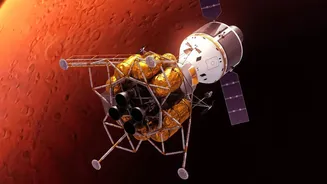
The single greatest argument against sending humans to Mars is the astronomical cost, driven almost entirely by the need to keep them alive. A human mission is not just about launching a person; it's about launching their entire Earth-like environment.
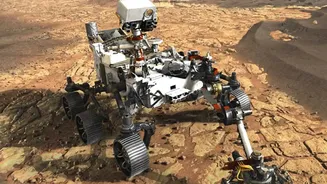
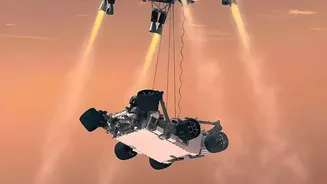
This includes air to breathe, water to drink, and food to eat for a mission that could last up to three years. Unlike robotic missions, which can be powered down, astronauts require constant life support. Estimates for a crewed Mars mission vary wildly, but often hover in the hundreds of billions of dollars, whereas a sophisticated rover mission like Perseverance costs less than $3 billion. Every kilogram of supplies—from freeze-dried meals to spare water filters—adds immense weight and fuel requirements, making the financial barrier to human exploration incredibly high.
The Robotic Advantage: Cheaper, Safer, and Tireless
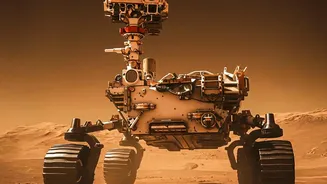
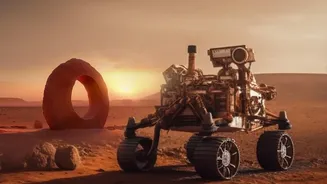
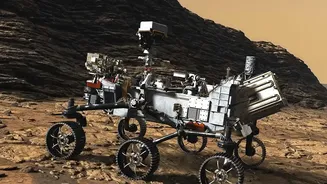
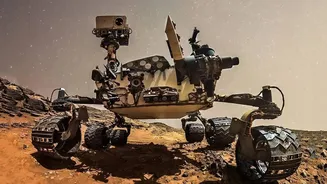
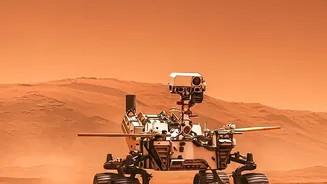
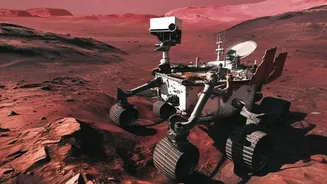
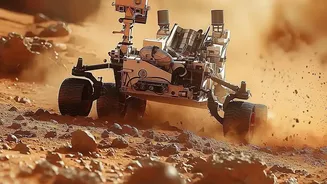
Robots are the undisputed champions of cost-effective and low-risk exploration. They don't need oxygen, food, or water, and they are immune to the psychological stresses of isolation. More importantly, they can withstand the harsh Martian environment, including extreme temperature swings and high radiation levels, for years on end. If a mission fails, the loss is financial and scientific, not human. Advances in artificial intelligence have made rovers like Perseverance increasingly autonomous, capable of navigating treacherous terrain and making scientific decisions without real-time human input—a necessity given the communication delays of up to 24 minutes each way between Earth and Mars. They can operate 24/7, methodically collecting data and paving the way for future discoveries without ever needing a break.
The Irreplaceable Human Element
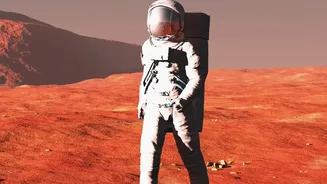
Despite their advantages, robots lack a key ingredient: human intuition. An astronaut can make a split-second decision, spot an unusual rock formation, and adapt a plan on the fly in a way no pre-programmed machine can. Proponents of human exploration argue that this adaptability leads to exponentially greater scientific returns. For instance, while Mars rovers have crawled for miles over decades, a human geologist could cover the same ground in a fraction of the time and perform far more complex tasks, like drilling deep into the ground or excavating a delicate fossil. A human on Mars can react to unexpected findings, pivot an entire line of research, and apply a level of analytical creativity that remains far beyond the reach of current AI. The human capacity for curiosity and on-the-spot problem-solving is, for many, the very essence of exploration.
Radiation and Health: The Unseen Dangers
Beyond the logistical nightmare of supplies, the Martian environment poses a severe threat to human health. Mars lacks a global magnetic field and has a thin atmosphere, leaving its surface exposed to dangerous levels of galactic cosmic rays and solar radiation. A round trip to Mars could expose astronauts to radiation levels that approach NASA's career limit, significantly increasing their lifetime risk of cancer and other health issues. Furthermore, the long journey in zero gravity, followed by months in Mars' low gravity, can cause muscle atrophy, bone density loss, and other physiological problems. While robots are built to withstand these conditions, protecting humans requires heavy shielding, advanced medical facilities, and countermeasures that add even more mass and complexity to an already challenging mission.
A Hybrid Future: Robots as Forerunners
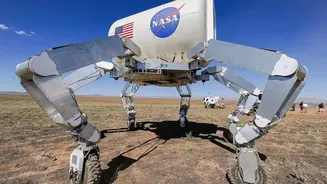
Ultimately, the debate isn't a simple choice between humans or robots, but rather a question of timing and strategy. The most likely path forward involves a hybrid approach where the two work in tandem. Robotic missions will continue to act as our indispensable scouts, mapping the terrain, identifying potential resources like water ice, and testing new technologies. NASA and other agencies envision a future where robots are sent ahead to prepare a landing site, deploy habitats, and even begin generating oxygen or fuel from Martian resources. This strategy uses the strengths of each approach: the endurance and safety of robots to do the heavy lifting and groundwork, followed by the arrival of humans who can then leverage that prepared infrastructure to conduct more advanced, hands-on science.