




The Foundation of a Cricketing Nation
To understand Indian cricket, one must first appreciate its scale. In a country of over a billion people, cricket is more than a sport; it's a unifying passion and a viable career path for millions. This sheer volume of players creates an immense talent
pool. The journey begins on dusty local grounds and in school competitions, but the path to the top is formalised by a structure overseen by the Board of Control for Cricket in India (BCCI). This system is designed to identify, filter, and harden talent through a series of increasingly difficult challenges, starting from district and state-level age-group tournaments.
The Crucible: The Ranji Trophy
The heart of India's domestic system is the Ranji Trophy, the country's premier first-class tournament. Established in 1934, it's where temperament, technique, and endurance are tested over grueling four-day matches. Players represent their states, battling in vastly different conditions across the country—from seaming pitches in the north to turning tracks in the south. This forces adaptability, a key trait for any international cricketer. A strong Ranji season, like Mohammed Siraj's 41-wicket haul for Hyderabad in 2016-17, puts a player firmly on the national selectors' radar. Almost every Indian Test legend, from Sachin Tendulkar to Virat Kohli, has proven their mettle in the Ranji arena first.
The White-Ball Proving Grounds
Modern cricket demands specialists across formats, and India's domestic structure caters to this. The Vijay Hazare Trophy (50-over) and the Syed Mushtaq Ali Trophy (T20) are the primary white-ball competitions. These tournaments are crucial for players aiming to break into India's formidable limited-overs squads. They test different skills: power-hitting, clever variations in bowling, and athletic fielding under pressure. Success here can be a ticket to the big leagues. For instance, Yashasvi Jaiswal became the youngest player to score a List A double century in the Vijay Hazare Trophy, a feat that announced his arrival as a special white-ball talent.
The IPL: A Finishing School and Global Stage
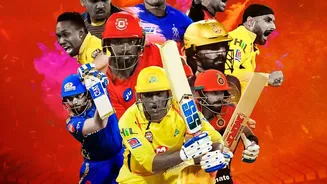
The Indian Premier League (IPL) has acted as a supercharger for the domestic system. While the Ranji Trophy builds the foundation, the IPL provides the finishing touches. It gives domestic players a unique platform to share a dressing room with international legends, learn from the best coaches, and perform under immense pressure in front of massive global audiences. A young player who might have taken years to get noticed can become a household name in a single IPL season. More importantly, it provides financial security, allowing players to focus entirely on their craft. The IPL doesn't replace the domestic grind; it complements and accelerates it, bridging the gap between domestic and international stardom.
Nurturing the Next Generation
The production line is kept running by a robust youth structure and a central institution for excellence. The BCCI runs a comprehensive pathway with U-16 and U-19 tournaments that help identify talent early. The National Cricket Academy (NCA) in Bengaluru plays a pivotal role in this ecosystem. Established in 2000, the NCA is a high-performance centre that nurtures the country's most promising young cricketers through scientific coaching, fitness programs, and sports science. It also serves as a critical rehabilitation centre for injured senior players, ensuring they return to peak condition. This holistic approach ensures that talent is not only discovered but also polished and preserved.