



Have you noticed how the local lake shrinks after the monsoon, exposing muddy banks? This isn't just a sign of the changing seasons; it's the trigger for a spectacular natural event that turns these urban water bodies into bustling avian hotspots.
An All-You-Can-Eat Buffet
The
primary reason for this sudden gathering of birds is simple: food. As the water level recedes during the drier post-monsoon and winter months, the lake essentially becomes a highly concentrated buffet. Aquatic life that was once dispersed throughout a large volume of water—small fish, tadpoles, insects, worms, snails, and crustaceans—is now trapped in shallower pools and exposed mudflats. This makes them incredibly easy for birds to catch. Instead of having to dive deep or search far and wide, birds can simply walk through the shallows and pick out their meals. This phenomenon turns the lake into a low-effort, high-reward feeding ground, a crucial energy-saving opportunity for both resident and migratory birds.
The Perfect Hunting Ground for Waders
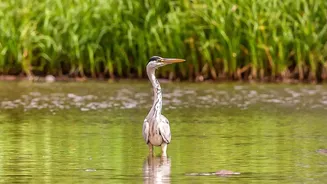
Lower water levels create the ideal habitat for a specific group of birds known as waders or shorebirds. Species like stilts, sandpipers, godwits, and certain herons are physically adapted for this environment. They possess long legs to navigate the shallow water without getting their bodies wet and specialised beaks designed to probe mud or snatch prey from the surface. Deeper water is unsuitable for them, as it prevents them from standing while they hunt. The exposed, soft mudflats become a perfect substrate for them to search for invertebrates hidden just below the surface. The varying depths created by the receding water also allow different species to coexist without directly competing; shorter-legged birds feed at the water's edge, while longer-legged ones can venture further out.
Safety in Numbers and Sightlines
The wide, open mudflats offer more than just food; they also provide safety. With less vegetation and a clear view across the expanse, birds can easily spot approaching predators, whether from the land or the air. This increased visibility gives them precious extra seconds to take flight and escape. Furthermore, the concentration of food attracts a large number of birds, leading to a 'safety in numbers' effect. A predator has a harder time singling out an individual from a large, alert flock. This combination of abundant food and enhanced security makes these shrinking lakes incredibly attractive, encouraging birds to gather in large, often mixed-species, flocks.
The Rhythm of the Indian Seasons
In India, this process is closely tied to the monsoon cycle. Urban lakes swell during the heavy monsoon rains, submerging surrounding grasslands and creating a deep, expansive water body. This is a time when fish and invertebrate populations flourish. As the rains subside and winter approaches, a long dry period begins. Water levels start to drop steadily, initiating the concentration of aquatic life. This timing often coincides with the arrival of migratory birds from Central Asia, Siberia, and the Himalayas, who travel to the subcontinent for the winter. For them, India's urban lakes, now entering their shallow phase, serve as vital refuelling stations on their long journeys, offering a predictable and rich source of food. Many resident species also take advantage of this seasonal bounty.
A Sign of a Healthy (But Fragile) Ecosystem
While this concentration of birds is a breathtaking sight, it's also an indicator of the lake's ecological function. It shows that the water body, despite being in a city, can still support a complex food web. However, these urban ecosystems are fragile. They are under constant threat from pollution, encroachment, and mismanagement, which can destroy the very aquatic life the birds depend on. A lake choked with sewage or invasive species like water hyacinth cannot sustain a healthy fish and invertebrate population, and the birds will not come. Therefore, the seasonal gathering of birds is not just a spectacle; it is a barometer of the health of our urban wetlands.