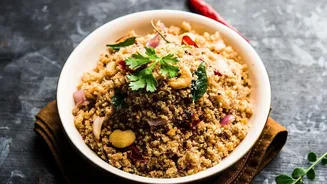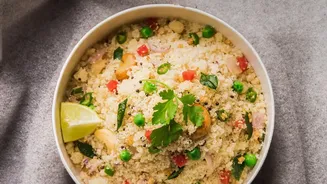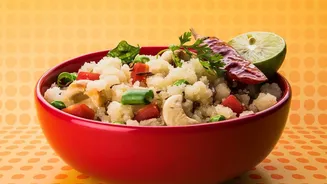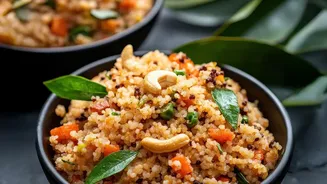

It’s a breakfast staple in millions of Indian homes, yet Upma is anything but uniform. This humble dish of cooked semolina transforms from one state to another, and the secret often lies in one foundational technique: tempering.
The Soul of Flavour: What is Tempering?
Tempering, known as 'tadka',
'chaunk', or 'baghaar' across India, is the cornerstone of flavour in many dishes, including Upma. It's a rapid process where whole or ground spices are sizzled in hot fat, like ghee or oil, to unlock their essential oils and aromatic compounds. This technique does more than just add flavour; it creates a fragrant aroma and ensures the spice notes are evenly distributed throughout the dish. Frying spices in fat releases their lipid-soluble flavour compounds, a process that simple boiling in water cannot achieve. This infused fat then becomes a flavour carrier, transforming the texture and taste of the final dish from simple to complex. The sequence is key: denser spices like mustard seeds and lentils go in first, followed by more delicate ingredients like curry leaves and chillies, each addition building a new layer of flavour.
The Classic South Indian Style
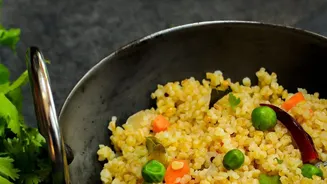
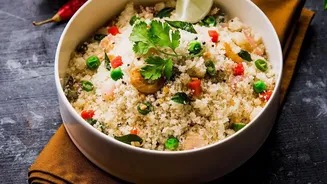
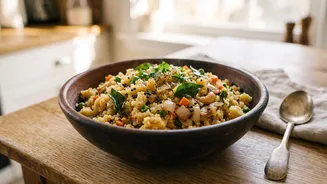
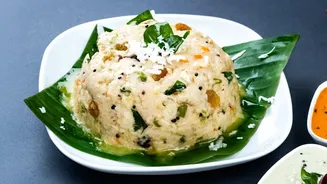
The most widely recognised form of Upma features a classic South Indian tempering that serves as a flavour blueprint. The process typically begins with heating ghee or oil and popping mustard seeds. This is immediately followed by adding lentils like urad dal (split black gram) and chana dal (split chickpeas), which are fried until they turn a pale golden colour, providing a nutty flavour and a crucial textural crunch. Next, curry leaves, green chillies, and sometimes finely chopped ginger are added, releasing a fresh, zesty aroma. A pinch of asafoetida (hing) often finishes the tadka before onions are sautéed until translucent. This foundational tempering creates the savoury, aromatic base that defines the quintessential Rava Upma experience—soft, fluffy, and flavourful.
Karnataka's Richer Cousin: Khara Bath
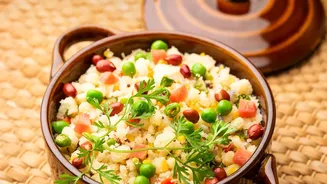
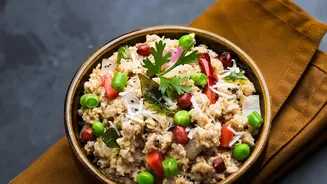
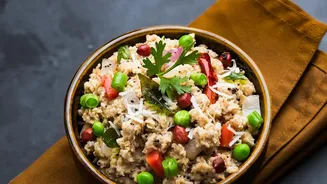
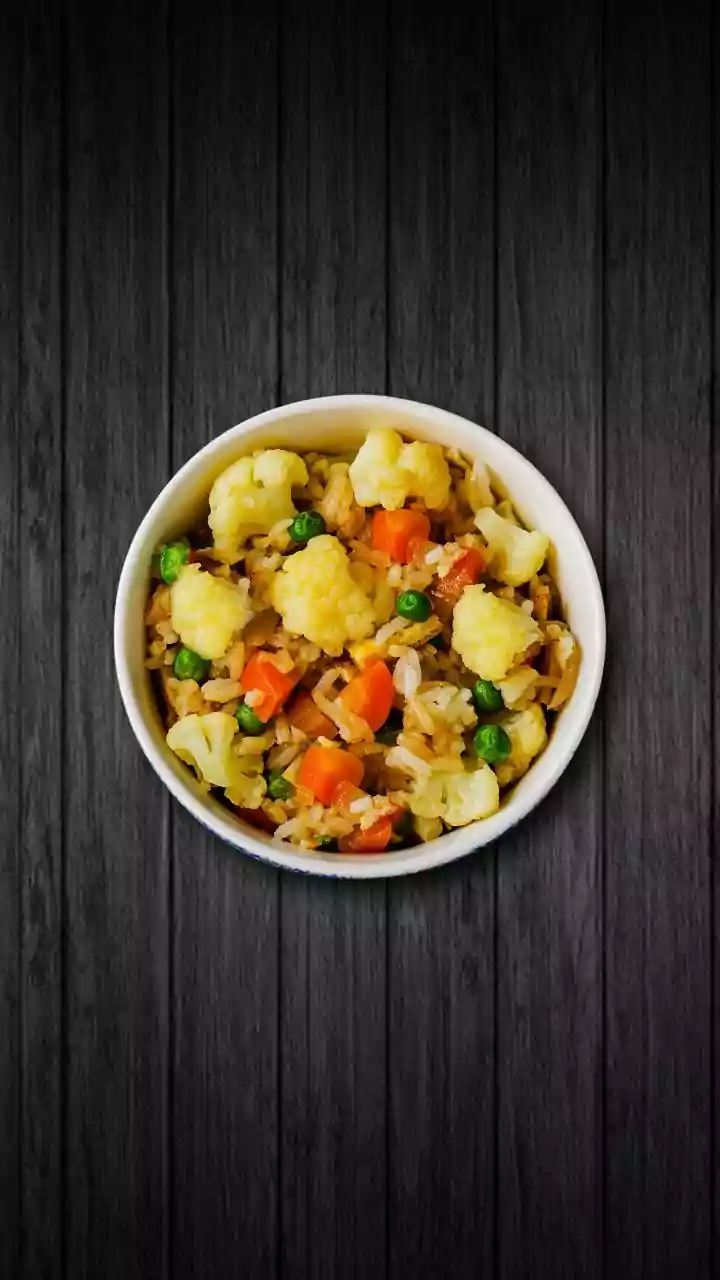
In Karnataka, Upma evolves into a spicier, more complex version known as Khara Bath. While the initial tempering process is similar—starting with mustard seeds, chana dal, and urad dal—it quickly diverges. Khara Bath is loaded with finely chopped vegetables like carrots, beans, and peas, which are sautéed with onions and tomatoes. The true distinction comes from the use of spice powders. Many recipes call for a measure of a specific masala blend, such as Vangi Bath powder or even Sambar powder, which is added to the tempering. This adds a layer of warmth and complexity not found in simpler Upma styles. Often finished with grated coconut and a squeeze of lemon juice, Khara Bath is richer, spicier, and has a softer, more luxurious texture. It is famously served alongside the sweet Kesari Bath in a combination called 'Chow Chow Bath'.
Tamil Nadu's Twist: Arisi Upma
Tamil Nadu offers a distinct variation with Arisi Upma, which uses coarse rice flour (arisi) instead of semolina. The base ingredient itself changes the texture, but the tempering is also unique. While it shares common elements like mustard seeds, dals, and red chillies, the emphasis on certain spices shifts. Black peppercorns and cumin seeds are often ground directly into the rice and dal mixture, infusing the main ingredient with a deep, earthy spice before it even hits the pan. The tempering is traditionally done in sesame or coconut oil, which imparts a signature nutty fragrance. The result is a hearty, flavourful dish where the tempering spices are integral to the grain itself, creating a comforting meal that is often served with coconut chutney or a tangy tamarind-based kuzhambu.
Maharashtra's Tangy Sanja
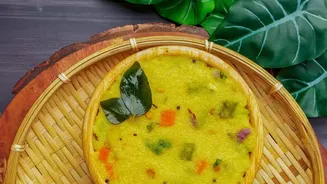
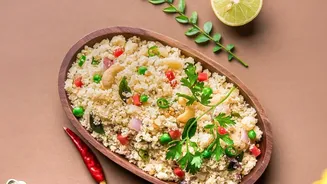
In Maharashtra, the local Upma variant is called Sanja. While it looks similar to the classic Rava Upma, its flavour profile is altered by a few key ingredients in the tempering and cooking process. The tadka follows a familiar pattern of mustard seeds, cumin seeds, green chillies, and curry leaves. However, turmeric is almost always added, giving Sanja its characteristic yellow hue. Onions and sometimes peanuts are sautéed for crunch. The most significant difference is the use of buttermilk or curd, which is added along with water to cook the roasted semolina. This lends a subtle, pleasant tanginess to the finished dish, setting it apart from its counterparts. Garnished with fresh coriander and grated coconut, Sanja is a flavourful and comforting breakfast with a distinctly Maharashtrian identity.