







Why Your Skin Acts Up
The primary culprit during the rainy season is humidity. The excess moisture in the air signals your skin to produce more oil, or sebum. This can leave your face feeling greasy, clog pores, and create a perfect environment for acne breakouts. Furthermore,
the constant dampness encourages the growth of bacteria and fungi, leading to a higher risk of infections like ringworm and athlete's foot, especially in skin folds. The combination of sweat, oil, and environmental pollutants trapped on the skin can result in a dull, grimy complexion and increased sensitivity.
Your Monsoon Skincare Overhaul
Adapting your skincare is crucial. Start by switching to a gentle, soap-free cleanser to wash your face twice daily; this removes excess oil without stripping the skin's natural barrier. Next, even though your skin feels oily, don't skip the moisturiser. Opt for a lightweight, non-comedogenic, gel-based formula that hydrates without feeling heavy or clogging pores. Exfoliating once or twice a week is also important to remove dead skin cells and prevent clogged pores, but avoid harsh scrubs that can cause irritation. Finally, one of the biggest myths is that you can skip sunscreen on cloudy days. UV rays penetrate clouds and can still cause significant damage. A broad-spectrum sunscreen with at least SPF 30 is non-negotiable.
The Science of Monsoon Hair Frizz
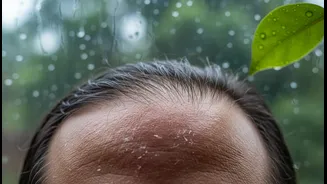
If your hair transforms into a frizzy, unmanageable mass during the monsoon, you're not alone. Hair is primarily made of keratin proteins, which contain hydrogen bonds. High humidity in the air causes these bonds to break and reform, making the hair shaft swell and the outer layer, or cuticle, to lift. This allows more moisture to penetrate the hair strand, resulting in the dreaded frizz and loss of style. Additionally, the scalp can become oilier, leading to issues like dandruff and an itchy scalp as the damp conditions are ideal for the fungus that causes it.
Taming Your Mane in High Humidity
To combat frizz, your hair needs the right kind of moisture. Start with a gentle, sulfate-free shampoo to avoid stripping natural oils. Using an anti-dandruff or clarifying shampoo once a week can help manage scalp health. Always follow up with a conditioner, focusing on the lengths and ends to smooth the hair cuticle. A weekly deep-conditioning hair mask will provide an extra layer of hydration and nourishment, making hair less susceptible to humidity. When styling, apply a lightweight anti-frizz serum to damp hair to seal the cuticle and create a barrier against moisture. Lastly, avoid tying your hair up when it's wet, as this is when it's most fragile and prone to breakage.
Preventing Fungal Infections
Beyond your face and hair, overall hygiene is critical to prevent fungal infections. Always dry yourself thoroughly after a shower, paying close attention to areas like between your toes and skin folds. Wear loose, breathable cotton clothing to allow for air circulation and prevent moisture from getting trapped against your skin. If you get caught in the rain, change out of wet clothes as soon as possible. Using an antifungal powder on your feet and in your shoes can also help keep them dry and infection-free.