



Why Your Pan Size Matters Most
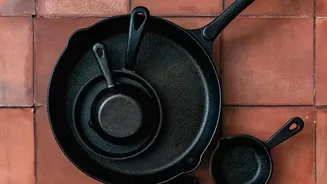
The most common mistake when halving a recipe is using the original cookware. When you pour half the batter into a full-sized pan, you create a much thinner layer of food. This has two negative effects. First, the thinner layer cooks much faster, increasing
the risk of burning before the flavours can develop. Second, the surface-area-to-volume ratio is thrown off. A larger surface area leads to faster evaporation, which can dry out your dish, whether it's a casserole or a cake. The solution is to use smaller cookware. As a rule of thumb, if a recipe calls for a 9x13-inch pan, halving it will require an 8x8-inch pan. This keeps the depth of the food consistent with the original recipe, allowing for more even cooking and better moisture retention. This principle applies to pots and skillets, too; a smaller volume of sauce or curry will perform better in a smaller saucepan.
Rethinking Your Recipe's Timing
Just because you’ve halved the ingredients doesn't mean you should halve the cooking time. This is a fast track to an undercooked meal. Because the mass of food is smaller, it will heat through more quickly, but not by a simple factor of two. A good starting point for oven-baked dishes is to reduce the original cooking time by about one-third, but the real key is to start checking for doneness much earlier. For a cake that originally took 60 minutes, you should start checking at around the 35 or 40-minute mark. You can always cook something for longer, but you can't un-bake it. For stovetop cooking like searing or sautéing, the time might remain almost the same, provided you've downsized your pan correctly. The goal is to use the timer as a reminder to check, not as a final verdict. Trust your senses: look for visual cues like browning and bubbling, and use a toothpick or thermometer to be sure.
The Tricky Task of Halving Ingredients
While halving flour or sugar is straightforward, some ingredients resist simple division. Spices, for example, don't always scale linearly. When halving a recipe, it's wise to start with slightly less than half the amount of potent seasonings like salt, chilli powder, or cloves, and then adjust to taste at the end. The most notorious ingredient is the egg. What do you do when a recipe calls for one egg, or three? For a single egg in a recipe that isn't a delicate custard, you can often just use the whole egg without issue. For an odd number like three, the professional method is to whisk one egg in a bowl and then use half of it, which is typically about two tablespoons. Save the rest for scrambled eggs. For maximum accuracy with all dry ingredients, especially in baking, using a kitchen scale is the best approach. Converting cups to grams makes it easy to divide measurements precisely, avoiding the inaccuracies of volume.
Baking: A Special Case for Scaling
Savory cooking often offers room for improvisation, but baking is a science. Scaling down a baking recipe requires more precision. The chemical reactions of leavening agents like baking soda and yeast are sensitive. While halving baking soda is generally fine, simply halving yeast in a bread recipe will result in a much slower rise. Similarly, some recipes just don't scale down well. Doughs that require a certain mass to be kneaded properly in a stand mixer might fail if the batch is too small for the hook to engage. When halving baked goods, pay extra attention to pan size and timing. A smaller pan prevents the batter from spreading too thin and drying out, and checking on it early and often is your best defence against over-baking. If you're new to this, start by halving recipes for forgiving items like brownies, cookies, or simple quick breads before moving on to more delicate cakes or breads.