

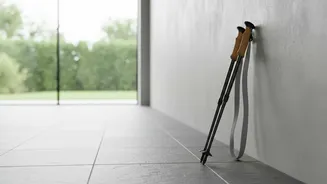

More Than a Walk in the Park
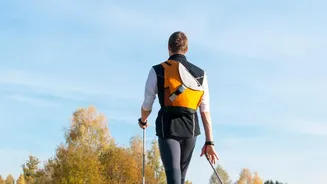
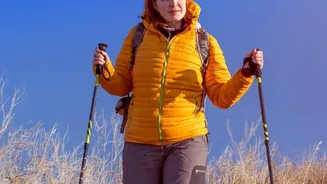
At first glance, Nordic walking looks like hiking, but with a different kind of purpose. Instead of using poles for stability on tricky terrain, Nordic walkers use them to propel themselves forward. Originating as a summer training method for cross-country
skiers in Finland, the technique involves a specific rhythmic motion: as you step with one foot, you plant the opposite pole behind you and push off. This transforms a lower-body-focused activity into a coordinated, full-body movement, engaging your arms, shoulders, chest, and core with every stride.
The Forgotten Upper Body
Many popular forms of cardio, like walking, running, and cycling, primarily focus on the legs. While excellent for heart health, they often leave the muscles of the back, shoulders, and arms underutilized. Upper-body strength, however, is essential for everyday life—from carrying groceries to maintaining good posture and preventing back pain. Engaging these muscles not only builds functional strength but also increases the overall intensity and calorie burn of a workout. This is where Nordic walking makes a significant difference, bridging the gap between a simple walk and a comprehensive strength and cardio session.
A Full-Body Calorie Burn
The science behind Nordic walking is compelling. By recruiting the upper body, you engage up to 90% of your body's muscles, compared to about 50% with regular walking. This increased muscle activation has a powerful effect. Studies show that Nordic walking can burn anywhere from 18% to 67% more calories than walking at the same pace without poles. Furthermore, it has been linked to reductions in fat mass, bad cholesterol, and anxiety, while improving cardiovascular fitness, endurance, and flexibility. Because the poles help distribute effort and reduce load, it's also gentler on joints like the knees and hips, making it an ideal activity for a wide range of fitness levels and ages.
The Shift to Accessible Fitness
Perhaps the biggest shift is in perception. Once seen as a niche sport or an activity for older adults in Europe, Nordic walking is now being embraced as a smart, accessible form of exercise for everyone. Its low-impact nature makes it suitable for people with joint issues or those recovering from injury, while its intensity can be scaled up for seasoned athletes. In an era where people are seeking sustainable, enjoyable, and effective fitness routines that don't require a gym membership, Nordic walking fits perfectly. It's an activity that gets you outdoors, can be done almost anywhere, and delivers a surprisingly powerful workout without feeling significantly harder than a brisk walk.
Getting Started with Your Stride
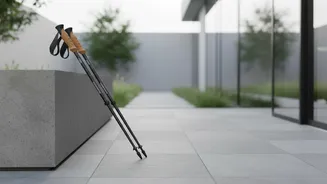
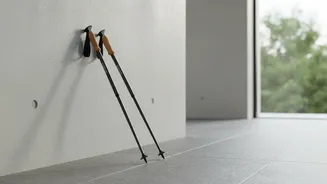
Getting started is straightforward, but technique matters. It's crucial to use poles designed specifically for Nordic walking, not trekking or ski poles, as they have a different design for propulsion. The basic movement involves walking with your arms and legs in opposition, just like a normal walk. Plant the pole at an angle behind you, roughly level with the heel of your front foot, and push off. Your shoulders should remain relaxed and your posture upright. Many find joining a beginner's class or watching tutorials helpful to master the rhythm and maximize the upper-body benefits.