






Understanding Cortisol: The Body's Alarm System
Often called the 'stress hormone,' cortisol is more complex than its reputation suggests. It’s a vital hormone that helps regulate your sleep-wake cycle, control blood sugar, manage how your body uses carbohydrates and fats, and reduce inflammation. When
you're facing a challenge, like a looming exam deadline, your brain activates a 'fight-or-flight' response, releasing cortisol to give you a burst of energy and focus. The problem arises when this stress becomes chronic. Consistently high cortisol levels can disrupt sleep, impair memory and concentration, and leave you feeling perpetually overwhelmed—the exact opposite of what you need when you're trying to study effectively.
Yoga's Role: Shifting from 'Fight' to 'Rest'
This is where mindful yoga comes in. The practice is more than just physical stretching; it's a holistic approach that combines movement (asana), breathwork (pranayama), and focused attention (dhyana). This combination works directly on your body's stress-response systems. When you are stressed, your sympathetic nervous system (the fight-or-flight response) is dominant. Yoga helps activate its counterpart, the parasympathetic nervous system, which is responsible for the 'rest-and-digest' state. By consciously slowing down your breathing and moving with intention, you send signals to your brain that the perceived threat has passed, which in turn helps to lower the production of cortisol.
The Power of Mindful Movement
The 'mindful' aspect of these stretches is crucial. It’s about paying attention to the physical sensations in your body without judgment. This practice helps to quiet the mental chatter and rumination that often accompany stress. Studies have shown that a regular yoga practice can measurably reduce cortisol levels. Even a single session of about 15-20 minutes can trigger a calming effect by stimulating the vagus nerve, a key component of the parasympathetic nervous system. This shift away from a constant state of high alert allows your body and mind to relax, release physical tension, and find a sense of equilibrium.
Simple Stretches to Try at Your Desk
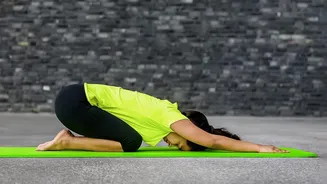
You don't need a full hour or a fancy studio to reap the benefits. These simple stretches can be done right at your study desk to break the stress cycle. 1. Seated Cat-Cow: Sit at the edge of your chair with your feet flat on the floor. Place your hands on your knees. As you inhale, arch your spine and look up, opening your chest (Cow). As you exhale, round your spine and drop your chin to your chest (Cat). Repeat this fluid movement for 5-10 breaths to gently mobilize your spine. 2. Seated Twist: Sit tall and inhale to lengthen your spine. As you exhale, gently twist your torso to one side, using the chair for light support. Hold for a few deep breaths, feeling the stretch without forcing it, then repeat on the other side. This helps release tension in the back. 3. Child’s Pose Variation: If you have space, come to your hands and knees and sink your hips back toward your heels, resting your forehead on the floor or a stack of books. A desk version involves simply folding forward in your chair, letting your torso rest on your thighs and your head hang heavy. Breathe deeply into your back for a minute to feel a sense of grounding and release.