


A Celestial Parade After Sundown
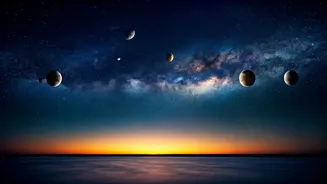
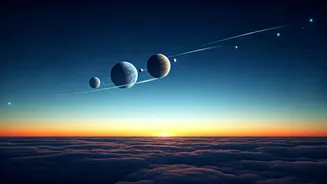
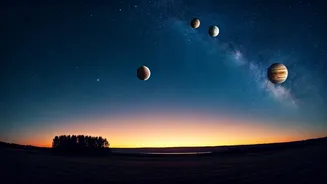
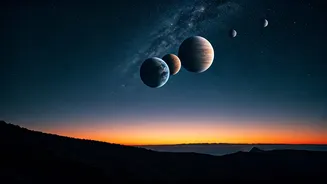
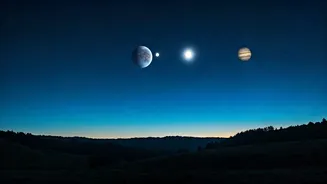
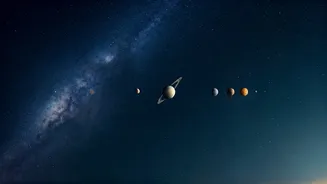
In recent months, a rare and beautiful phenomenon has graced our evening skies: a “planet parade.” This occurs when several planets in our solar system appear to line up in a row from our vantage point on Earth. While they aren't actually aligned in a straight
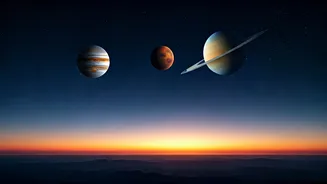
line out in space—that would be an astronomically rare event—their orbits bring them to the same side of the sun, making them visible in the same patch of sky. After sunset, the western horizon has transformed into a grand cosmic stage. Events like the recent five-planet alignment, featuring Mercury, Venus, Mars, Jupiter, and Saturn, have created a buzz not just within astronomical circles but among the general public. It's a visual reminder of the vast solar system we inhabit, a spectacle that has been observed and chronicled by sky-watchers for millennia.
The Planets on Display
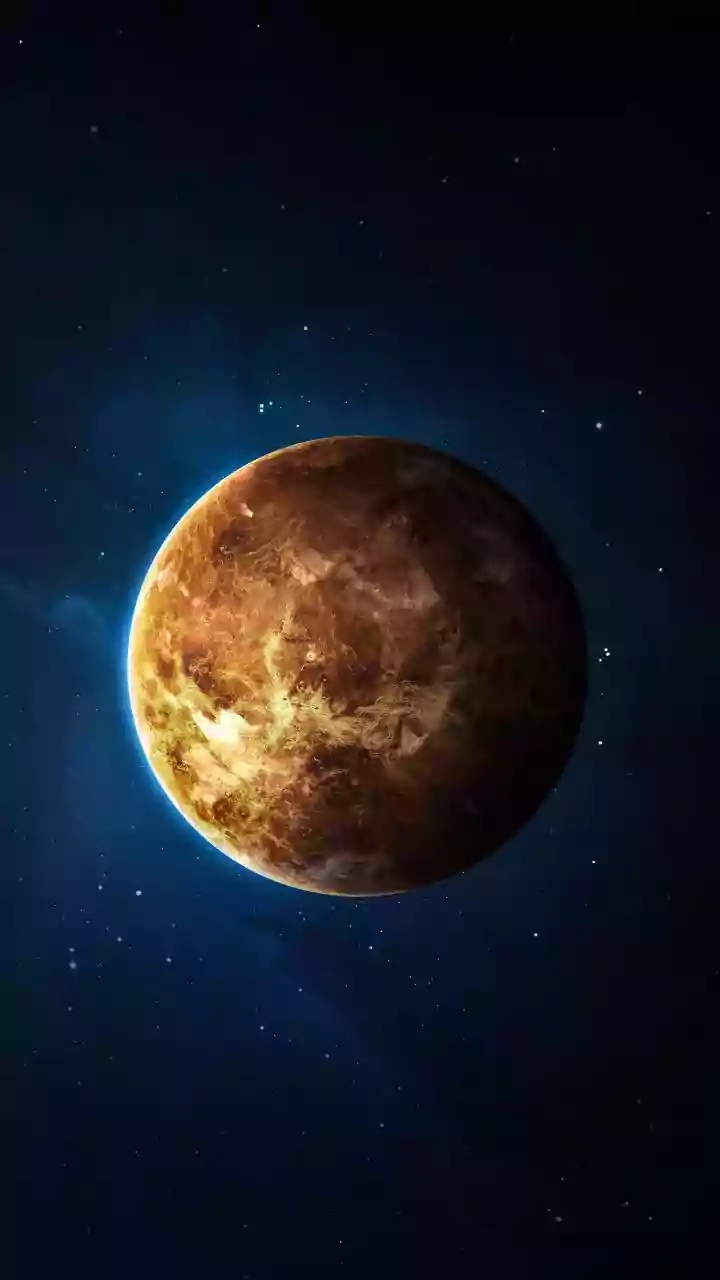
So, who are the stars of this show? The cast often includes the five planets visible to the naked eye. Venus is almost always the most dazzling, a brilliant white diamond that outshines every other star. It’s often the first “star” you’ll see after the sun goes down. Jupiter is the second-brightest, a steady and regal point of light. Mars is easily identifiable by its distinct reddish-orange hue, earning it the nickname “the Red Planet.” Saturn is fainter, with a calmer, yellowish-white glow. The trickiest one to spot is Mercury. Because it’s the closest planet to the sun, it never strays far from its glare and is only visible for a short window during twilight. Spotting all five requires a bit of luck and timing, but the reward is a breathtaking view of our planetary neighbours.
Your Guide to Planet-Spotting
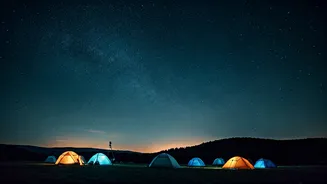
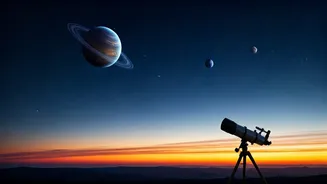
You don’t need a fancy telescope to join the chase. Here’s how you can witness the next planetary alignment. First, find a location with an unobstructed view of the western horizon, away from tall buildings and bright city lights. The best time to look is about 30 to 60 minutes after sunset. Give your eyes at least 15 minutes to adjust to the darkness; you’ll be surprised at how much more you can see. While your eyes are enough, a simple pair of binoculars can dramatically enhance the view, revealing the phases of Venus or even the four largest moons of Jupiter as tiny pinpricks of light. For extra help, smartphone apps like Stellarium, SkyView, or Star Walk can act as your personal guide, using your phone’s camera and GPS to identify exactly which planet you’re looking at.
The Thrill of the Chase
For India’s growing community of amateur astronomers, these alignments are major events. Across cities like Bangalore, Mumbai, and Delhi, local astronomy clubs and groups gather on rooftops and in open fields. It’s a shared experience, fueled by a passion for the cosmos. They share tips, point out constellations, and help newcomers distinguish Saturn from a distant airplane. The “chase” is part of the fun—planning the viewing, checking weather forecasts, and heading out with a sense of anticipation. For many, it’s a meditative escape from the hustle of daily life. The feeling of capturing a photo of multiple planets with a basic DSLR camera or simply sketching the alignment in a notebook connects them to a tradition of sky-gazing that is as old as humanity itself. It’s a hobby that requires only patience and an upward gaze.
More Than Just Dots of Light
Watching a planetary alignment is more than just a novel astronomical event; it’s a moment of connection. Each point of light is a world—Mars with its dusty red deserts, Jupiter with its colossal storms, and Saturn with its iconic rings. Seeing them strung across our sky is a profound and humbling experience. It reminds us that our Earth is not an isolated bubble but part of a dynamic, moving system. These events bridge the gap between abstract science and tangible wonder. They offer a chance to pause, look up, and appreciate the silent, grand mechanics of the universe unfolding above our heads. It’s a free, awe-inspiring show available to everyone, a shared heritage written in the stars.