




A Lab Colder Than Deep Space
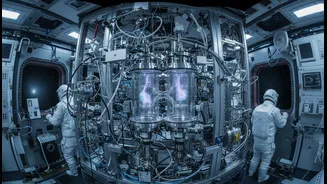
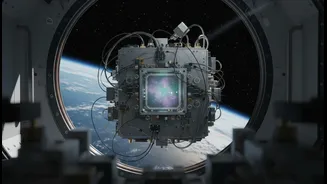
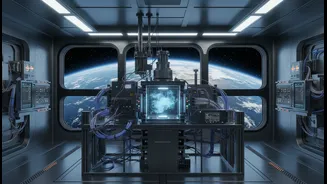
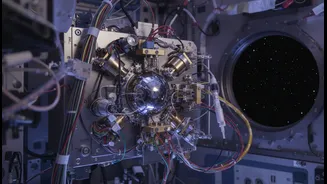
Aboard the International Space Station (ISS), NASA's Cold Atom Laboratory (CAL) has a unique mission: to chill atoms to temperatures just a fraction of a degree above absolute zero, or about minus 459 degrees Fahrenheit. At these extreme temperatures,
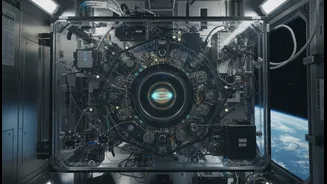
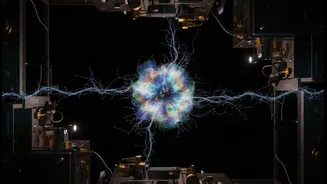
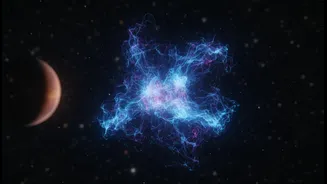
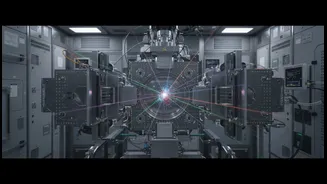
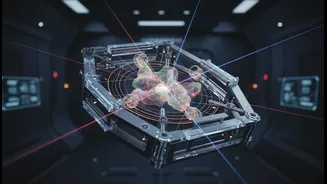
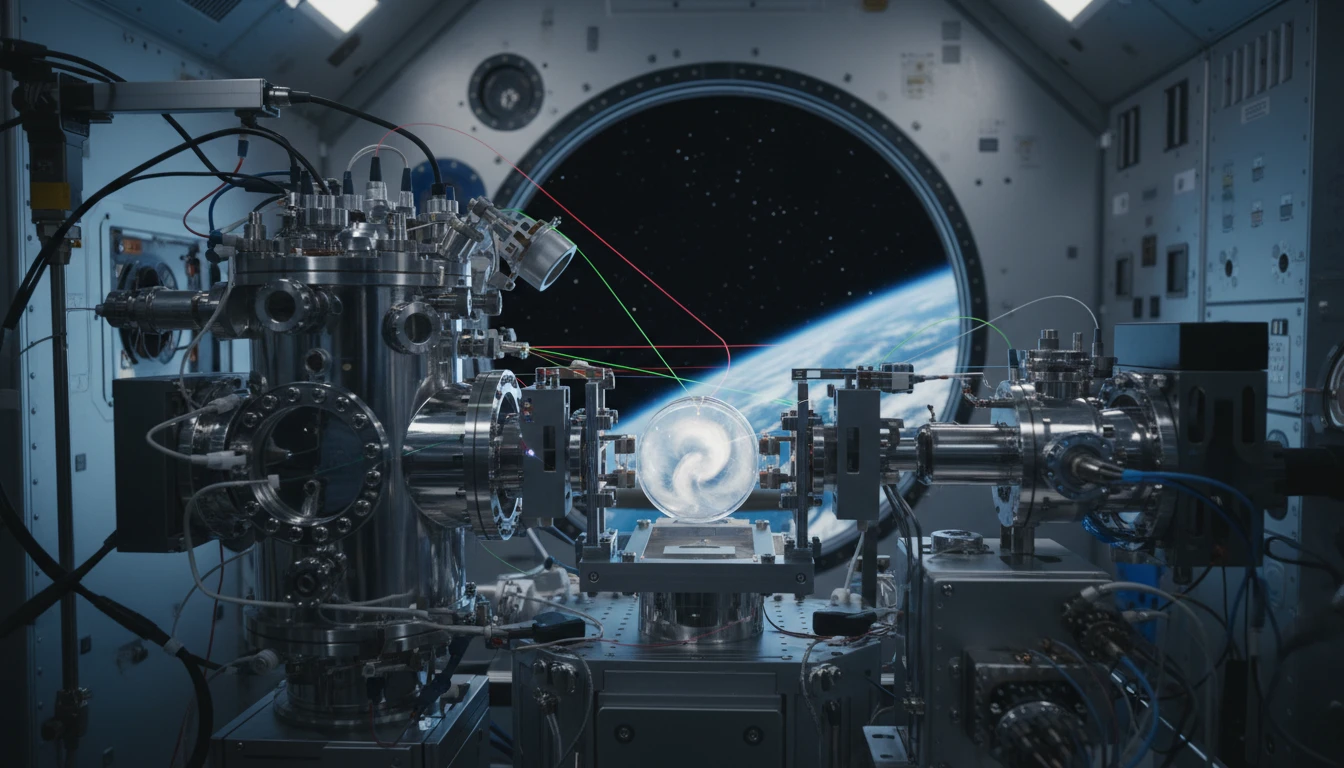
atoms slow to a near standstill and can merge into a strange fifth state of matter called a Bose-Einstein condensate (BEC). In this state, a cloud of individual atoms starts behaving like a single, massive wave, allowing scientists to observe quantum phenomena on a scale large enough to see. The lab itself is a marvel of engineering, shrinking a room-sized university physics lab into a compact facility operated remotely from Earth.
What's New in the Quantum Realm?
Since its installation in 2018, the CAL has received several upgrades, with the latest enhancements significantly expanding its research capabilities. This recent upgrade, installed by astronauts in 2026, includes a redesigned magnetic trap that gives scientists more flexibility to shape and manipulate the ultracold atom clouds. Think of it as giving them new ways to hold and poke at these delicate quantum states. Engineers also improved the metal atom sources used to generate the gas clouds for experiments. These improvements allow for the creation of larger BECs and provide more control, pushing the boundaries of what can be studied in space.
Why Study Quantum Physics in Space?
Conducting these experiments on Earth is a constant battle against gravity, which pulls the atom clouds down, limiting observation times to mere fractions of a second. The microgravity environment of the ISS is a game-changer. It allows these ultracold atom clouds to float freely, extending observation times to many seconds. This longer duration enables the atoms to cool to even lower temperatures than possible on the ground and allows the matter waves to grow much larger. This extended, pristine environment is crucial for making the ultra-precise measurements needed to test fundamental theories of physics and develop new quantum technologies.
From Weird Science to Real-World Technology
While studying the fundamental nature of the universe is a key goal, the research has very practical implications. The work being done on the Cold Atom Lab is described as 'Quantum 2.0'—the direct manipulation of quantum states to build new technologies. This research is a proving ground for future instruments that could revolutionise deep space navigation, creating a sort of 'quantum compass' that doesn't need to communicate with Earth. On our planet, this work could lead to ultra-precise sensors capable of monitoring Earth's water reserves and tracking climate change with unprecedented accuracy. These advancements are foundational for the next wave of innovation, similar to how the first quantum revolution gave us lasers, computers, and MRI machines.