




The Common Understanding of Equinox
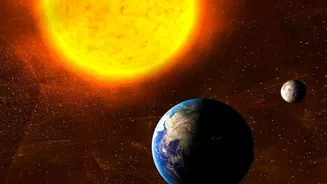
Twice a year, around March 20 and September 22, the Earth reaches a point in its orbit where its axis isn't tilted toward or away from the sun. On these days, known as equinoxes, the sun shines directly over the equator. The Latin origin of the word,
'aequinoctium' (equal night), leads to the popular belief that day and night are both precisely 12 hours long across the globe. Astronomically, the equinox is the moment the center of the sun's disk passes over the Earth's equator. And if our planet were a vacuum with a sun that was just a single point of light, that 12-hour balance would be perfect. But two key factors disrupt this perfect equilibrium.
Reason One: Earth's Atmosphere Bends Light
The first reason we get a few extra minutes of sun is a phenomenon called atmospheric refraction. Earth’s atmosphere acts like a lens, bending sunlight as it travels toward us. This effect is most pronounced at sunrise and sunset when the sun is low on the horizon. Because of refraction, the sun's light reaches our eyes several minutes before its disk actually crests the horizon. In the evening, the same effect allows us to see the sun for several minutes after it has technically dipped below the horizon. This atmospheric bending essentially gives us a premature sunrise and a delayed sunset, adding about six or more minutes of total daylight, depending on your location and atmospheric conditions.
Reason Two: The Sun Is a Disc, Not a Point
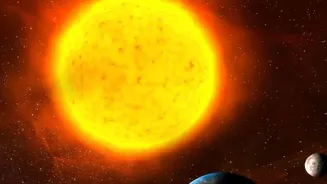
The second reason relates to how we define sunrise and sunset. These moments are not based on when the center of the sun crosses the horizon. Instead, sunrise is officially marked the moment the very top edge (or upper limb) of the sun becomes visible. Sunset is defined as the moment that same top edge disappears below the horizon. Because the sun is a large disc and not a single point, the time it takes for its full diameter to rise or set means we get extra daylight. Even after the sun's geometric center has set, its upper edge is still visible, contributing to the length of the day. This factor alone adds an extra two to three minutes of daylight at mid-temperate latitudes.
Meet the 'Equilux': The Real Day of Equal Light
If the equinox isn't the day of perfect balance, then when is it? For that, there is another term: the 'equilux'. Coined in the 1980s, the equilux refers to the actual day when a location experiences as close to 12 hours of daylight and 12 hours of darkness as possible. Due to the effects of refraction and the sun's disc, this day doesn't fall on the equinox itself. For the Northern Hemisphere, the autumn equilux happens a few days after the September equinox. The exact date varies depending on your latitude. Around the equinoxes, the rate of change in day length is at its fastest, meaning the perfect 12/12 split is a fleeting moment.