



The Main Adventure: Nongriat's Double Decker
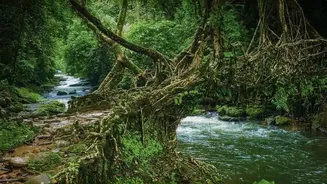
The most famous trek leads to the Umshiang Double Decker Living Root Bridge in Nongriat village. This is the quintessential root bridge experience. The journey starts from Tyrna village, a short shared taxi ride from Cherrapunji (Sohra). From Tyrna, it's
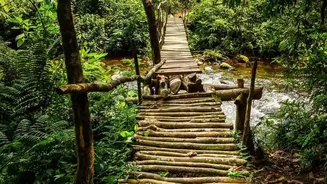
a steep descent of approximately 3,500 steps. The trek down takes about 90 minutes to two hours, passing smaller villages, lush forests, and thrilling suspension bridges. While challenging, especially the climb back up, it's a well-trodden path. You don't necessarily need a guide, but hiring one supports the local community that maintains these trails. A bamboo stick, available for a nominal price at the start, is highly recommended for stability.
Budgeting Your Trek
This adventure is incredibly budget-friendly. Transportation from Shillong to Cherrapunji can be done via shared sumos, which are very economical. From Cherrapunji, shared taxis to the Tyrna trailhead cost around ₹80-100 per seat. Entry fees to the bridges themselves are minimal, usually between ₹20-₹50, which contributes to their upkeep. The biggest savings come from accommodation. Instead of a day trip, plan to stay overnight in Nongriat. Basic homestays in the village offer rooms for as little as ₹300-₹500 per night. These are no-frills accommodations, often with shared bathrooms and simple, hearty meals of rice and dal, but they provide an authentic and immersive experience.
Beyond the Double Decker: Rainbow Falls
Staying overnight in Nongriat gives you a massive advantage: you can experience the bridges in the quiet hours of the early morning before day-trippers arrive. It also allows you to trek further to Rainbow Falls. This is a 45 to 60-minute walk beyond the Double Decker bridge. The trail leads past another single-decker root bridge and secluded natural pools. The waterfall is famous for the consistent rainbow that appears in its mist on sunny mornings, typically between 9 AM and 11 AM. It's a truly magical extension to the main trek and a reward for those who choose to stay in the valley.
Lesser-Known Root Bridge Routes
While Nongriat is the main attraction, Meghalaya has over 100 living root bridges. For a less crowded experience, consider other routes. The Riwai Living Root Bridge near Mawlynnong (often called Asia's cleanest village) is one of the most accessible. It's a relatively easy and short walk from the village. For a more strenuous adventure, you can seek out the Mawkyrnot-Rangthylliang bridge, considered the longest natural bridge, which involves a descent of about 1,500 steps. Exploring these alternative bridges often requires hiring a local guide who can navigate the less-marked trails and share stories about the region.
Essential Tips for Backpackers
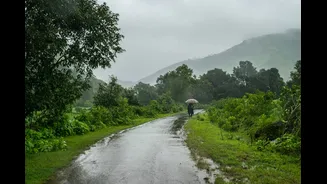
To make the most of your trip, start your treks early in the day to avoid the afternoon heat and potential rain. The weather in Meghalaya changes quickly, so a raincoat or poncho is essential, even outside of monsoon season. Wear shoes with excellent grip, as the stone steps can be slippery. Carry a reusable water bottle and some high-energy snacks. While guides aren't always mandatory for the main Nongriat trek, they are invaluable for exploring off-the-beaten-path bridges. Finally, phone connectivity is patchy to non-existent in the valleys, so inform someone of your plans before you descend.