







The Illusion of the Cheap Ticket
Budget airlines have mastered the art of the tempting base fare. However, this initial price is often just a starting point. Once you factor in charges for seat selection, in-flight meals, and even printing a boarding pass at the airport, the final cost
can creep up significantly. These unbundled services are how low-cost carriers keep their headline prices down. A full-service carrier or even a higher-tier train ticket, which includes these amenities, can sometimes offer better overall value. Before you book, it's crucial to calculate the total expense, not just the eye-catching number on the search results page.
The Last-Mile Calculation
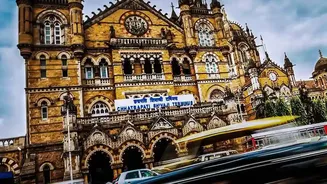
A significant, often overlooked, cost is the journey to and from the terminal. Airports in India are typically located on the outskirts of major cities, requiring a lengthy and expensive taxi or cab ride. In contrast, major railway stations are usually situated in the heart of the city, easily accessible by public transport. For example, reaching Kempegowda International Airport in Bengaluru or Indira Gandhi International in Delhi can take over an hour and a considerable fare, depending on traffic. Meanwhile, arriving at New Delhi Railway Station or Mumbai Central puts you right in the urban core, saving both time and money on last-mile connectivity.
Time Isn't Just Flight Duration
A one-hour flight is rarely just a one-hour journey. The process involves travelling to the airport, arriving two hours early for check-in and security, the flight itself, deplaning, and then waiting for your baggage. A one-hour flight can easily become a four to five-hour door-to-door affair. For short to medium distances, a train journey might take longer on paper but be more efficient in reality. Consider a five-hour Vande Bharat Express trip: you can arrive at the station just 30 minutes before departure and have productive, connected time on your laptop throughout the journey. For routes under 600km, like Mumbai-Pune or Delhi-Chandigarh, the total travel time for a train is often comparable to, or even less than, flying.
The Rise of Premium Train Travel
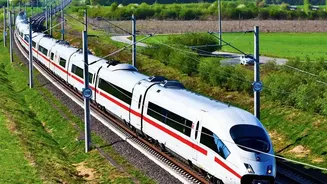
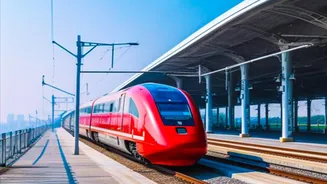
Indian Railways is rapidly closing the gap with airlines in terms of speed and comfort. The introduction of semi-high-speed trains like the Vande Bharat Express has been a game-changer on many popular routes. These trains offer airline-style seating, cleaner facilities, and onboard meals, presenting a compelling alternative to flying. On corridors like Delhi-Varanasi or Mumbai-Ahmedabad, Vande Bharat offers significant cost savings compared to flights, with journey times that are competitive when you factor in the total door-to-door duration. The on-time performance of these services is also proving to be highly reliable, often more so than flights, which are susceptible to air traffic congestion and weather delays.
The Baggage Battle
For many young travellers, especially students or those relocating, luggage is a major consideration. Most domestic airlines in India have a strict 15 kg limit for check-in baggage, with steep charges for every extra kilo. This can quickly turn a cheap ticket into an expensive mistake. Trains, on the other hand, offer a far more generous allowance. Passengers in AC classes can carry between 40 kg and 70 kg of luggage for free, depending on the class. While Indian Railways has begun implementing stricter, airline-style baggage checks at some stations, the free allowance remains significantly higher than what airlines offer, providing crucial flexibility and cost savings.