









Myth 1: 'Baked, Not Fried' Is Always Healthier
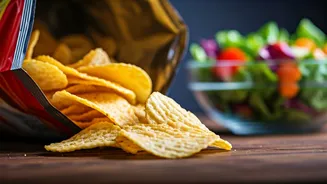
The claim 'baked, not fried' is one of the most common marketing tactics in the snack aisle. While baked chips are generally lower in fat and calories, the difference isn't always significant enough to matter. To compensate for the lack of flavour and texture
from frying, manufacturers often add more starches, sugars, and sodium. A 2024 analysis by a registered dietitian found that while a bag of baked chips had about 5 grams less fat than fried, they also had more carbohydrates and offered fewer nutrients like potassium and vitamin C. So, while there's a reduction in fat, the overall nutritional profile isn't necessarily a huge leap forward. Portion control remains key, regardless of how the chip is cooked.
Myth 2: 'Veggie Chips' Are a Serving of Vegetables
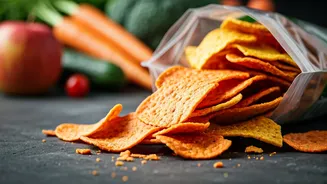
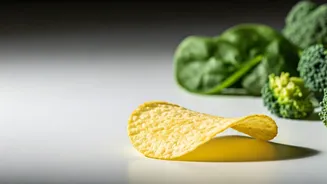
It’s tempting to think that a colourful bag of veggie straws or chips is a clever way to increase your vegetable intake. Unfortunately, this is rarely the case. Many popular veggie snacks are made primarily from potato starch, potato flour, or cornmeal, with only a small amount of vegetable powder added for colour and flavour. These products often lack the fibre and nutrients of whole vegetables and can be just as high in sodium and processed oils as regular potato chips. Dietitians recommend checking the ingredient list; if a whole vegetable isn't the first ingredient, you're likely not getting the benefits you think you are. For a true vegetable-based crunch, you are better off with actual baby carrots or pepper slices with hummus.
Myth 3: 'Gluten-Free' or 'Organic' Means Healthy
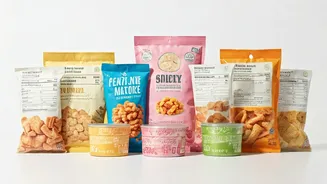
Labels like 'gluten-free' and 'organic' can create a powerful health halo, leading consumers to believe a product is inherently good for them. However, these labels don't automatically equate to nutritional superiority. A gluten-free cookie is still a cookie, often made with refined flours, sugar, and fat. Similarly, organic chips are still chips; while the ingredients may be sourced organically, they can be just as processed and high in calories, salt, and fat as their non-organic counterparts. These labels describe a method of farming or the absence of a specific protein, not the overall healthiness of the final product. It's crucial to look beyond these buzzwords and examine the full nutrition facts panel.
Myth 4: They Are Low in Salt and Sugar
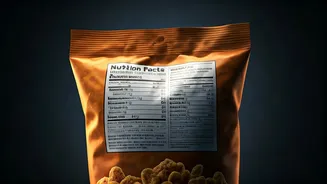
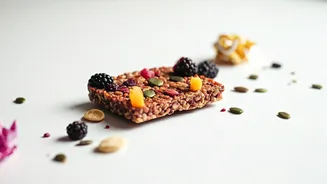
To make these 'healthier' snacks palatable, manufacturers often load them with sodium and, in some cases, hidden sugars. High sodium intake is a concern for blood pressure and overall heart health. A recent analysis of so-called healthy snack bars found that many contained surprisingly high sugar levels, sometimes equivalent to a third of a child's daily limit in a single serving. This is a classic example of a formulation trade-off: when fat is removed, sugar and salt are often increased to make the product taste good. Always check the nutrition label for sodium and added sugar content, as it can be much higher than you'd expect in a savoury snack.
What Makes a Truly Healthy Snack?
So, what should you reach for when a craving strikes? Nutrition experts consistently point toward whole, minimally processed foods. A truly healthy snack provides a balance of macronutrients: protein, fibre, and healthy fats. This combination helps stabilize blood sugar, provides lasting energy, and keeps you feeling full. Think about pairing foods, like an apple with a handful of nuts, Greek yogurt with berries, or whole-grain crackers with hummus. These options deliver valuable vitamins and minerals without the additives, refined carbohydrates, and excessive sodium found in many packaged snacks. The goal is to choose foods that are nutrient-dense, not just lower-calorie versions of junk food.