






For over 35 years, the Hubble Space Telescope has been humanity’s eye on the cosmos. Now, its mission is threatened by orbital decay, and NASA is turning to the private sector with an unprecedented request for help.
The Slow Descent
Like all objects in low Earth orbit,
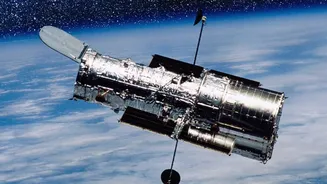
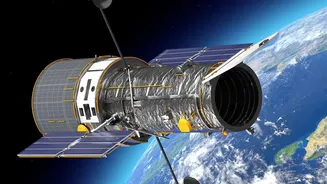
the Hubble Space Telescope is subject to atmospheric drag. Even hundreds of miles up, the wisps of Earth's atmosphere are enough to gradually slow the observatory, causing it to lose altitude. Launched in 1990, Hubble has no onboard propulsion system to counteract this slow but relentless pull. Without intervention, its orbit will continue to decay until it makes an uncontrolled reentry into the atmosphere, which NASA projects could happen between 2033 and 2034. While the risk to people on the ground is low, it is higher than NASA's safety standards allow, making a planned solution necessary.
NASA's Open Invitation
In late October 2026, NASA officially issued a Request for Information (RFI), asking the commercial space industry for ideas on how to address Hubble's future. This is not a contract, but a market research step to see what's possible. The RFI outlines three main options: a 'reboost' mission to push Hubble into a higher, more stable orbit; a servicing mission to potentially upgrade its systems; or a controlled de-orbit to safely dispose of the telescope over the ocean at the end of its life. The deadline for companies to submit their concepts is November 30, 2026.
A New Model of Rescue
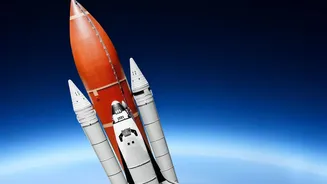
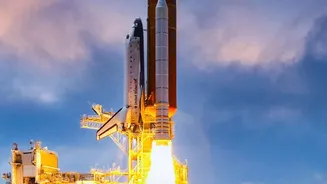
This call for commercial proposals marks a significant shift from how Hubble has been maintained in the past. Throughout the 1990s and 2000s, NASA's own Space Shuttle fleet flew five servicing missions. Astronauts performed spacewalks to install new instruments, repair components, and, on several occasions, boost the telescope's orbit. The last such reboost was in 2002. With the shuttle program retired in 2011, NASA no longer has an internal capability for this kind of hands-on servicing mission. The new plan relies on the burgeoning commercial space sector, asking a private company to provide the launch, the spacecraft, the mission operations, and even the crew, if a crewed mission is proposed.
Who Are the Potential Partners?
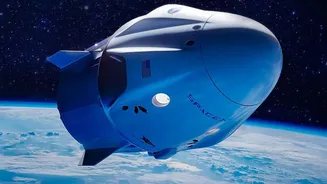
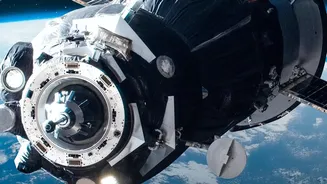
While NASA's request is open to any company with the capability, a few names stand out. In 2022, NASA and SpaceX signed an unfunded agreement to study the feasibility of using a Dragon spacecraft for a reboost mission, in partnership with the private Polaris Program led by billionaire Jared Isaacman. That study explored a crewed mission to dock with and push Hubble to a higher orbit. Now, with a formal RFI, other companies with experience in satellite servicing and logistics, such as Northrop Grumman or Rocket Lab, may also present solutions. Any proposed mission would have to happen by 2032 to be effective.
What is at Stake?
Extending Hubble's life is about more than preserving a piece of history. The telescope remains a powerful scientific tool with unique capabilities. It is the only major observatory that can see in ultraviolet light, a crucial window for studying everything from planets in our solar system to the most distant universe. While the James Webb Space Telescope is more powerful in the infrared spectrum, it does not replace Hubble's view. A successful reboost to the requested altitude of 600 kilometers could add 25 years or more to Hubble's operational life, allowing it to continue making discoveries until a successor, the Habitable Worlds Observatory, is potentially launched in the 2040s.