

The Crown Jewel of Spices
Saffron, or 'kesar', holds a hallowed place in Indian culture and cuisine. Harvested by hand from the Crocus sativus flower, each blossom yields only three delicate red threads. This labour-intensive process makes it the most expensive spice in the world.
In India, it's more than just an ingredient; it's a symbol of luxury, festivity, and royalty, lending its distinct floral aroma, subtle bitter notes, and brilliant golden hue to everything from biryanis to desserts.
Spotting the Real Deal
Given its cost, the market is unfortunately rife with fakes. Adulterated saffron may consist of dyed corn silk or other plant materials. Pure saffron threads are trumpet-shaped, deep red, and feel dry and brittle. A simple home test is to place a few threads in a glass of cool water. Real saffron will slowly release a golden-yellow colour, while the threads themselves remain red. Fake saffron often bleeds an artificial red colour almost instantly and may dissolve or lose its colour entirely. Authentic saffron should have a strong, hay-like and floral aroma, and it should taste slightly bitter, not sweet.
Unlock the Magic: How to Bloom Saffron
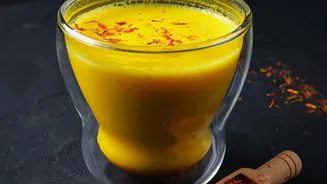
To get the most from your precious threads, never add them directly to a dish. You must 'bloom' them first to release their full potential. This involves steeping the saffron in a warm liquid. Lightly crush about 15-20 threads for a dish serving four people. Soak them in 2-3 tablespoons of warm (not boiling) water or milk for at least 15-20 minutes. Boiling liquid can destroy the delicate aromatic compounds. You'll know it's ready when the liquid turns a vibrant golden-orange. This infused liquid, along with the threads, should be added towards the end of the cooking process to preserve its flavour and aroma.
Saffron and Rice: A Match Made in Heaven
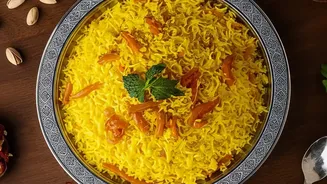
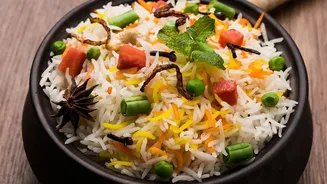
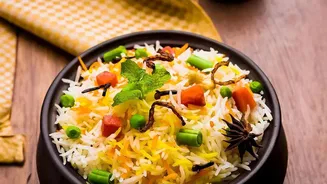
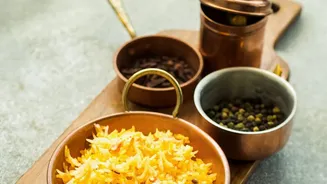
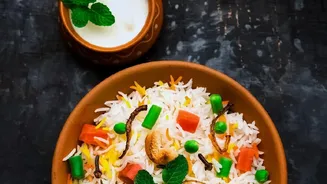
Saffron and rice are a classic pairing in Indian cuisine, most famously in Zafrani Pulao and Biryani. In a pulao, the bloomed saffron is often added to the cooking water, infusing each grain with colour and fragrance. For Biryani, it's a finishing touch; the saffron-infused milk is drizzled over the top layer of rice just before the final 'dum' or steaming. This creates a stunning visual of white and golden grains and ensures pockets of intense aroma throughout the dish. A general rule of thumb is to use about 20-25 threads for 500g of rice.
Beyond Biryani: Other Saffron Delights
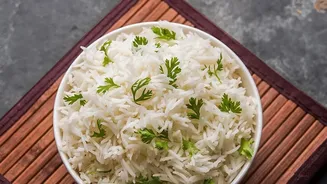
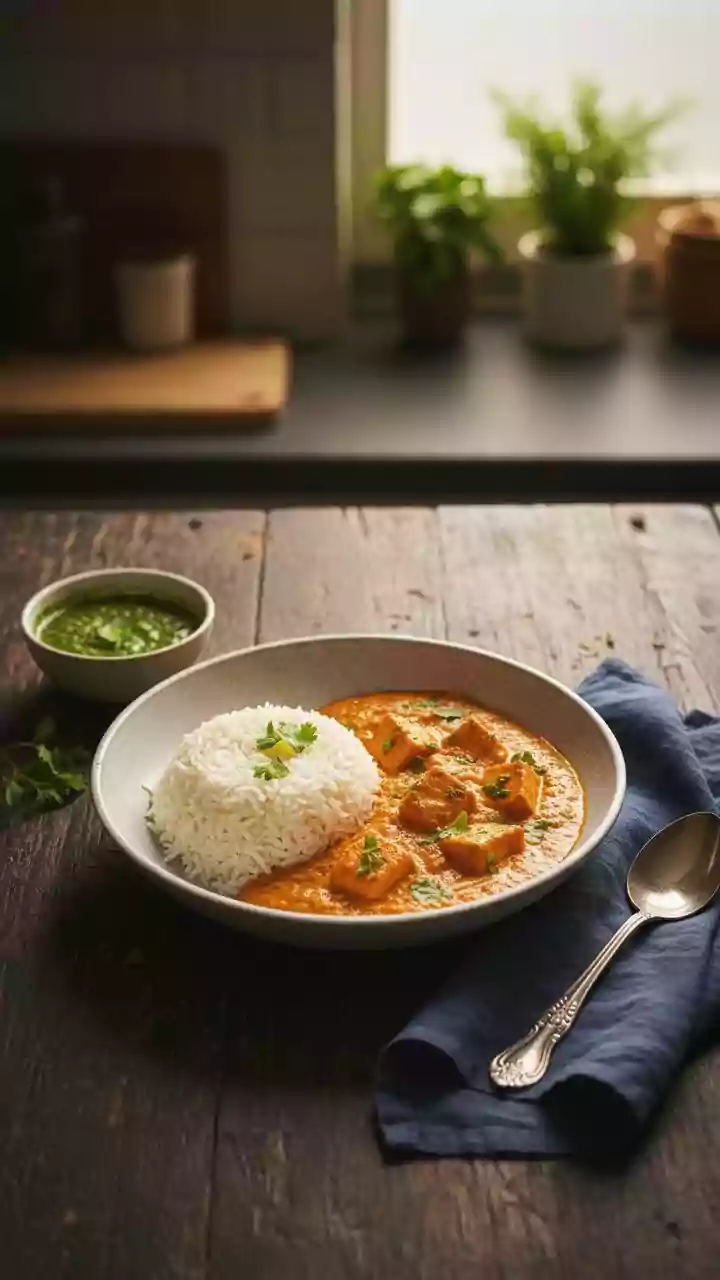
The use of saffron rice isn't limited to savoury meals. Kesar Bhaat is a sweet rice dish, fragrant with saffron, sugar, and ghee, often studded with nuts and raisins. It's a festive treat in many parts of India. Saffron is also the star in many Indian desserts like kheer (rice pudding) and shrikhand (sweet strained yoghurt), where its flavour profile beautifully complements the dairy richness. Even a simple bowl of basmati rice can be transformed into something special with just a few threads, making an everyday meal feel like a celebration.
Tips for the Home Cook
To protect your investment, proper storage is key. Keep saffron threads in a small, airtight, and opaque container. Store it in a cool, dark, and dry place, like a kitchen cupboard away from the stove and sunlight, as light, heat, and moisture are its enemies. Stored correctly, whole threads can retain their potency for up to two years, though the aroma may slowly diminish. Always buy whole threads rather than powder, as ground saffron loses its aroma much faster and is more easily adulterated. Remember, with genuine saffron, a very small amount goes a very long way.