



Why Bodyweight Training Works
Bodyweight training is a powerful and convenient way to get fit. Because it requires no special equipment, you can do it anywhere, anytime, removing the most common barriers to starting a fitness journey. It is incredibly effective for building functional
strength, which refers to the strength you use in everyday life, like carrying groceries or climbing stairs. These exercises often engage multiple muscle groups at once, improving your coordination, balance, and flexibility while also strengthening your muscles and cardiovascular system. Research has shown that bodyweight training can produce significant improvements in muscle strength and body composition, making it a proven method for getting stronger and leaner.
The Foundational Full-Body Moves
A balanced routine doesn't need to be complicated. For beginners, focusing on a handful of compound exercises that work the entire body is the most efficient approach. The following five movements form a complete, well-rounded workout that targets your upper body, lower body, and core. As you get comfortable, you can combine them into a circuit. Perform each exercise for a set number of repetitions, resting briefly between moves, and repeat the full circuit two to three times. Aim to do this workout two to three times per week on non-consecutive days to allow your muscles time to recover and grow.
Master the Bodyweight Squat
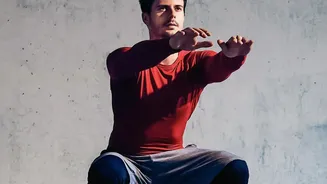
The squat is a fundamental movement for building lower body and core strength, targeting your quadriceps, hamstrings, and glutes. To perform one correctly, stand with your feet shoulder-width apart, with your toes pointing slightly outward. Keeping your chest up and back straight, push your hips back as if you are sitting down in a chair. Lower yourself until your thighs are parallel to the ground, ensuring your knees track in line with your toes and do not collapse inward. Push through your heels to return to the starting position. A common mistake is letting the knees travel too far forward; focus on sending your hips back first.
Perfect Your Push-Up
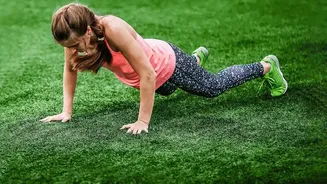
The push-up is the gold standard for upper-body strength, working your chest, shoulders, triceps, and core. Start in a high plank position with your hands slightly wider than your shoulders. Your body should form a straight line from your head to your heels. As you lower your body, keep your elbows tucked at a 45-degree angle, not flared out to the sides. Lower until your chest is close to the floor, then press back up. If a full push-up is too difficult, start with incline push-ups against a wall or sturdy table, or perform them on your knees. This modification reduces the weight you have to lift while still building strength.
Build a Strong Core with the Plank
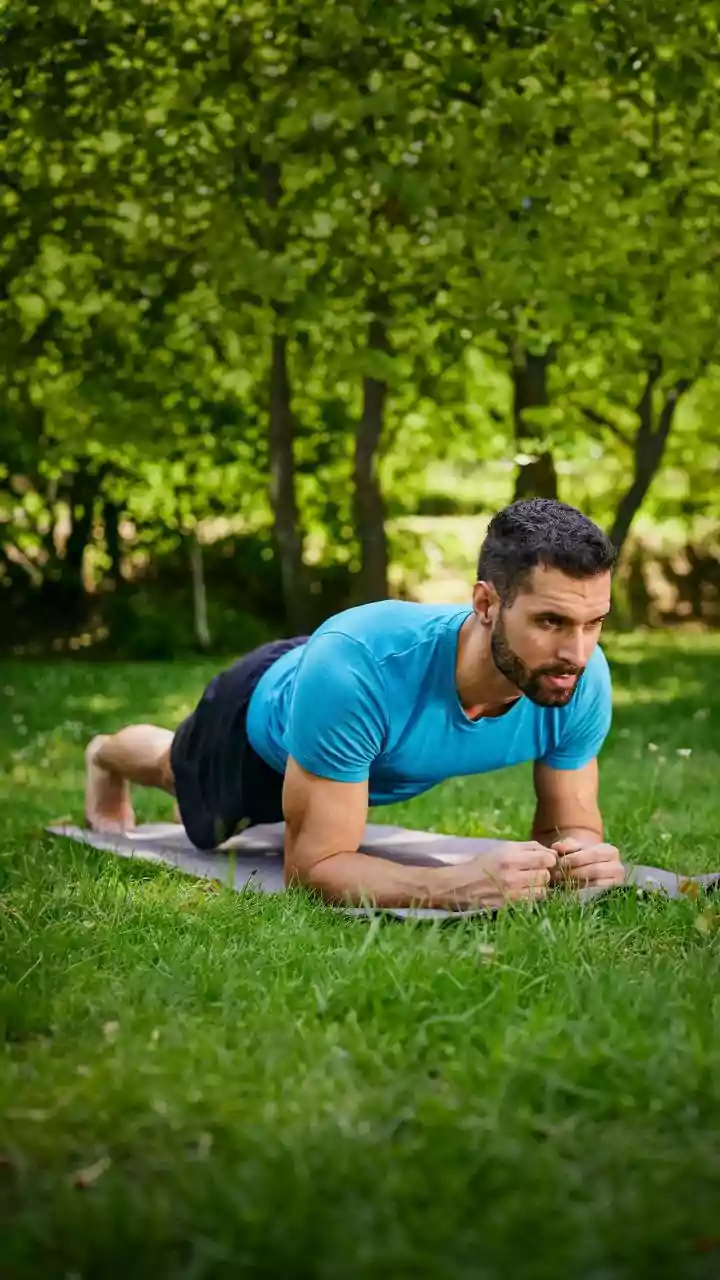
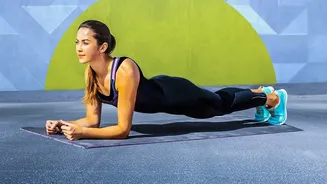
The plank is an isometric exercise that is excellent for building deep core stability, which is vital for good posture and preventing lower back pain. To get into position, place your forearms on the floor with your elbows directly under your shoulders. Extend your legs back, resting on your toes, so your body forms a straight, rigid line from head to heels. Engage your core and glutes to prevent your hips from sagging or rising too high. Look down at the floor to keep your neck in a neutral position. Hold this position for 20-30 seconds to start, gradually increasing the time as you get stronger.
Strengthen Your Legs with Lunges
Lunges are fantastic for targeting each leg individually, which helps to improve balance and correct strength imbalances. Start by standing tall, then take a large step forward with one leg. Lower your hips until both knees are bent at a 90-degree angle. Your front knee should be directly above your ankle, and your back knee should hover just above the ground. Keep your torso upright. Push off your front foot to return to the starting position. Alternate legs with each repetition. Reverse lunges, where you step backward, are often a safer starting point for beginners as they put less stress on the knee.